

552
PALEOGENE
NEOGENE & aUATERNARY
FRANKFURT
b
[j llitmiillillii illilllllllillb.. ::Js
,,:::::::::::::::rm..
\
c
BRACKISH -LIIvIN IC -HYPERSALINE LAKES /LAGOONS
-lI g
I 0
I
I
I
E
0
0
0
' "'
6
0
0
'"
UJ
I
z
UJ
I
0
0
I
Cl
•
FLUV IA L
LI lvI NIC
PEAT
IvIAINLY
IvIARLS
EVAPORITES
BITUIvI . SHALE
10 km
d
Chapter 12 Basin Evolution and Sediments
PERIvIIAN
JURASSIC
RHINE
GRABEN
aUATERNARY
N
:::;
I 0
I 6
LlIvINIC LlIvIEST .
BASAL CLASTICS
LOWER OLiGOCENE,
EoeENE
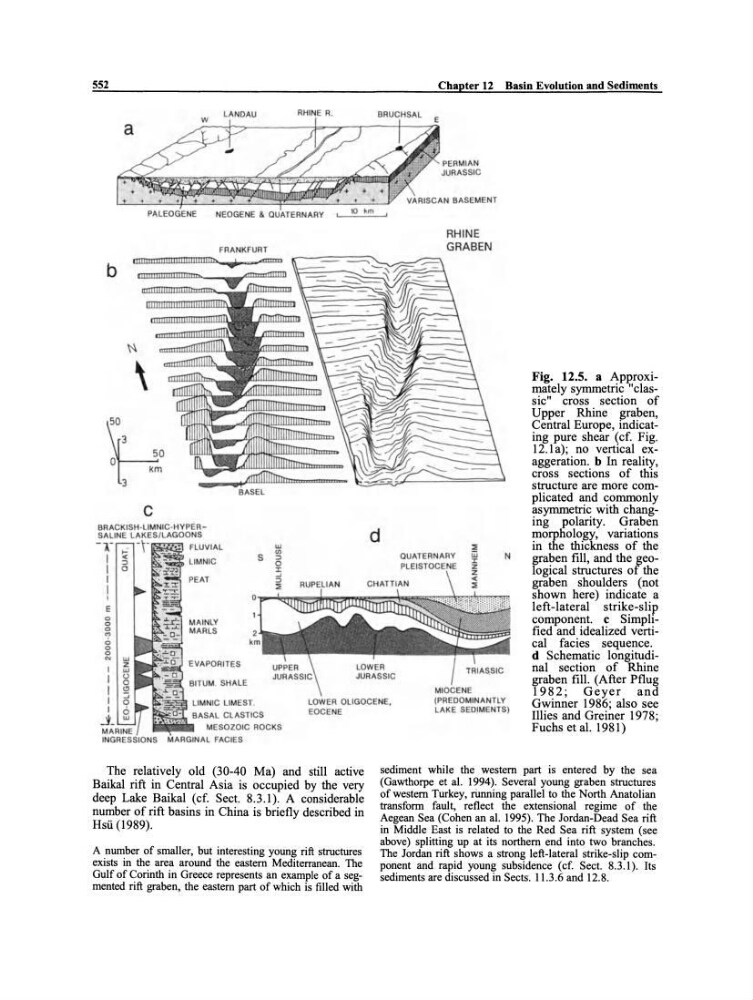
Fig. 12.5. a Approxirnately symmetrie "classie" cross section of
Upper Rhine graben,
Central Europe, indicating pure shear (cf. Fig.
12.1a); no vertieal exaggeration. b In reality,
cross sections of this
structure are more cornplieated and commonly
asymmetrie with changing polarity. Graben
rnorphology, variations
in the thickness of the
graben fill, and the geologieal structures of the
graben shoulders (not
shown here) indicate a
left-lateral strike-slip
eornponent. c Sirnplified and idealized vertical facies sequence.
d Schematic longitudinal section of Rhine
graben fill. (After Pflug
1982; Geyer and
Gwinner 1986; also see
Illies and Greiner 1978;
Fuchs et al. 1981)
IvIESOZOIC ROCKS
..1UJ
IvIARINE
INGRESSIO NS IvIARGINAL FACIES
The reiatively old (30-40 Ma) and still active
Baikai rift in Central Asia is occupied by the very
deep Lake Baikai (cf. Sect. 8.3.1). A considerable
nurnber of rift basins in China is briefly described in
Hsü (1989).
A number of smaller, but interesting young rift structures
exists in the area around the eastern Mediterranean. The
Gulf of Corinth in Greece represents an example of a segmented rift graben, the eastern part of which is filled with
sediment while the western part is entered by the sea
(Gawthorpe et al. 1994). Several young graben structures
of western Turkey, rimning parallel to the North Anatolian
transfonn fault, reflect the extensional regime of the
Aegean Sea (Cohen an al. 1995). The Jordan-Dead Sea rift
in Middle East is related to the Red Sea rift system (see
above) splitting up at its northern end into two branches.
The Jordan rift shows a strorig left-Iateral strike-slip component and rapid young subsidence (cf. Sect. 8.3.1). Its
sediments are discussed in Sects. 11.3.6 and 12.8.
PALEOGENE
NEOGENE & aUATERNARY
FRANKFURT
b
[j llitmiillillii illilllllllillb.. ::Js
,,:::::::::::::::rm..
\
c
BRACKISH -LIIvIN IC -HYPERSALINE LAKES /LAGOONS
-lI g
I 0
I
I
I
E
0
0
0
' "'
6
0
0
'"
UJ
I
z
UJ
I
0
0
I
Cl
•
FLUV IA L
LI lvI NIC
PEAT
IvIAINLY
IvIARLS
EVAPORITES
BITUIvI . SHALE
10 km
d
Chapter 12 Basin Evolution and Sediments
PERIvIIAN
JURASSIC
RHINE
GRABEN
aUATERNARY
N
:::;
I 0
I 6
LlIvINIC LlIvIEST .
BASAL CLASTICS
LOWER OLiGOCENE,
EoeENE
Fig. 12.5. a Approxirnately symmetrie "classie" cross section of
Upper Rhine graben,
Central Europe, indicating pure shear (cf. Fig.
12.1a); no vertieal exaggeration. b In reality,
cross sections of this
structure are more cornplieated and commonly
asymmetrie with changing polarity. Graben
rnorphology, variations
in the thickness of the
graben fill, and the geologieal structures of the
graben shoulders (not
shown here) indicate a
left-lateral strike-slip
eornponent. c Sirnplified and idealized vertical facies sequence.
d Schematic longitudinal section of Rhine
graben fill. (After Pflug
1982; Geyer and
Gwinner 1986; also see
Illies and Greiner 1978;
Fuchs et al. 1981)
IvIESOZOIC ROCKS
..1UJ
IvIARINE
INGRESSIO NS IvIARGINAL FACIES
The reiatively old (30-40 Ma) and still active
Baikai rift in Central Asia is occupied by the very
deep Lake Baikai (cf. Sect. 8.3.1). A considerable
nurnber of rift basins in China is briefly described in
Hsü (1989).
A number of smaller, but interesting young rift structures
exists in the area around the eastern Mediterranean. The
Gulf of Corinth in Greece represents an example of a segmented rift graben, the eastern part of which is filled with
sediment while the western part is entered by the sea
(Gawthorpe et al. 1994). Several young graben structures
of western Turkey, rimning parallel to the North Anatolian
transfonn fault, reflect the extensional regime of the
Aegean Sea (Cohen an al. 1995). The Jordan-Dead Sea rift
in Middle East is related to the Red Sea rift system (see
above) splitting up at its northern end into two branches.
The Jordan rift shows a strorig left-Iateral strike-slip component and rapid young subsidence (cf. Sect. 8.3.1). Its
sediments are discussed in Sects. 11.3.6 and 12.8.