

504
Chapter 11 Sediment Supply, Subsidence, and Basin Fill
a
DISTANCE FROM RIFT AXIS
2000
1000
0
1000
2000 km
I
I
b
. .
I
I
S.AMERICA
0
SEDIMENT ATIO N
RATE OF CAR0
BONATE -FREE
.,
MATERIAL
~
ITREND OF
w
BASIN MEAN)
(!)
0
«
60
TERRIGENOUS
CLAY - SILT
80
100
CALCAREOUS OOZE
OR LIMESTONE
120
10
20
30 m/Ma
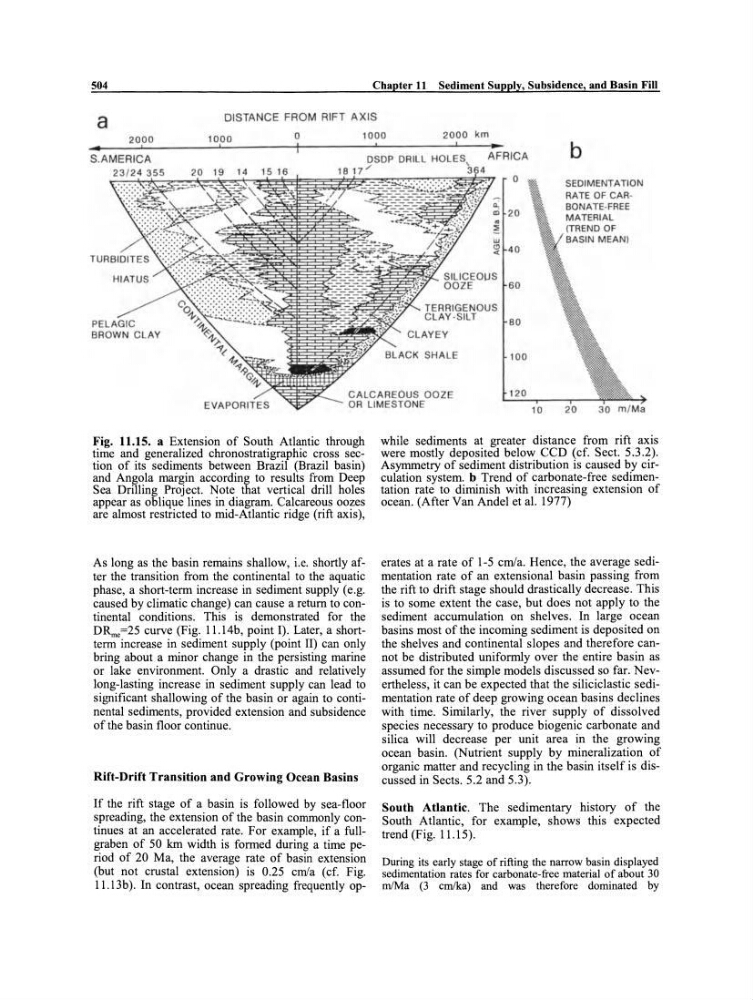
Fig. 11.15. a Extension of South Atlantic through
time and generalized chronostratigraphic cross secti on of its sediments between Brazil (Brazil basin)
and Angola margin according to results from Deep
Sea Drilling Project. Note that vertical drill holes
appear as oblique lines in diagram. Calcareous oozes
are almost restricted to mid-Atlantic ridge (rift axis),
As long as the basin remains shallow, i.e. shortlyafter the transition from the continental to the aquatic
phase, a short-term increase in sediment supply (e.g.
caused by climatic change) can cause areturn to continental conditions. This is demonstrated for the
D~e=25 curve (Fig. 11.14b, point I). Later, a shortterm increase in sediment supply (point II) can only
bring about a minor change in the persisting marine
or lake environment. Only a drastic and relatively
long-lasting increase in sediment supply can lead to
significant shallowing of the basin or again to continental sediments, provided extension and subsidence
of the basin floor continue.
Rift-Drift Transition and Growing Ocean Basins
If the rift stage of a basin is followed by sea-floor
spreading, the extension of the basin commonly continues at an accelerated rate. For example, if a fullgraben of 50 km width is formed during a time period of 20 Ma, the average rate of basin extension
(but not crustal extension) is 0.25 cmla (cf. Fig.
11.13b). In contrast, ocean spreading frequently opwhile sediments at greater distance from rift axis
were mostly deposited below CCD (cf. Sect. 5.3.2).
Asymmetry of sediment distribution is caused by circulation system. b Trend of carbonate-free sedimentation rate to diminish with increasing extension of
ocean. (After Van Andel et al. 1977)
erates at a rate of 1-5 cmJa. Hence, the average sedimentation rate of an extensional basin passing from
the rift to drift stage should drastically decrease. This
is to some extent the case, but does not apply to the
sediment accumulation on shelves. In large ocean
basins most of the incoming sediment is deposited on
the shelves and continental slopes and therefore cannot be distributed uniformly over the entire basin as
assumed for the simple models discussed so far. Nevertheless, it can be expected that the silicic1astic sedimentation rate of deep growing ocean basins dec1ines
with time. Similarly, the river supply of dissolved
species necessary to produce biogenie carbonate and
silica will decrease per unit area in the growing
ocean basin. (Nutrient supply by mineralization of
organic matter and recycling in the basin itself is discussed in Sects. 5.2 and 5.3).
South Atlantic. The sedimentary history of the
South Atlantic, for example, shows this expected
trend (Fig. 11.15).
During its early stage of rifting the narrow basin displayed
sedimentation rates for carbonate-free material of about 30
mlMa (3 cmlka) and was therefore dominated by
Chapter 11 Sediment Supply, Subsidence, and Basin Fill
a
DISTANCE FROM RIFT AXIS
2000
1000
0
1000
2000 km
I
I
b
. .
I
I
S.AMERICA
0
SEDIMENT ATIO N
RATE OF CAR0
BONATE -FREE
.,
MATERIAL
~
ITREND OF
w
BASIN MEAN)
(!)
0
«
60
TERRIGENOUS
CLAY - SILT
80
100
CALCAREOUS OOZE
OR LIMESTONE
120
10
20
30 m/Ma
Fig. 11.15. a Extension of South Atlantic through
time and generalized chronostratigraphic cross secti on of its sediments between Brazil (Brazil basin)
and Angola margin according to results from Deep
Sea Drilling Project. Note that vertical drill holes
appear as oblique lines in diagram. Calcareous oozes
are almost restricted to mid-Atlantic ridge (rift axis),
As long as the basin remains shallow, i.e. shortlyafter the transition from the continental to the aquatic
phase, a short-term increase in sediment supply (e.g.
caused by climatic change) can cause areturn to continental conditions. This is demonstrated for the
D~e=25 curve (Fig. 11.14b, point I). Later, a shortterm increase in sediment supply (point II) can only
bring about a minor change in the persisting marine
or lake environment. Only a drastic and relatively
long-lasting increase in sediment supply can lead to
significant shallowing of the basin or again to continental sediments, provided extension and subsidence
of the basin floor continue.
Rift-Drift Transition and Growing Ocean Basins
If the rift stage of a basin is followed by sea-floor
spreading, the extension of the basin commonly continues at an accelerated rate. For example, if a fullgraben of 50 km width is formed during a time period of 20 Ma, the average rate of basin extension
(but not crustal extension) is 0.25 cmla (cf. Fig.
11.13b). In contrast, ocean spreading frequently opwhile sediments at greater distance from rift axis
were mostly deposited below CCD (cf. Sect. 5.3.2).
Asymmetry of sediment distribution is caused by circulation system. b Trend of carbonate-free sedimentation rate to diminish with increasing extension of
ocean. (After Van Andel et al. 1977)
erates at a rate of 1-5 cmJa. Hence, the average sedimentation rate of an extensional basin passing from
the rift to drift stage should drastically decrease. This
is to some extent the case, but does not apply to the
sediment accumulation on shelves. In large ocean
basins most of the incoming sediment is deposited on
the shelves and continental slopes and therefore cannot be distributed uniformly over the entire basin as
assumed for the simple models discussed so far. Nevertheless, it can be expected that the silicic1astic sedimentation rate of deep growing ocean basins dec1ines
with time. Similarly, the river supply of dissolved
species necessary to produce biogenie carbonate and
silica will decrease per unit area in the growing
ocean basin. (Nutrient supply by mineralization of
organic matter and recycling in the basin itself is discussed in Sects. 5.2 and 5.3).
South Atlantic. The sedimentary history of the
South Atlantic, for example, shows this expected
trend (Fig. 11.15).
During its early stage of rifting the narrow basin displayed
sedimentation rates for carbonate-free material of about 30
mlMa (3 cmlka) and was therefore dominated by