

460
Chapter 10 Sedimentation Rates and Organie Matter
cm Ika
miM a
J,
500
I~ 5000
•
I •
~
I
\
• I
I
•
I
I
I
i
I
•
1
I
1
I
I
I
I
I
1
1
I
1
1
I
I
i
I
1
I
:
I
I
1
I
I
I
1
I
I
I
I
I
I
I
I
! :
I
I
i J
I
I
I
I
I
I
1
I
I
I
I
I
1
I
I
T
I
I
I
I
I
I
I
I
1
I
I
I
I
I
I
I
I
I
I I I
1
I I 1 I
I
I
I
I
I
I
I
I
1
I
I
I
1
i
1
I
I
I
I
I
I
I
1
I
I
1
I
I
I
I
I
200
100
50
20
10
5
2
0.5
2000
1000
500
200
100
50
20
10
5
SABKHA TlDAl
FlAT
I
1 I
CORAl 0010 1 1
REEF SHOAl..!
I
INNER
SHElP
OUTER
SHElF
I
I
I
I
I
I
1
LONG -TERM, SEVERAL cm/ka
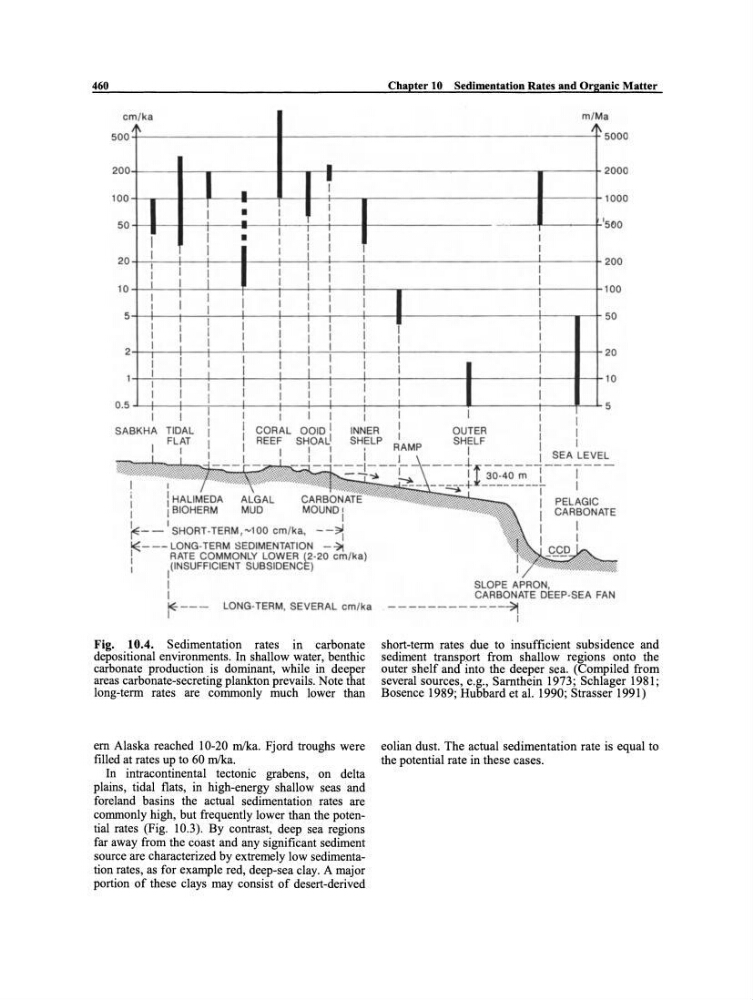
Fig. 10.4. Sedimentation rates in carbonate
depositional environments. In shallow water, benthic
carbonate production is dominant, while in deeper
areas carbonate-secreting plankton prevails. Note that
long-term rates are commonly much lower than
em Alaska reached 10-20 mlka. Fjord troughs were
filled at rates up to 60 mlka.
In intracontinental tectonic grabens, on delta
plains, tidal flats, in high-energy shallow seas and
foreland basins the actual sedimentation rates are
commonly high, but frequently lower than the potential rates (Fig. 10.3). By contrast, deep sea regions
far away from the coast and any significant sediment
source are characterized by extremely low sedimentation rates, as for example red, deep-sea clay. A major
portion of these clays may consist of desert-derived
SLOPE APRON,
PELAGIC
CARBONATE
CARBONATE OEEP-SEA FAN
-------------71
I
short-term rates due to insufficient subsidence and
sediment transport from shallow regions onto the
outer shelf and into the deeper sea. (Compiled from
several sources, e.g., Samthein 1973; Schlager 1981;
Bosence 1989; Hubbard et al. 1990; Strasser 1991)
eolian dust. The actual sedimentation rate is equal to
the potential rate in these cases.
Chapter 10 Sedimentation Rates and Organie Matter
cm Ika
miM a
J,
500
I~ 5000
•
I •
~
I
\
• I
I
•
I
I
I
i
I
•
1
I
1
I
I
I
I
I
1
1
I
1
1
I
I
i
I
1
I
:
I
I
1
I
I
I
1
I
I
I
I
I
I
I
I
! :
I
I
i J
I
I
I
I
I
I
1
I
I
I
I
I
1
I
I
T
I
I
I
I
I
I
I
I
1
I
I
I
I
I
I
I
I
I
I I I
1
I I 1 I
I
I
I
I
I
I
I
I
1
I
I
I
1
i
1
I
I
I
I
I
I
I
1
I
I
1
I
I
I
I
I
200
100
50
20
10
5
2
0.5
2000
1000
500
200
100
50
20
10
5
SABKHA TlDAl
FlAT
I
1 I
CORAl 0010 1 1
REEF SHOAl..!
I
INNER
SHElP
OUTER
SHElF
I
I
I
I
I
I
1
LONG -TERM, SEVERAL cm/ka
Fig. 10.4. Sedimentation rates in carbonate
depositional environments. In shallow water, benthic
carbonate production is dominant, while in deeper
areas carbonate-secreting plankton prevails. Note that
long-term rates are commonly much lower than
em Alaska reached 10-20 mlka. Fjord troughs were
filled at rates up to 60 mlka.
In intracontinental tectonic grabens, on delta
plains, tidal flats, in high-energy shallow seas and
foreland basins the actual sedimentation rates are
commonly high, but frequently lower than the potential rates (Fig. 10.3). By contrast, deep sea regions
far away from the coast and any significant sediment
source are characterized by extremely low sedimentation rates, as for example red, deep-sea clay. A major
portion of these clays may consist of desert-derived
SLOPE APRON,
PELAGIC
CARBONATE
CARBONATE OEEP-SEA FAN
-------------71
I
short-term rates due to insufficient subsidence and
sediment transport from shallow regions onto the
outer shelf and into the deeper sea. (Compiled from
several sources, e.g., Samthein 1973; Schlager 1981;
Bosence 1989; Hubbard et al. 1990; Strasser 1991)
eolian dust. The actual sedimentation rate is equal to
the potential rate in these cases.