

9.1 Weathering, Soils, Terrigenous Sediments
419
a
SOlL FORM ATION DURING SEDIMENTATION
r----f--,
I
I ;
I
I
I
I
H.p I
I
I
!
ISR~r-t--i
I
. .. '. I :~. ~ t. :,,,
RESIDENCE
TIME
RT = H.p/SR
For H ... = 2 m
and SR = 2 mm/a
i\ is RT = 1000 a
b
2.5 RTCURVE
~ 2.0
E
MAIN FEATURES OF PALEOSOLS
MOTTLING
- - - - - ._-. DESTRATIFICATION
ARGILLIC HORIZON.
± CARBONATE LEACHING
E 1.5
---rr----- - - - - - - - . CARBONATE NODULES
::DE'pi' ~ ÖF .::
; ACTIVE
~
PEDOGENESIS
~
RTM1N .--1
<{ 1.0 FOR SOlL I
CI:
DEVELOPM .
DURIPANS (LATER.!.T!~,_
THICK CAlCRETES, SILCRETESI
:'. H. p : '. J
\
.
: .
: I
!
.,"·. n~ .. -n . tT • .-c".
.. ............... ·1.··
~ 0 .5
o
UJ
IJ)
NO
o SOlLS
0 . 1
I WEAKLY
I DEVEL.
I SOlLS
I
I
: STRONGLY
I . DEVEL. SOlLS
10
100
1000
10000
TIME PERIOD OF PEDOGENESIS (kai
c
SOlL FORMATION AND EROSION
RA TE OF MECH .
EROSION
d
<}::::>
ION
LOSS
SOlL
UNSTABLE
ST ABLE THICK
SAPROLITE
...... ~~!':"'!~ PR2, SAPROLITE
lil~ ~i~illli~1 1 1 1 TO SOlL
: SAPROllTE:,
:i.:.i. :.i:':~ :·: ;';~i:"::·
.-;,,/ ..... (,,! . . .
-
PARENT ROCK,"/ ....
OR SEDIMENT I (·~ :PR1. ROCK TO
SAPROLITE
PR1, PR2, RATES
OF PEDOGENESIS
(PRl = 5-50 mm/kal
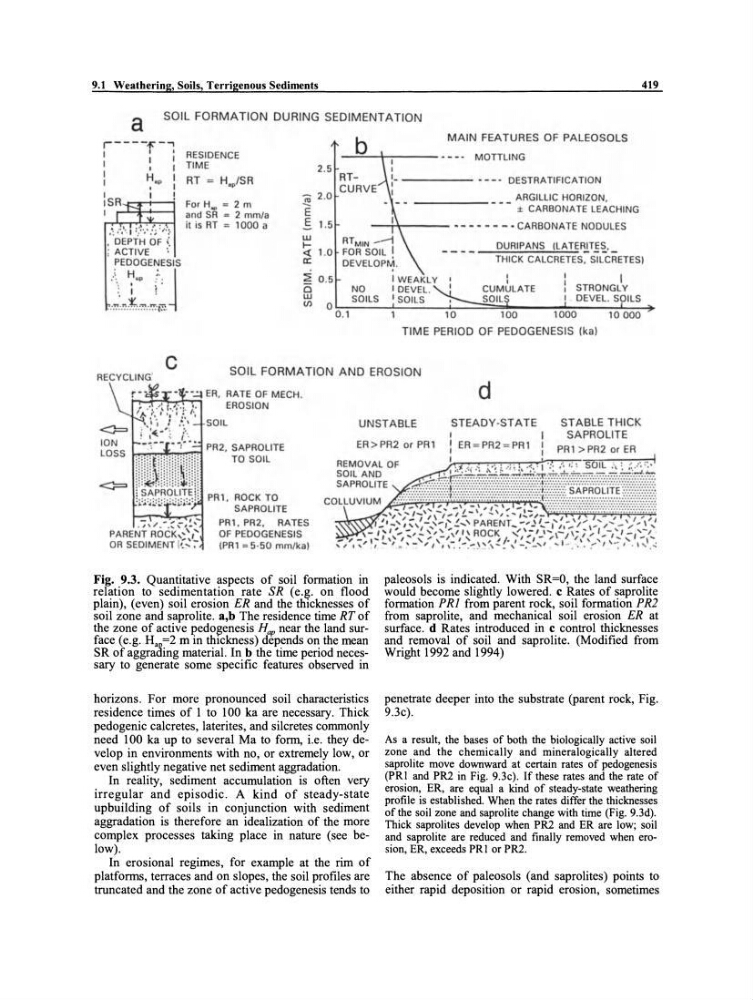
Fig. 9.3. Quantitative aspects of soil fonnation in
relation to sedimentation rate SR (e.g. on flood
plain), (even) soil erosion ER and the thicknesses of
soil zone and saprolite. a,b The residence time RT of
the zone of active pedogenesis H ap near the land surface (e.g. Ha~=2 m in thickness) depends on the mean
SR of aggraaing material. In b the time period necessary to generate some specific features observed in
horizons. For more pronounced soil characteristics
residence times of 1 to 100 ka are necessary. Thick
pedogenic calcretes, laterites, and silcretes commonly
need 100 ka up to several Ma to form, i.e. they develop in environments with no, or extremely low, or
even slightly negative net sediment aggradation.
In reality, sediment accumulation is often very
irregular and episodic. A kind of steady-state
upbuilding of soils in conjunction with sediment
aggradation is therefore an idealization of t11e more
complex processes taking place in nature (see below).
In erosional regimes, for example at the rim of
platforms, terraces and on slopes, the soil profiles are
truncated and the zone of active pedogenesis tends to
paleosols is indicated. With SR=O, the land surface
would become slightly lowered. c Rates of saprolite
formation PR] from parent rock, soil formation PR2
from saprolite, and mechanical soil erosion ER at
surface. d Rates introduced in c control thicknesses
and removal of soil and saprolite. (Modified from
Wright 1992 and 1994)
penetrate deeper into the substrate (parent rock, Fig.
9.3c).
As a result, the bases of both the biologicaUy active soil
zone and the chemically and mineralogically alte red
saprolite move downward at certain rates of pedogenesis
(PRl and PR2 in Fig. 9.3c). If these rates and the rate of
erosion, ER, are equal a kind of steady-state weathering
profile is established. When the rates differ the thiclmesses
of the soil zone and saprolite change with time (Fig. 9.3d).
Thick saprolites develop when PR2 and ER are low; soil
and saprolite are reduced and finally removed when erosion, ER, exceeds PRl or PR2.
The absence of paleosols (and saprolites) points to
either rapid deposition or rapid erosion, sometimes
419
a
SOlL FORM ATION DURING SEDIMENTATION
r----f--,
I
I ;
I
I
I
I
H.p I
I
I
!
ISR~r-t--i
I
. .. '. I :~. ~ t. :,,,
RESIDENCE
TIME
RT = H.p/SR
For H ... = 2 m
and SR = 2 mm/a
i\ is RT = 1000 a
b
2.5 RTCURVE
~ 2.0
E
MAIN FEATURES OF PALEOSOLS
MOTTLING
- - - - - ._-. DESTRATIFICATION
ARGILLIC HORIZON.
± CARBONATE LEACHING
E 1.5
---rr----- - - - - - - - . CARBONATE NODULES
::DE'pi' ~ ÖF .::
; ACTIVE
~
PEDOGENESIS
~
RTM1N .--1
<{ 1.0 FOR SOlL I
CI:
DEVELOPM .
DURIPANS (LATER.!.T!~,_
THICK CAlCRETES, SILCRETESI
:'. H. p : '. J
\
.
: .
: I
!
.,"·. n~ .. -n . tT • .-c".
.. ............... ·1.··
~ 0 .5
o
UJ
IJ)
NO
o SOlLS
0 . 1
I WEAKLY
I DEVEL.
I SOlLS
I
I
: STRONGLY
I . DEVEL. SOlLS
10
100
1000
10000
TIME PERIOD OF PEDOGENESIS (kai
c
SOlL FORMATION AND EROSION
RA TE OF MECH .
EROSION
d
<}::::>
ION
LOSS
SOlL
UNSTABLE
ST ABLE THICK
SAPROLITE
...... ~~!':"'!~ PR2, SAPROLITE
lil~ ~i~illli~1 1 1 1 TO SOlL
: SAPROllTE:,
:i.:.i. :.i:':~ :·: ;';~i:"::·
.-;,,/ ..... (,,! . . .
-
PARENT ROCK,"/ ....
OR SEDIMENT I (·~ :PR1. ROCK TO
SAPROLITE
PR1, PR2, RATES
OF PEDOGENESIS
(PRl = 5-50 mm/kal
Fig. 9.3. Quantitative aspects of soil fonnation in
relation to sedimentation rate SR (e.g. on flood
plain), (even) soil erosion ER and the thicknesses of
soil zone and saprolite. a,b The residence time RT of
the zone of active pedogenesis H ap near the land surface (e.g. Ha~=2 m in thickness) depends on the mean
SR of aggraaing material. In b the time period necessary to generate some specific features observed in
horizons. For more pronounced soil characteristics
residence times of 1 to 100 ka are necessary. Thick
pedogenic calcretes, laterites, and silcretes commonly
need 100 ka up to several Ma to form, i.e. they develop in environments with no, or extremely low, or
even slightly negative net sediment aggradation.
In reality, sediment accumulation is often very
irregular and episodic. A kind of steady-state
upbuilding of soils in conjunction with sediment
aggradation is therefore an idealization of t11e more
complex processes taking place in nature (see below).
In erosional regimes, for example at the rim of
platforms, terraces and on slopes, the soil profiles are
truncated and the zone of active pedogenesis tends to
paleosols is indicated. With SR=O, the land surface
would become slightly lowered. c Rates of saprolite
formation PR] from parent rock, soil formation PR2
from saprolite, and mechanical soil erosion ER at
surface. d Rates introduced in c control thicknesses
and removal of soil and saprolite. (Modified from
Wright 1992 and 1994)
penetrate deeper into the substrate (parent rock, Fig.
9.3c).
As a result, the bases of both the biologicaUy active soil
zone and the chemically and mineralogically alte red
saprolite move downward at certain rates of pedogenesis
(PRl and PR2 in Fig. 9.3c). If these rates and the rate of
erosion, ER, are equal a kind of steady-state weathering
profile is established. When the rates differ the thiclmesses
of the soil zone and saprolite change with time (Fig. 9.3d).
Thick saprolites develop when PR2 and ER are low; soil
and saprolite are reduced and finally removed when erosion, ER, exceeds PRl or PR2.
The absence of paleosols (and saprolites) points to
either rapid deposition or rapid erosion, sometimes