

376
Chapter 7 Sequences, Minor Cycles, and Event Stratigraphy
!
10 Ma
10 7 a
Large floods and
debris flows on land
Milankovitch cycles
3rd order cycles
I I
I
Channels,
Overbank deposits
I
I
middle fan i
"
Lower fan, basin plain I
~I 1:==f::J~~verage ;~;~~-~~~~-~nelss)
Sand turbidites
(deep seal
I
I
I
I
I
Modern tempestites
Ancient tempestites
,
I
'-~-------1
c--I------------,
Tempestites
Average (~rom thicknes~) C:+-.:1
(shallow seal
I
Gravity mass flows
(~
;
I h . ~ '""'- cp
(deep seal
I
1 ka
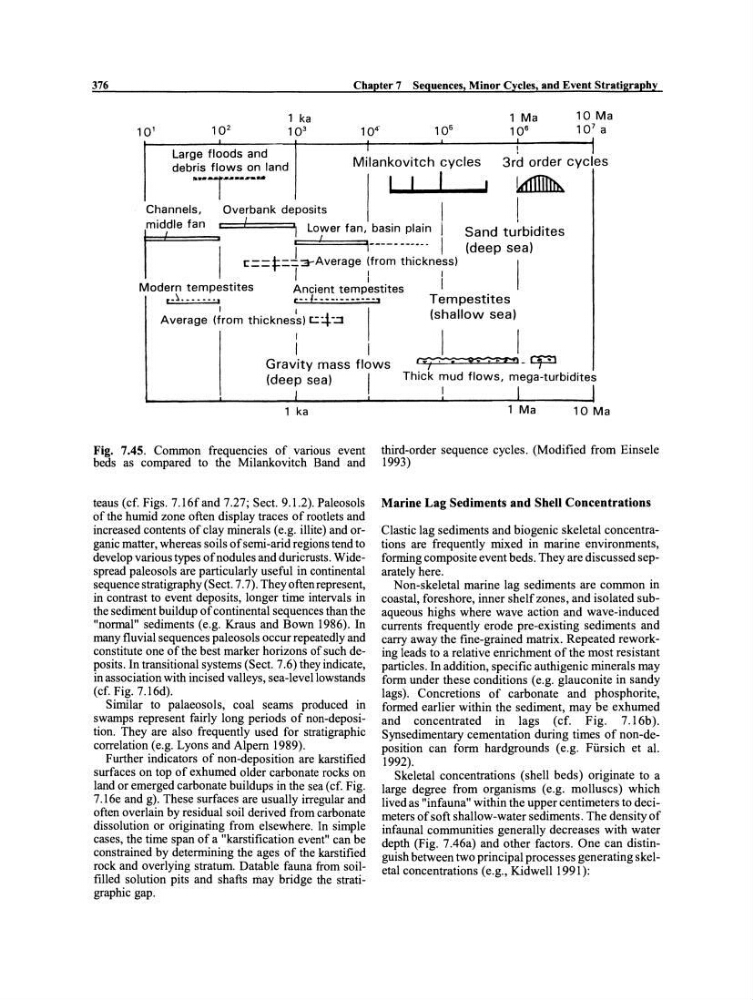
Fig. 7.45. Common frequencies of various event
beds as compared to the Milankovitch Band and
teaus (cf. Figs. 7.16fand 7.27; Sect. 9.1.2). Paleosols
of the humid zone often display traces of rootlets and
increased contents of clay minerals (e.g. illite) and organic matter, whereas soils of semi-arid regions tend to
develop various types of nodules and duricrusts. Widespread paleosols are particularly useful in continental
sequence stratigraphy (Sect. 7.7). They often represent,
in contrast to event deposits, longer time intervals in
the sediment buildup of continental sequences than the
"normal" sediments (e.g. Kraus and Bown 1986). In
many fluvial sequences paleosols occur repeatedly and
constitute one of the best marker horizons of such deposits. In transitional systems (Sect. 7.6) they indicate,
in association with incised valleys, sea-Ievel!owstands
(cf. Fig. 7.l6d).
Similar to palaeosols, coal seams produced in
swamps represent fairly long periods of non-deposition. They are also frequently used for stratigraphic
correlation (e.g. Lyons and Alpem 1989).
Further indicators of non-deposition are karstified
surfaces on top of exhumed older carbonate rocks on
land or emerged carbonate buildups in the sea (cf. Fig.
7.16e and g). These surfaces are usually irregular and
often overlain by residual soil derived from carbonate
dissolution or originating from elsewhere. In simple
cases, the time span of a "karstification event" can be
constrained by determining the ages of the karstified
rock and overlying stratum. Datable fauna from soilfilled solution pits and shafts may bridge the stratigraphie gap.
Thick mud flows, mega-turbidites
I
1 Ma
10 Ma
third-order sequence cycles. (Modified from EinseIe
1993)
Marine Lag Sediments and Shell Concentrations
Clastic lag sediments and bio genie skeletal concentrations are frequently mixed in marine environments,
forrning composite event beds. They are discussed separately here.
Non-skeletal marine lag sediments are common in
coastal, foreshore, inner shelf zones, and isolated subaqueous highs where wave action and wave-induced
currents frequently erode pre-existing sediments and
carry away the fine-grained matrix. Repeated reworking leads to a relative enrichment of the most resistant
particles. In addition, specific authigenic minerals may
form under these conditions (e.g. glauconite in sandy
lags). Concretions of carbonate and phosphorite,
formed earlier within the sediment, may be exhumed
and concentrated in lags (cf. Fig. 7.16b).
Synsedimentary cementation during times of non-deposition can form hardgrounds (e.g. Fürsich et al.
1992).
Skeletal concentrations (shell beds) originate to a
large degree from organisrns (e.g. molluscs) which
lived as "infauna" within the upper centimeters to decimeters of soft shallow-water sediments. The density of
infaunal communities generally decreases with water
depth (Fig. 7.46a) and other factors. One can distinguish between two principal processes generating skeleta! concentrations (e.g., KidweIl 1991):
Chapter 7 Sequences, Minor Cycles, and Event Stratigraphy
!
10 Ma
10 7 a
Large floods and
debris flows on land
Milankovitch cycles
3rd order cycles
I I
I
Channels,
Overbank deposits
I
I
middle fan i
"
Lower fan, basin plain I
~I 1:==f::J~~verage ;~;~~-~~~~-~nelss)
Sand turbidites
(deep seal
I
I
I
I
I
Modern tempestites
Ancient tempestites
,
I
'-~-------1
c--I------------,
Tempestites
Average (~rom thicknes~) C:+-.:1
(shallow seal
I
Gravity mass flows
(~
;
I h . ~ '""'- cp
(deep seal
I
1 ka
Fig. 7.45. Common frequencies of various event
beds as compared to the Milankovitch Band and
teaus (cf. Figs. 7.16fand 7.27; Sect. 9.1.2). Paleosols
of the humid zone often display traces of rootlets and
increased contents of clay minerals (e.g. illite) and organic matter, whereas soils of semi-arid regions tend to
develop various types of nodules and duricrusts. Widespread paleosols are particularly useful in continental
sequence stratigraphy (Sect. 7.7). They often represent,
in contrast to event deposits, longer time intervals in
the sediment buildup of continental sequences than the
"normal" sediments (e.g. Kraus and Bown 1986). In
many fluvial sequences paleosols occur repeatedly and
constitute one of the best marker horizons of such deposits. In transitional systems (Sect. 7.6) they indicate,
in association with incised valleys, sea-Ievel!owstands
(cf. Fig. 7.l6d).
Similar to palaeosols, coal seams produced in
swamps represent fairly long periods of non-deposition. They are also frequently used for stratigraphic
correlation (e.g. Lyons and Alpem 1989).
Further indicators of non-deposition are karstified
surfaces on top of exhumed older carbonate rocks on
land or emerged carbonate buildups in the sea (cf. Fig.
7.16e and g). These surfaces are usually irregular and
often overlain by residual soil derived from carbonate
dissolution or originating from elsewhere. In simple
cases, the time span of a "karstification event" can be
constrained by determining the ages of the karstified
rock and overlying stratum. Datable fauna from soilfilled solution pits and shafts may bridge the stratigraphie gap.
Thick mud flows, mega-turbidites
I
1 Ma
10 Ma
third-order sequence cycles. (Modified from EinseIe
1993)
Marine Lag Sediments and Shell Concentrations
Clastic lag sediments and bio genie skeletal concentrations are frequently mixed in marine environments,
forrning composite event beds. They are discussed separately here.
Non-skeletal marine lag sediments are common in
coastal, foreshore, inner shelf zones, and isolated subaqueous highs where wave action and wave-induced
currents frequently erode pre-existing sediments and
carry away the fine-grained matrix. Repeated reworking leads to a relative enrichment of the most resistant
particles. In addition, specific authigenic minerals may
form under these conditions (e.g. glauconite in sandy
lags). Concretions of carbonate and phosphorite,
formed earlier within the sediment, may be exhumed
and concentrated in lags (cf. Fig. 7.16b).
Synsedimentary cementation during times of non-deposition can form hardgrounds (e.g. Fürsich et al.
1992).
Skeletal concentrations (shell beds) originate to a
large degree from organisrns (e.g. molluscs) which
lived as "infauna" within the upper centimeters to decimeters of soft shallow-water sediments. The density of
infaunal communities generally decreases with water
depth (Fig. 7.46a) and other factors. One can distinguish between two principal processes generating skeleta! concentrations (e.g., KidweIl 1991):