

360
Chapter 7 Sequences, Minor Cycies, and Event Stratigraphy
-2
E ... 100
TILT or
0""41
P 23
P 18
a
ORBITAL
PARAMETERS
1
NSOLATION
W/m 2 )
o
SUM OF
E, 0, AND P
2 ~----T
,
,
,
•
i
OXYGEN
ISOTOPES
o
200
400
600
800 ka B.P.
3.5-.----------,..------------.-------r---.
3.0
~ 2.5
o
co
"0
1.5
1.0
19
3~
37
47
)
BRUNHES/MATUY AMA BOUNDARY
I
MILANKOVITCH
CROLL
LAPLACE
0.5 -+----.------r---,.L------r--~r_--_,_.!.---I--_r---..-----;
o
200
400
600
800
1000
1200
1400
1600
1800 ka B. P.
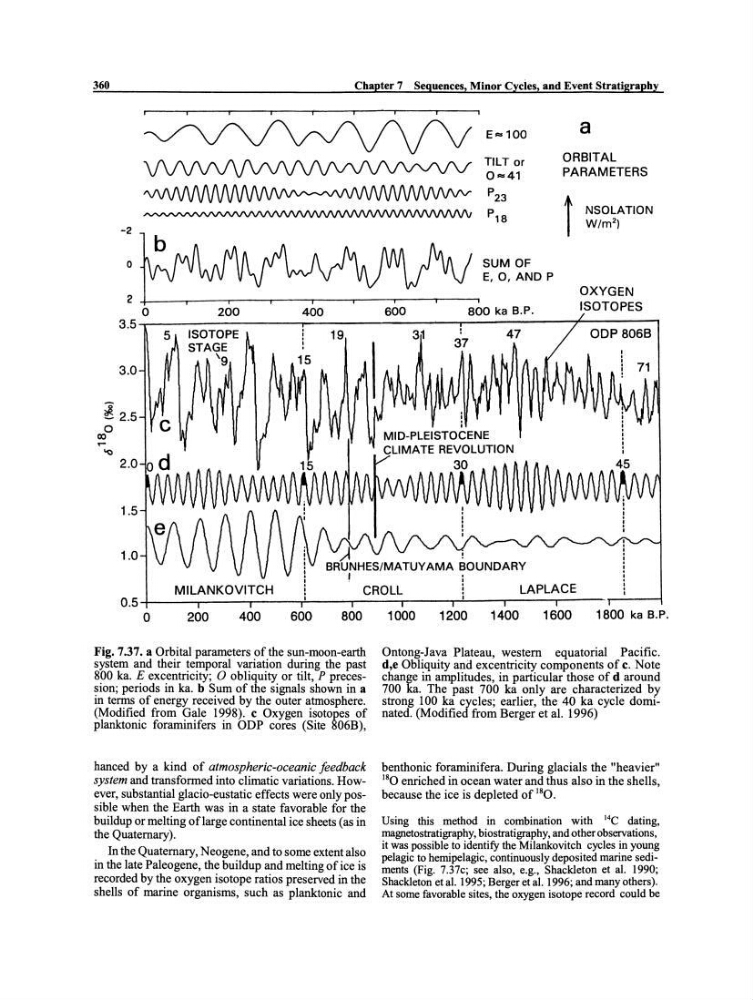
Fig. 7.37. a Orbital parameters ofthe sun-moon-earth
system and their temporal variation during the past
800 ka. E excentricity; 0 obliquity or tilt, P precession; periods in ka. b Sum of the signals shown in a
in terms of energy received by the outer atmosphere.
(Modified from Gale 19(8). c Oxygen isotopes of
planktonic foraminifers in ODP cores (Site 806B),
hanced by a kind of atmospheric-oceanic feedback
system and transformed into climatic variations. However, substantial glacio-eustatic effects were only possible when the Earth was in astate favorable for the
buildup or melting oflarge continental ice sheets (as in
the Quaternary).
In the Quaternary, Neogene, and to some extentalso
in the late Paleogene, the buildup and melting of ice is
recorded by the oxygen isotope ratios preserved in the
shells of marine organisms, such as planktonic and
Ontong-Java Plateau, western equatorial Pacific.
d,e Obliquity and excentricity components of c. Note
change in amplitudes, in particular those of d around
700 ka. The past 700 ka only are characterized by
strong 100 ka cycles; earlier, the 40 ka cycle dorninated. (Modified from Berger et a1. 1996)
benthonic foraminifera. During glacials the "heavier"
18 0 enriched in ocean water and thus also in the shells,
because the ice is depleted of 18 0.
Using this method in combination with i4C dating,
magnetostratigraphy, biostratigraphy, and other observations,
it was possible to identify the Milankovitch cyc1es in young
pelagic to hemipelagic, continuously deposited marine sediments (Fig. 7.37c; see also, e.g., Shackleton et al. 1990;
Shackleton et al. 1995; Berger et al. 1996; and many others).
At some favorable sites, the oxygen isotope record could be
Chapter 7 Sequences, Minor Cycies, and Event Stratigraphy
-2
E ... 100
TILT or
0""41
P 23
P 18
a
ORBITAL
PARAMETERS
1
NSOLATION
W/m 2 )
o
SUM OF
E, 0, AND P
2 ~----T
,
,
,
•
i
OXYGEN
ISOTOPES
o
200
400
600
800 ka B.P.
3.5-.----------,..------------.-------r---.
3.0
~ 2.5
o
co
"0
1.5
1.0
19
3~
37
47
)
BRUNHES/MATUY AMA BOUNDARY
I
MILANKOVITCH
CROLL
LAPLACE
0.5 -+----.------r---,.L------r--~r_--_,_.!.---I--_r---..-----;
o
200
400
600
800
1000
1200
1400
1600
1800 ka B. P.
Fig. 7.37. a Orbital parameters ofthe sun-moon-earth
system and their temporal variation during the past
800 ka. E excentricity; 0 obliquity or tilt, P precession; periods in ka. b Sum of the signals shown in a
in terms of energy received by the outer atmosphere.
(Modified from Gale 19(8). c Oxygen isotopes of
planktonic foraminifers in ODP cores (Site 806B),
hanced by a kind of atmospheric-oceanic feedback
system and transformed into climatic variations. However, substantial glacio-eustatic effects were only possible when the Earth was in astate favorable for the
buildup or melting oflarge continental ice sheets (as in
the Quaternary).
In the Quaternary, Neogene, and to some extentalso
in the late Paleogene, the buildup and melting of ice is
recorded by the oxygen isotope ratios preserved in the
shells of marine organisms, such as planktonic and
Ontong-Java Plateau, western equatorial Pacific.
d,e Obliquity and excentricity components of c. Note
change in amplitudes, in particular those of d around
700 ka. The past 700 ka only are characterized by
strong 100 ka cycles; earlier, the 40 ka cycle dorninated. (Modified from Berger et a1. 1996)
benthonic foraminifera. During glacials the "heavier"
18 0 enriched in ocean water and thus also in the shells,
because the ice is depleted of 18 0.
Using this method in combination with i4C dating,
magnetostratigraphy, biostratigraphy, and other observations,
it was possible to identify the Milankovitch cyc1es in young
pelagic to hemipelagic, continuously deposited marine sediments (Fig. 7.37c; see also, e.g., Shackleton et al. 1990;
Shackleton et al. 1995; Berger et al. 1996; and many others).
At some favorable sites, the oxygen isotope record could be