

358
Chapter 7 Sequences, Minor Cycles, and Event Stratigraphy
SEA LEVEL
WELL OXYGENATED
OCEAN
LOW
HIGH
0
///
~~ ~
>si- ~
TERT.
~~:f~
P
~
-u
MOST RAPID
100
· . . ········ ··l
>
CRETAC.
z
SEA··FLOOR
LONGa
SPREADING
z
BREAKUPOF
JUR.
TERM
200
TRANSMAJOR
-
GLACIATION ~~-.~l
P~G~l
TRIAS .
GRESSION (ICE H OUSEt) ~m~1
PANGEA
PERM.
. . . . . . . . . . . . · . . . . · · · . . . . . . . . · · . . . . . . . . . . l . . . . . . . . . . . . t
~
I
I
~ TENDENCY FOR
300
CONTINENTAL
--CARB.
FLOODINGBLACK SHA LE
AGGRADA llON
FORMl\iION
OF
REGRESSION
'-.....
CONTINENTS
DEVON.
CYCLE I
~
400
1
SILUR.
REGRESSION
I
/ /
-
ORDOV.
1
V
500
.. · .. ····· .... · .............. · .. ·· .... · .... j ...... ••• .... ·A
~
-
1
LONG-TERM
BREAKUPOF
1
GLOBAL
CAMBR.
1
TRANSPAN-AFRICA
I
WARM, MORE
1
GRESSION
EQUABLE
~
600
............. · .............. ···• .. ·· .... ··1 .. • .. ···· .... ··1
CU MATE
PROTERO·
Mo
zOle
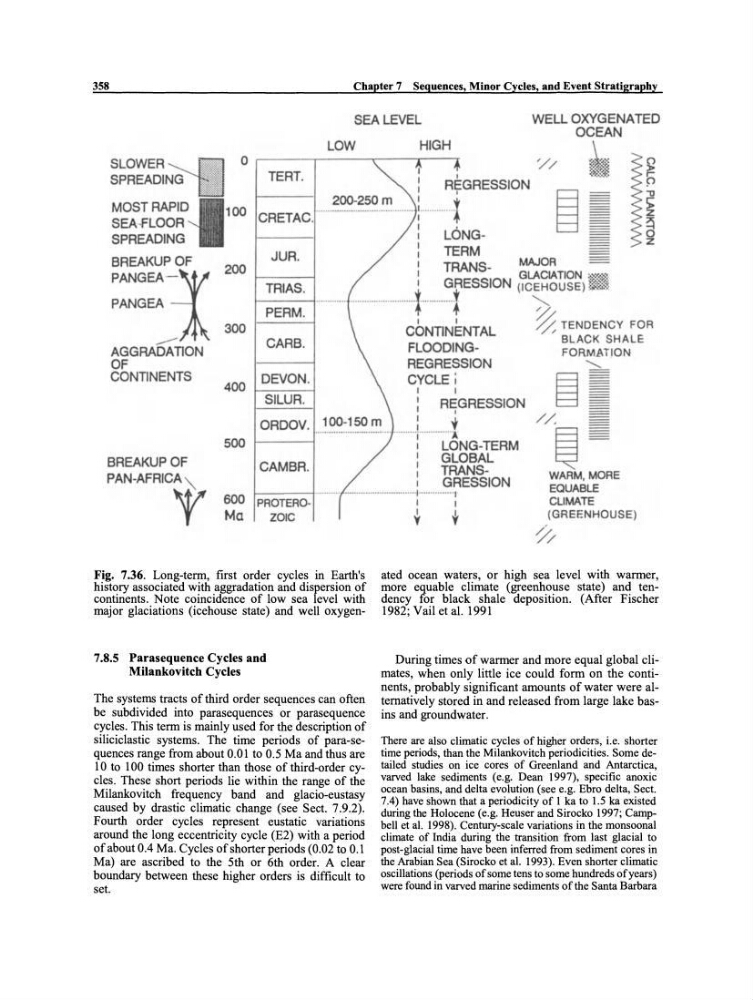
Fig. 7.36. Long-tenn, first order cycles in Earth's
history associated with aggradation and dispersion of
continents. Note coincidence of low sea level with
major glaciations (icehouse state) and weH oxygen7.8.5 Parasequence Cycles and
Milankovitch Cycles
The systems tracts of third order sequences can often
be subdivided into parasequences or parasequence
cycles. This tenn is mainly used for the description of
siliciclastic systems. The time periods of para-sequences range from about 0.01 to 0.5 Ma and thus are
10 to 100 times shorter than those of third-order cycles. These short periods lie within the range of the
Milankovitch frequency band and glacio-eustasy
caused by drastic climatic change (see Sect. 7.9.2).
Fourth order cycles represent eustatic variations
around the long eccentricity cycle (E2) with aperiod
of about 0.4 Ma. Cycles of shorter periods (0.02 to 0.1
Ma) are ascribed to the 5th or 6th order. A clear
boundary between these higher orders is difficult to
set.
1
1
1
y
(GREF.NHOUSE)
Y
0
ated ocean waters, or high sea level with warmer,
more equable climate (greenhouse state) and tendency for black shale deposition. (After Fischer
1982; Vail et al. 1991
During times of wanner and more equal global climates, when only little ice could fonn on the continents, probably significant amounts of water were altematively stored in and released from large lake basins and groundwater.
There are also cIimatic eycIes of higher orders, i.e. shorter
time periods, than the Milankoviteh periodieities. Some detailed studies on iee cores of Greenland and Antaretiea,
varved lake sediments (e.g. Dean 1997), specifie anoxie
oeean basins, and delta evolution (see e.g. Ebro delta, Seet.
7.4) have shown that a periodieity of I ka to 1.5 ka existed
during the Holoeene (e.g. Heuser and Siroeko 1997; Campbell et al. 1998). Century-seale variations in the monsoonal
cIimate of India during the transition from last glaeial to
post-glaeial time have been inferred from sediment eores in
the Arabian Sea (Siroeko et al. 1993). Even shorter cIimatie
oseillations (periods ofsome tens to some hundreds ofyears)
were found in varved marine sediments of the Santa Barbara
Chapter 7 Sequences, Minor Cycles, and Event Stratigraphy
SEA LEVEL
WELL OXYGENATED
OCEAN
LOW
HIGH
0
///
~~ ~
>si- ~
TERT.
~~:f~
P
~
-u
MOST RAPID
100
· . . ········ ··l
>
CRETAC.
z
SEA··FLOOR
LONGa
SPREADING
z
BREAKUPOF
JUR.
TERM
200
TRANSMAJOR
-
GLACIATION ~~-.~l
P~G~l
TRIAS .
GRESSION (ICE H OUSEt) ~m~1
PANGEA
PERM.
. . . . . . . . . . . . · . . . . · · · . . . . . . . . · · . . . . . . . . . . l . . . . . . . . . . . . t
~
I
I
~ TENDENCY FOR
300
CONTINENTAL
--CARB.
FLOODINGBLACK SHA LE
AGGRADA llON
FORMl\iION
OF
REGRESSION
'-.....
CONTINENTS
DEVON.
CYCLE I
~
400
1
SILUR.
REGRESSION
I
/ /
-
ORDOV.
1
V
500
.. · .. ····· .... · .............. · .. ·· .... · .... j ...... ••• .... ·A
~
-
1
LONG-TERM
BREAKUPOF
1
GLOBAL
CAMBR.
1
TRANSPAN-AFRICA
I
WARM, MORE
1
GRESSION
EQUABLE
~
600
............. · .............. ···• .. ·· .... ··1 .. • .. ···· .... ··1
CU MATE
PROTERO·
Mo
zOle
Fig. 7.36. Long-tenn, first order cycles in Earth's
history associated with aggradation and dispersion of
continents. Note coincidence of low sea level with
major glaciations (icehouse state) and weH oxygen7.8.5 Parasequence Cycles and
Milankovitch Cycles
The systems tracts of third order sequences can often
be subdivided into parasequences or parasequence
cycles. This tenn is mainly used for the description of
siliciclastic systems. The time periods of para-sequences range from about 0.01 to 0.5 Ma and thus are
10 to 100 times shorter than those of third-order cycles. These short periods lie within the range of the
Milankovitch frequency band and glacio-eustasy
caused by drastic climatic change (see Sect. 7.9.2).
Fourth order cycles represent eustatic variations
around the long eccentricity cycle (E2) with aperiod
of about 0.4 Ma. Cycles of shorter periods (0.02 to 0.1
Ma) are ascribed to the 5th or 6th order. A clear
boundary between these higher orders is difficult to
set.
1
1
1
y
(GREF.NHOUSE)
Y
0
ated ocean waters, or high sea level with warmer,
more equable climate (greenhouse state) and tendency for black shale deposition. (After Fischer
1982; Vail et al. 1991
During times of wanner and more equal global climates, when only little ice could fonn on the continents, probably significant amounts of water were altematively stored in and released from large lake basins and groundwater.
There are also cIimatic eycIes of higher orders, i.e. shorter
time periods, than the Milankoviteh periodieities. Some detailed studies on iee cores of Greenland and Antaretiea,
varved lake sediments (e.g. Dean 1997), specifie anoxie
oeean basins, and delta evolution (see e.g. Ebro delta, Seet.
7.4) have shown that a periodieity of I ka to 1.5 ka existed
during the Holoeene (e.g. Heuser and Siroeko 1997; Campbell et al. 1998). Century-seale variations in the monsoonal
cIimate of India during the transition from last glaeial to
post-glaeial time have been inferred from sediment eores in
the Arabian Sea (Siroeko et al. 1993). Even shorter cIimatie
oseillations (periods ofsome tens to some hundreds ofyears)
were found in varved marine sediments of the Santa Barbara