

348
Chapter 7 Sequences, Minor Cycles, and Event Stratigraphy
HIGH-FREQUENCY LAKE (PLAYA) SEQUENCES
(TRIASSIC/JURASSIC, EAST GREENLAND)
ANOXIC LAKE
SHALLOW MARINE
DEPTH - 100 m )
--LAKE LEVEL
HIGH LOW
--LAKE
LEVEL
H
L
~8.:r:.6h!~,;w~~fiDEL TA PLAIN
OPEN
LAKE
~~!::i5q __ - - TSE
AND DELTA
FRONT, WAVE·
AND STORMDOMINATED
DISTR.
CHANNEL
USF
f-..,-=,..-~- - - - - - SB
FAN
YA
MUDFLATS
\ \
PLAYA-LAKE
W ITH
TOI - - -50 km '-----1
",n'''LLUVY CARBONATE LAKE
ORLAGOON
TSE = TRANSGRESSIVE
SURFACE OF EROSION
LSF = LOWER SHORE-FACE
USF = LOWER SHORE-FACE
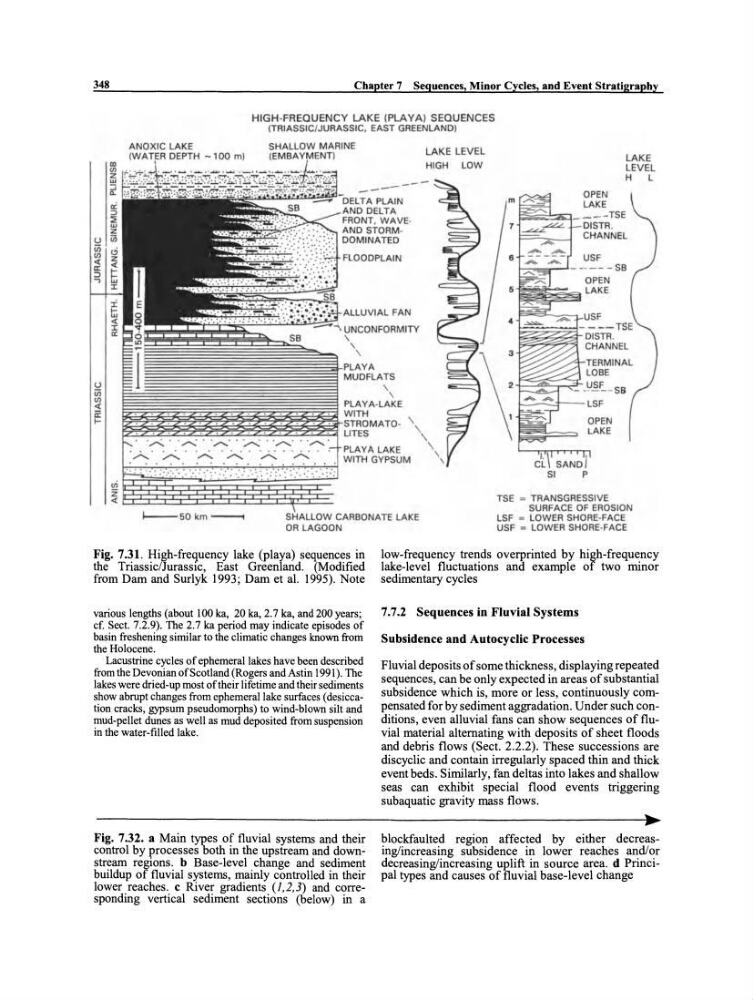
Fig. 7.31. High-freguency lake (playa) sequences in
the Triassic/Jurasslc, East Greenland. (Modified
from Dam and Surlyk 1993; Dam et aL 1995). Note
various lengths(about 100 ka, 20 ka, 2.7 ka, and 200 years;
cf. Sect. 7.2.9). The 2.7 ka period may indicate episodes of
basin freshening similar to the climatic changes known from
the Holocene.
Lacustrine cycles of ephemerallakes have been described
from the Devonian ofScotland (Rogers and Astin 1991). The
lakes were dried-up most oftheir lifetime and their sediments
show abrupt changes from ephemerallake surfaces (desiccation cracks, gypsum pseudomorphs) to wind-blown silt and
mud-pellet dunes as weil as mud deposited from suspension
in the water-filled lake.
Fig. 7.32. a Main types of fluvial systems and their
control by processes both in the upstream and downstream regions. b Base-level change and sediment
buildup of fluvial systems, mainly controlled in their
lower reaches. c River gradients (1,2,3) and corresponding vertical sediment sections (below) in a
low-frequency trends overprinted by high-frequency
lake-level fluctuations and example of two minor
sedimentary cycles
7.7.2 Sequences in Fluvial Systems
Subsidence and Autocyclic Processes
Fluvial deposits of some thickness, displaying repeated
sequences, can be only expected in areas of substantial
subsidence which is, more or less, continuously compensated for by sediment aggradation. U nder such conditions, even alluvial fans can show sequences of fluvial material altemating with deposits of sheet floods
and debris flows (Sect. 2.2.2). These successions are
discyclic and contain irregularly spaced thin and thick
event beds. Similarly, fan deltas into lakes and shallow
seas can exhibit special flood events triggering
subaquatic gravity mass flows.
blockfaulted region affected by either decreasing/increasing subsidence in lower reaches andlor
decreasing/increasing uplift in source area. d Principal types and causes of fluvial base-level change
Chapter 7 Sequences, Minor Cycles, and Event Stratigraphy
HIGH-FREQUENCY LAKE (PLAYA) SEQUENCES
(TRIASSIC/JURASSIC, EAST GREENLAND)
ANOXIC LAKE
SHALLOW MARINE
DEPTH - 100 m )
--LAKE LEVEL
HIGH LOW
--LAKE
LEVEL
H
L
~8.:r:.6h!~,;w~~fiDEL TA PLAIN
OPEN
LAKE
~~!::i5q __ - - TSE
AND DELTA
FRONT, WAVE·
AND STORMDOMINATED
DISTR.
CHANNEL
USF
f-..,-=,..-~- - - - - - SB
FAN
YA
MUDFLATS
\ \
PLAYA-LAKE
W ITH
TOI - - -50 km '-----1
",n'''LLUVY CARBONATE LAKE
ORLAGOON
TSE = TRANSGRESSIVE
SURFACE OF EROSION
LSF = LOWER SHORE-FACE
USF = LOWER SHORE-FACE
Fig. 7.31. High-freguency lake (playa) sequences in
the Triassic/Jurasslc, East Greenland. (Modified
from Dam and Surlyk 1993; Dam et aL 1995). Note
various lengths(about 100 ka, 20 ka, 2.7 ka, and 200 years;
cf. Sect. 7.2.9). The 2.7 ka period may indicate episodes of
basin freshening similar to the climatic changes known from
the Holocene.
Lacustrine cycles of ephemerallakes have been described
from the Devonian ofScotland (Rogers and Astin 1991). The
lakes were dried-up most oftheir lifetime and their sediments
show abrupt changes from ephemerallake surfaces (desiccation cracks, gypsum pseudomorphs) to wind-blown silt and
mud-pellet dunes as weil as mud deposited from suspension
in the water-filled lake.
Fig. 7.32. a Main types of fluvial systems and their
control by processes both in the upstream and downstream regions. b Base-level change and sediment
buildup of fluvial systems, mainly controlled in their
lower reaches. c River gradients (1,2,3) and corresponding vertical sediment sections (below) in a
low-frequency trends overprinted by high-frequency
lake-level fluctuations and example of two minor
sedimentary cycles
7.7.2 Sequences in Fluvial Systems
Subsidence and Autocyclic Processes
Fluvial deposits of some thickness, displaying repeated
sequences, can be only expected in areas of substantial
subsidence which is, more or less, continuously compensated for by sediment aggradation. U nder such conditions, even alluvial fans can show sequences of fluvial material altemating with deposits of sheet floods
and debris flows (Sect. 2.2.2). These successions are
discyclic and contain irregularly spaced thin and thick
event beds. Similarly, fan deltas into lakes and shallow
seas can exhibit special flood events triggering
subaquatic gravity mass flows.
blockfaulted region affected by either decreasing/increasing subsidence in lower reaches andlor
decreasing/increasing uplift in source area. d Principal types and causes of fluvial base-level change