

336
Chapter 7 Sequences, Minor Cycles, and Event Stratigraphy
CARBONA TE-EVAPORITE BASINS
INCOMPLETE DRAWDOWN
d LATE HST,
SABKHAS AND EVAPORITIC LAGOONS,
FOLLOWED BY DRAWDOWN (LSTl
~~-~--f2--~-------~=[=:
COMPLETE DRAWDOWN
9 HST,
RENEWED PLATFORM/BASIN MORPHOLOGY
BY SUBSIDENCE
OIFFERENTIAL SUBSIDENCE
f TS-EVAPORITES AND HS-AGGRADED
PLA TFORM CARBONATES
SL
C TST, BACKSTEPPING FACIES
HST------- ------------------------~ -
------- ------ ----- - ~ ---TST
I
;::i~~ ..... CqNIDEINSI:D SECTION
LS-HALITE BASIN FILL
BACKSTEPPING
CARBONATES AND COASTAL SABKHAS
b LS-MARGINAL GYPSUM WEDGE
e LS-HALITE PANS AND LAKES
SABKHA SULFATE
SHELF SELEN
OISPLACEO
~~~iii~--- LAMINITES (CARBONATES, G
i:ij
± RICH IN ORG . CARBON)
a HST,
PINNACLE REEFS OR MUD MOUNDS
OPEN MARINE, CARBONATE RIM
(FORMED DURING TST1\.
S)LL OR BARRIER
SEA LEVEL-- - - - - - - - - - PELAGIC CARBONÄ TES ANO - HEMIPELAGiC - ~ OPEN OCEAN
MUDSTONES (± LAMINATEDl
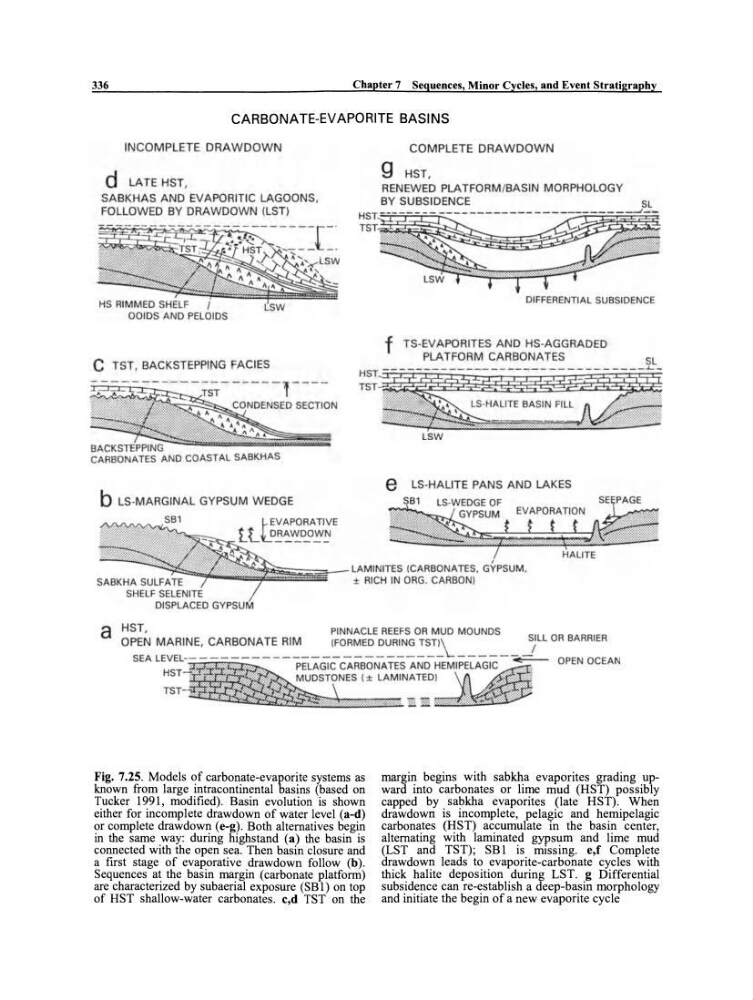
Fig. 7.25. Models of carbonate-evaporite systems as
known from large intracontinental basins (based on
Tucker 1991, modified). Basin evolution is shown
either for incomplete drawdown of water level (a-d)
or complete drawdown (e-g). Both alternatives begin
in the same way: during highstand (a) the basin is
connected with the open sea. Then basin c10sure and
a first stage of evaporative drawdown follow (b).
Sequences at the basin margin (carbonate platform)
are characterized by subaerial exposure (SB 1) on top
of HST shallow-water carbonates. c,d TST on the
margin begins with sabkha evaporites grading upward into carbonates or lime mud (HST) possibly
capped by sabkha evaporites (late HST). When
drawdown is incomplete, pelagic and hemipelagic
carbonates (HST) accumulate in the basin center,
alternating with laminated gypsum and lime mud
(LST and TST); SBI is missing. e,f Complete
drawdown leads to evaporite-carbonate cycles with
thiek halite deposition during LST. g Differential
subsidence can re-establish a deep-basin morphology
and initiate the begin of a new evaporite eyc1e
Chapter 7 Sequences, Minor Cycles, and Event Stratigraphy
CARBONA TE-EVAPORITE BASINS
INCOMPLETE DRAWDOWN
d LATE HST,
SABKHAS AND EVAPORITIC LAGOONS,
FOLLOWED BY DRAWDOWN (LSTl
~~-~--f2--~-------~=[=:
COMPLETE DRAWDOWN
9 HST,
RENEWED PLATFORM/BASIN MORPHOLOGY
BY SUBSIDENCE
OIFFERENTIAL SUBSIDENCE
f TS-EVAPORITES AND HS-AGGRADED
PLA TFORM CARBONATES
SL
C TST, BACKSTEPPING FACIES
HST------- ------------------------~ -
------- ------ ----- - ~ ---TST
I
;::i~~ ..... CqNIDEINSI:D SECTION
LS-HALITE BASIN FILL
BACKSTEPPING
CARBONATES AND COASTAL SABKHAS
b LS-MARGINAL GYPSUM WEDGE
e LS-HALITE PANS AND LAKES
SABKHA SULFATE
SHELF SELEN
OISPLACEO
~~~iii~--- LAMINITES (CARBONATES, G
i:ij
± RICH IN ORG . CARBON)
a HST,
PINNACLE REEFS OR MUD MOUNDS
OPEN MARINE, CARBONATE RIM
(FORMED DURING TST1\.
S)LL OR BARRIER
SEA LEVEL-- - - - - - - - - - PELAGIC CARBONÄ TES ANO - HEMIPELAGiC - ~ OPEN OCEAN
MUDSTONES (± LAMINATEDl
Fig. 7.25. Models of carbonate-evaporite systems as
known from large intracontinental basins (based on
Tucker 1991, modified). Basin evolution is shown
either for incomplete drawdown of water level (a-d)
or complete drawdown (e-g). Both alternatives begin
in the same way: during highstand (a) the basin is
connected with the open sea. Then basin c10sure and
a first stage of evaporative drawdown follow (b).
Sequences at the basin margin (carbonate platform)
are characterized by subaerial exposure (SB 1) on top
of HST shallow-water carbonates. c,d TST on the
margin begins with sabkha evaporites grading upward into carbonates or lime mud (HST) possibly
capped by sabkha evaporites (late HST). When
drawdown is incomplete, pelagic and hemipelagic
carbonates (HST) accumulate in the basin center,
alternating with laminated gypsum and lime mud
(LST and TST); SBI is missing. e,f Complete
drawdown leads to evaporite-carbonate cycles with
thiek halite deposition during LST. g Differential
subsidence can re-establish a deep-basin morphology
and initiate the begin of a new evaporite eyc1e