

312
Chapter 7 Sequences, Minor Cydes, and Event Stratigraphy
a
I
SUB,= O
(HINGE UNE) ,
,
COAST AL PLAIN '
( ± INCISED VALLEYS)
RAMP MARGIN,
DIFFERENTIAL
SUBSIDENCE
COASTUNE MIGRATION
I--------,,~ ---------+
(MINIMUM, DEPENDING ON SS)
SUB = 0
SUBII
11
111
b
IV
-~_ . _ . _._._. I_. - MFS _._._ ._ ._ . -
I
.I
I
r : 4~SS:S2r82: ~~~.: ~~:
DEEPENING t I
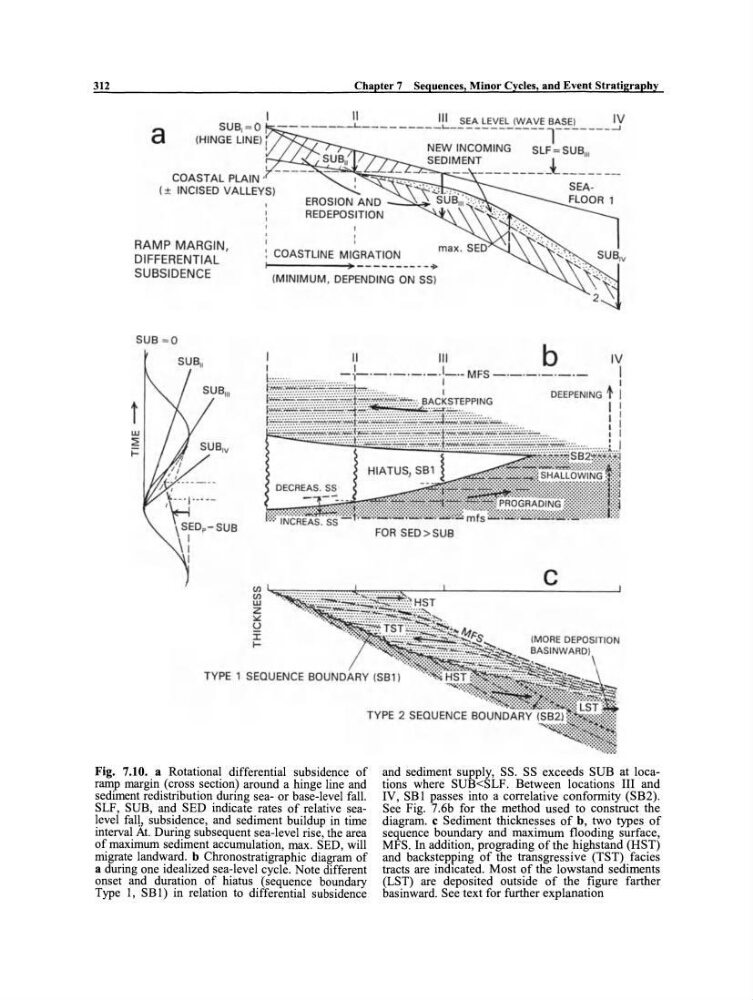
Fig. 7.10. a Rotational differential subsidence of
ramp margin (cross section) around a hinge line and
sediment redistribution during sea- or base-level fall.
SLF, SUB, and SED indicate rates of relative sealevel fall, subsidence, and sediment buildup in time
interval At. During subsequent sea-level rise, the area
of maximum sediment accumulation, max. SED, will
migrate landward. b Chronostratigraphic diagram of
a during one idealized sea-Ievel cyc1e. Note different
onset and duration of hiatus (sequence boundary
Type l, SB l) in relation to differential subsidence
HIATUS} SB1
FOR SED>SUB
I I
I I
I I
, I
I . .J
and sediment supply, SS. SS exceeds SUB at locations where SUB
See Fig. 7.6b for the method used to construct the
diagram. c Sediment thicknesses of b, two types of
sequence boundary and maximum flooding surface,
MFS. In addition, prograding ofthe highstand (HST)
and backstepping of the transgressive (TST) facies
tracts are indicated. Most of the lowstand sediments
(LST) are deposited outside of the figure farther
basinward. See text for further explanation
Chapter 7 Sequences, Minor Cydes, and Event Stratigraphy
a
I
SUB,= O
(HINGE UNE) ,
,
COAST AL PLAIN '
( ± INCISED VALLEYS)
RAMP MARGIN,
DIFFERENTIAL
SUBSIDENCE
COASTUNE MIGRATION
I--------,,~ ---------+
(MINIMUM, DEPENDING ON SS)
SUB = 0
SUBII
11
111
b
IV
-~_ . _ . _._._. I_. - MFS _._._ ._ ._ . -
I
.I
I
r : 4~SS:S2r82: ~~~.: ~~:
DEEPENING t I
Fig. 7.10. a Rotational differential subsidence of
ramp margin (cross section) around a hinge line and
sediment redistribution during sea- or base-level fall.
SLF, SUB, and SED indicate rates of relative sealevel fall, subsidence, and sediment buildup in time
interval At. During subsequent sea-level rise, the area
of maximum sediment accumulation, max. SED, will
migrate landward. b Chronostratigraphic diagram of
a during one idealized sea-Ievel cyc1e. Note different
onset and duration of hiatus (sequence boundary
Type l, SB l) in relation to differential subsidence
HIATUS} SB1
FOR SED>SUB
I I
I I
I I
, I
I . .J
and sediment supply, SS. SS exceeds SUB at locations where SUB
See Fig. 7.6b for the method used to construct the
diagram. c Sediment thicknesses of b, two types of
sequence boundary and maximum flooding surface,
MFS. In addition, prograding ofthe highstand (HST)
and backstepping of the transgressive (TST) facies
tracts are indicated. Most of the lowstand sediments
(LST) are deposited outside of the figure farther
basinward. See text for further explanation