

7.2 Basic Concepts
305
a SL VARIAI:lL~ (SL-CYCLES)
GAIN IN ACC
I
LOSS IN ACC
TIME~
CONSTANT)
b Sl!B VARIABLE (SUB-CYCLES)
(SS& SL = CONST ANT)
C SS VARIABLE (SS-CYCLES)
,
(SUB & SL = CONST ANT)
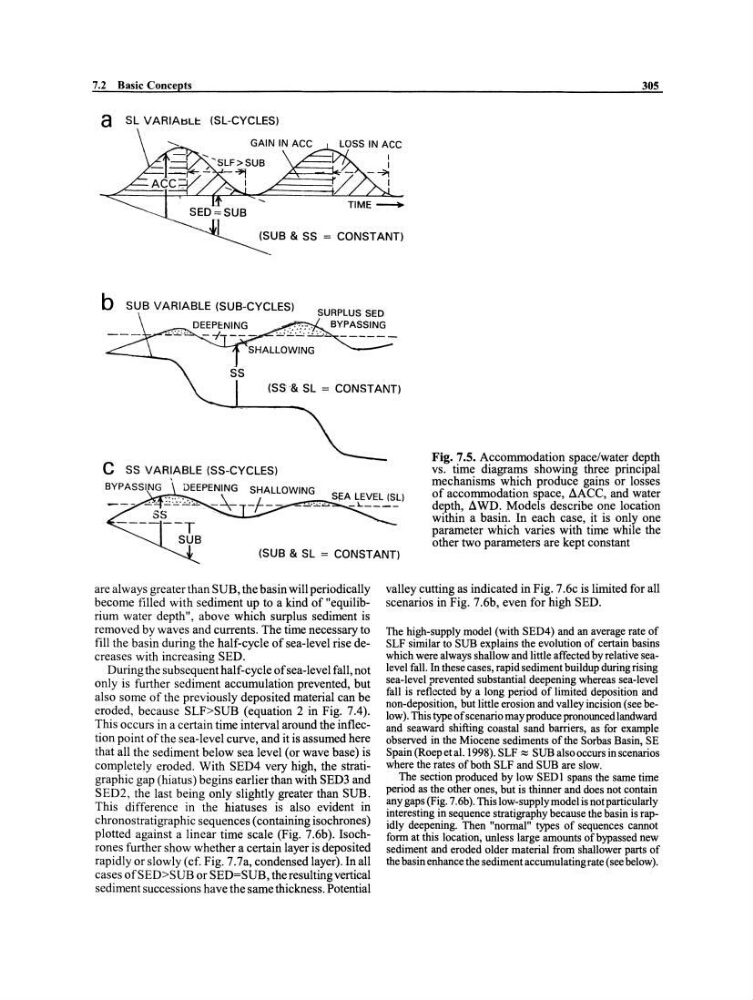
Fig. 7.5. Accommodation space/water depth
vs. time diagrams showing three principal
mechanisms which produce gains or losses
of accommodation space, LlACC, and water
depth, Ll WD. Models describe one location
within a basin. In each case, it is only one
parameter which varies with time while the
other two parameters are kept constant
are always greater than SUB, the basin will periodically
become filled with sediment up to a kind of "equilibrium water depth", above which surplus sediment is
removcd by waves and currents. The time necessary to
fill the basin during the half-cyc1e of sea-Ievel rise decreases with incrcasing SED.
During the subsequent half-cyc1e of sea-Ievel fall, not
only is further sediment accumulation prevented, but
also some of the previously deposited material can be
eroded, because SLF>SUB (equation 2 in Fig. 7.4).
This occurs in a certain time interval around the inflection point ofthe sea-Ievel curve, and it is assumed here
that all the sediment below sea level (or wave base) is
completely eroded. With SED4 very high, the stratigraphie gap (hiatus) begins earlier than with SED3 and
SED2, the last being only slightly greater than SUB.
This difference in the hiatuses is also evident in
chronostratigraphic sequences (containing isochrones)
plotted against a linear time scale (Fig. 7.6b). Isochrones further show wh ether a certain layer is deposited
rapidly or slowly (cf. Fig. 7.7a, condensed layer). In all
cases ofSED>SUB or SED=SUB, the resultingvertical
sediment successions have the same thickness. Potential
valley cutting as indicated in Fig. 7.6c is limited for all
scenarios in Fig. 7.6b, even for high SED.
The high-supply model (with SED4) and an average rate of
SLF similar to SUB explains the evolution of certain basins
which were always shallow and little affected by relative sealevel fall. In these cases, rapid sediment buildup during rising
sea-Ievel prevented substantial deepening whereas sea-Ievel
fall is reflccted by a long period of limited deposition and
non-deposition, but little erosion and valley incision (see below). This type of scenario mayproduce pronounced landward
and seaward shifting coastal sand barriers, as for example
observed in the Miocene sediments ofthe Sorbas Basin, SE
Spain (Roep et al. 1998). SLF ::::: SUB also occurs in scenarios
where the rates ofboth SLF and SUB are slow.
The section produced by low SED I spans the same time
period as the other ones, but is thinner and does not contain
any gaps (Fig. 7 .6b). This low-supply model is not particularly
interesting in sequence stratigraphy because the basin is rapidly deepening. Then "normal" types of sequences cannot
form at this location, unless large amounts ofbypassed new
sediment and eroded older material ftom shallower parts of
the basin enhance the sediment accumulating rate (see below).
305
a SL VARIAI:lL~ (SL-CYCLES)
GAIN IN ACC
I
LOSS IN ACC
TIME~
CONSTANT)
b Sl!B VARIABLE (SUB-CYCLES)
(SS& SL = CONST ANT)
C SS VARIABLE (SS-CYCLES)
,
(SUB & SL = CONST ANT)
Fig. 7.5. Accommodation space/water depth
vs. time diagrams showing three principal
mechanisms which produce gains or losses
of accommodation space, LlACC, and water
depth, Ll WD. Models describe one location
within a basin. In each case, it is only one
parameter which varies with time while the
other two parameters are kept constant
are always greater than SUB, the basin will periodically
become filled with sediment up to a kind of "equilibrium water depth", above which surplus sediment is
removcd by waves and currents. The time necessary to
fill the basin during the half-cyc1e of sea-Ievel rise decreases with incrcasing SED.
During the subsequent half-cyc1e of sea-Ievel fall, not
only is further sediment accumulation prevented, but
also some of the previously deposited material can be
eroded, because SLF>SUB (equation 2 in Fig. 7.4).
This occurs in a certain time interval around the inflection point ofthe sea-Ievel curve, and it is assumed here
that all the sediment below sea level (or wave base) is
completely eroded. With SED4 very high, the stratigraphie gap (hiatus) begins earlier than with SED3 and
SED2, the last being only slightly greater than SUB.
This difference in the hiatuses is also evident in
chronostratigraphic sequences (containing isochrones)
plotted against a linear time scale (Fig. 7.6b). Isochrones further show wh ether a certain layer is deposited
rapidly or slowly (cf. Fig. 7.7a, condensed layer). In all
cases ofSED>SUB or SED=SUB, the resultingvertical
sediment successions have the same thickness. Potential
valley cutting as indicated in Fig. 7.6c is limited for all
scenarios in Fig. 7.6b, even for high SED.
The high-supply model (with SED4) and an average rate of
SLF similar to SUB explains the evolution of certain basins
which were always shallow and little affected by relative sealevel fall. In these cases, rapid sediment buildup during rising
sea-Ievel prevented substantial deepening whereas sea-Ievel
fall is reflccted by a long period of limited deposition and
non-deposition, but little erosion and valley incision (see below). This type of scenario mayproduce pronounced landward
and seaward shifting coastal sand barriers, as for example
observed in the Miocene sediments ofthe Sorbas Basin, SE
Spain (Roep et al. 1998). SLF ::::: SUB also occurs in scenarios
where the rates ofboth SLF and SUB are slow.
The section produced by low SED I spans the same time
period as the other ones, but is thinner and does not contain
any gaps (Fig. 7 .6b). This low-supply model is not particularly
interesting in sequence stratigraphy because the basin is rapidly deepening. Then "normal" types of sequences cannot
form at this location, unless large amounts ofbypassed new
sediment and eroded older material ftom shallower parts of
the basin enhance the sediment accumulating rate (see below).