

7.1 General Characteristics of Cyclic Sediments
a
STOCHASTIC
"BEOOING"
TIME
3
2
o
"DEPO·
SITIONAL
NOISE"
RHYTHMtC BEDDING ~
b /
~ c
~ d
EVENT STRATI·
FICATION,
TIME (LINEAR)
3
2
-- 0
OISCYClIC.
EPISOOIC
(NON·PERIODlCl
AB 1 .; AB2 * AB3
INCREASING THiCKNESS
OF BEDOING COUPLETS
- OUE TO EXPANOEO
TIME PERIOO
(3 INSTEAO OF1),OR
TIME (LINEAR)
_ PERMANENTLY
~ B
HIGHER SE OlMEN·
_..1
TATION RATE (1 ),(2l!,.
=ATIME (LINEAR)
3
2
INCREASING
SEO. RATE,
TIME (NONLINEAR)
3
2
0 0 0
:!: ENHANCED BY ' - - - - - _ ~r- ______ ...../
DIAGCNETIC OVERv
PRINT ANO/OR
STRICTLY CYCLIC (PERIOOIC)
WEATHERING
TIME PFRIOD FOR AB = const.
NORMAL FIELD-SCALE CYCLES
e
f
9
SYMMETRIC
BUNOLES
A
C
B
A
B
C
B
A
GRAIN SIZE
CLAY,
CARBONATE
CONTENT, ETC.
COARSENFINING-UP
ING-l:lP
lIMITEO TRUNCATION
INCOMPLETE
CYCLES DUE TO
OEEP TRUNCATION
293
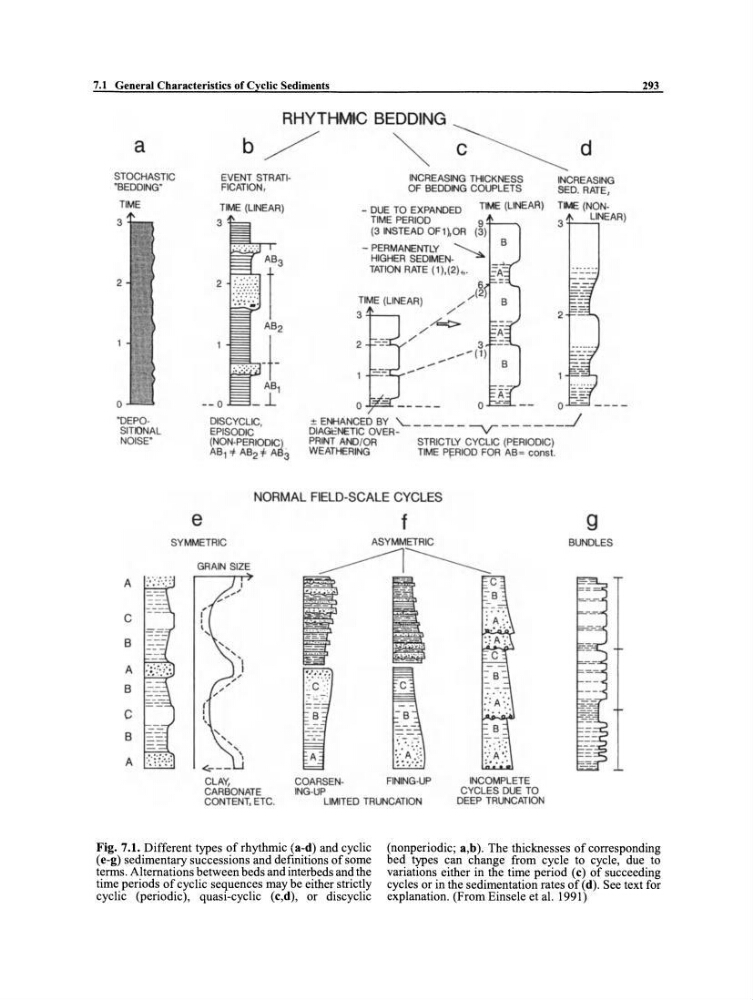
Fig. 7.1. Different types of rhythmic (a-d) and cyclic
(e-g) sedimentary successions and definitions of some
terms. Altemations between beds and interbeds and the
time periods of cyclic sequences may be either strict1y
cyclic (periodic), quasi-cyclic (c,d), or discyclic
(nonperiodic; a,b). The thicknesses of corresponding
bed types can change from cycle to cycle, due to
variations either in the time period (c) of succeeding
cycles or in the sedimentation rates of (d). See text for
explanation. (From Einseie et al. 1991)
a
STOCHASTIC
"BEOOING"
TIME
3
2
o
"DEPO·
SITIONAL
NOISE"
RHYTHMtC BEDDING ~
b /
~ c
~ d
EVENT STRATI·
FICATION,
TIME (LINEAR)
3
2
-- 0
OISCYClIC.
EPISOOIC
(NON·PERIODlCl
AB 1 .; AB2 * AB3
INCREASING THiCKNESS
OF BEDOING COUPLETS
- OUE TO EXPANOEO
TIME PERIOO
(3 INSTEAO OF1),OR
TIME (LINEAR)
_ PERMANENTLY
~ B
HIGHER SE OlMEN·
_..1
TATION RATE (1 ),(2l!,.
=ATIME (LINEAR)
3
2
INCREASING
SEO. RATE,
TIME (NONLINEAR)
3
2
0 0 0
:!: ENHANCED BY ' - - - - - _ ~r- ______ ...../
DIAGCNETIC OVERv
PRINT ANO/OR
STRICTLY CYCLIC (PERIOOIC)
WEATHERING
TIME PFRIOD FOR AB = const.
NORMAL FIELD-SCALE CYCLES
e
f
9
SYMMETRIC
BUNOLES
A
C
B
A
B
C
B
A
GRAIN SIZE
CLAY,
CARBONATE
CONTENT, ETC.
COARSENFINING-UP
ING-l:lP
lIMITEO TRUNCATION
INCOMPLETE
CYCLES DUE TO
OEEP TRUNCATION
293
Fig. 7.1. Different types of rhythmic (a-d) and cyclic
(e-g) sedimentary successions and definitions of some
terms. Altemations between beds and interbeds and the
time periods of cyclic sequences may be either strict1y
cyclic (periodic), quasi-cyclic (c,d), or discyclic
(nonperiodic; a,b). The thicknesses of corresponding
bed types can change from cycle to cycle, due to
variations either in the time period (c) of succeeding
cycles or in the sedimentation rates of (d). See text for
explanation. (From Einseie et al. 1991)