

266
Chapter 6 Special Depositional Environments
a
COASTAL SABKHA
EVAPORATIVE
CONTINENTAL
PUMPING
GROUND WATER
SALT PAN
GROUND WATER
WITH HAllTE
TABLE
:!: OTHER SALTS
--------\----:>
SUPRATIDAL ZONE ___ UPPER
/
~ /
/
LOWER
MIDDLE
/
~ DESICCATIDN
CRACKS
LAGOON
(:!:HYPER·
SALINE)
b
VALLE FILL
(POSSIBLE BRINE
REFLUX)
----. ....... ----..-,
NORMAL TIDAL RANGE
(INTERTIDAL ZONE)
c
1
Some
dm
1
INTERTIDAL
FACIES WITH
CHANNELS
SUBTIDAL F.
ALGAL MAT WITH
DESICCATION FEATURES
CRYSTAL MUSH OF .
GYPSUM AND CARBONATE
(PARTIALLY DOLOMITE)
LARGE GYPSUM
CRYSTALS
LAGOONAL MUD,
:!:BIOTURBATED
d
EOLIAN SAND (+STORM SAND)
LOCALLY SOME HAllTE
DOLOMITIC MUD.
USUALLY RED
ENTEROLITHIC ANHYDRITE
(CONTORTED EARUER·FORMED
GYPSUM)
• CHICKEN·WIRE • ANHYDRITE
(AFTER GYPSUM)
ALGAL MAT. DOLOMlTIC,
WITH GYPSUM CRYSTALS
LAGOONAL MUD (CARBONATE
AND SlliCICLASTICS)
CONTINENTAL FACIES
(LAGOONAL, :::;-I~~~B~~~~J~~
OOUTIC BARS)
SUPRATIDAL
FACIES WITH
EVAPORITES
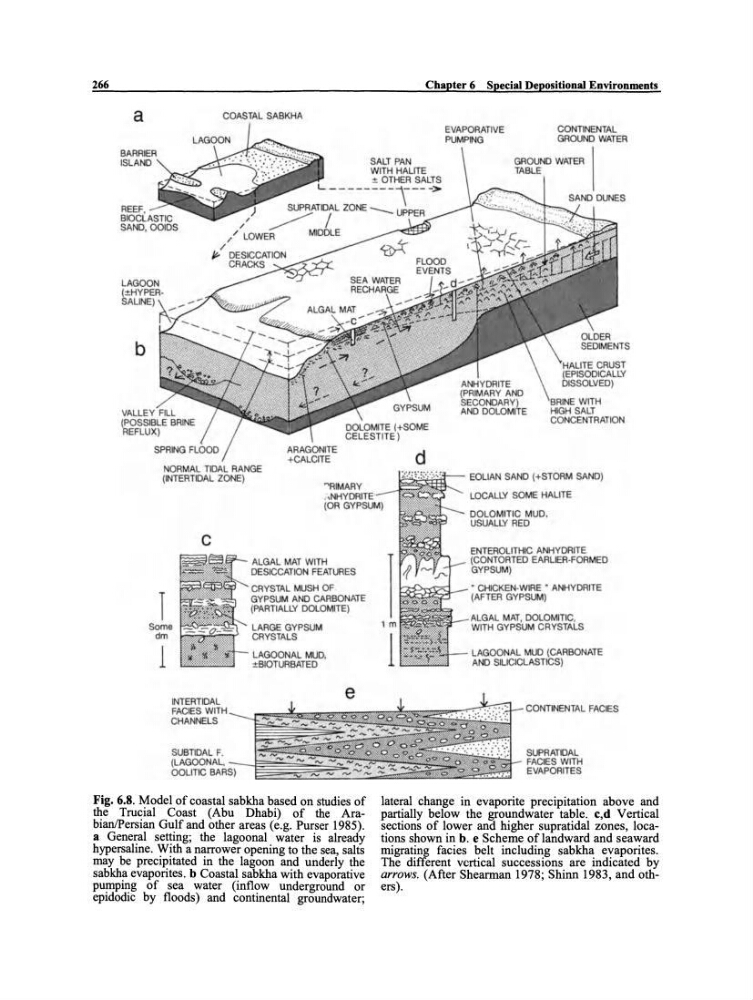
Fig. 6.8. Model of coastal sabkha based on studies of
the Trucial Coast (Abu Dhabi) of the ArabianlPersian Gulf and other areas (e.g. Purser 1985).
a General setting; the lagoonal water is already
hypersaline. With a narrower opening to the sea, salts
may be precipitated in the lagoon and underly the
sabkha evaporites. b Coastal sabkha with evaporative
pumping of sea water (inflow underground or
epidodic by floods) and continental groundwater;
lateral change in evaporite precipitation above and
partially be10w the groundwater table. c,d Vertical
sections of lower and higher supratidal zones, locations shown in b. e Scheme oflandward and seaward
migrating facies belt inc1uding sabkha evaporites.
The different vertical successions are indicated by
arrows. (After Shearman 1978; Shinn 1983, and others).
Chapter 6 Special Depositional Environments
a
COASTAL SABKHA
EVAPORATIVE
CONTINENTAL
PUMPING
GROUND WATER
SALT PAN
GROUND WATER
WITH HAllTE
TABLE
:!: OTHER SALTS
--------\----:>
SUPRATIDAL ZONE ___ UPPER
/
~ /
/
LOWER
MIDDLE
/
~ DESICCATIDN
CRACKS
LAGOON
(:!:HYPER·
SALINE)
b
VALLE FILL
(POSSIBLE BRINE
REFLUX)
----. ....... ----..-,
NORMAL TIDAL RANGE
(INTERTIDAL ZONE)
c
1
Some
dm
1
INTERTIDAL
FACIES WITH
CHANNELS
SUBTIDAL F.
ALGAL MAT WITH
DESICCATION FEATURES
CRYSTAL MUSH OF .
GYPSUM AND CARBONATE
(PARTIALLY DOLOMITE)
LARGE GYPSUM
CRYSTALS
LAGOONAL MUD,
:!:BIOTURBATED
d
EOLIAN SAND (+STORM SAND)
LOCALLY SOME HAllTE
DOLOMITIC MUD.
USUALLY RED
ENTEROLITHIC ANHYDRITE
(CONTORTED EARUER·FORMED
GYPSUM)
• CHICKEN·WIRE • ANHYDRITE
(AFTER GYPSUM)
ALGAL MAT. DOLOMlTIC,
WITH GYPSUM CRYSTALS
LAGOONAL MUD (CARBONATE
AND SlliCICLASTICS)
CONTINENTAL FACIES
(LAGOONAL, :::;-I~~~B~~~~J~~
OOUTIC BARS)
SUPRATIDAL
FACIES WITH
EVAPORITES
Fig. 6.8. Model of coastal sabkha based on studies of
the Trucial Coast (Abu Dhabi) of the ArabianlPersian Gulf and other areas (e.g. Purser 1985).
a General setting; the lagoonal water is already
hypersaline. With a narrower opening to the sea, salts
may be precipitated in the lagoon and underly the
sabkha evaporites. b Coastal sabkha with evaporative
pumping of sea water (inflow underground or
epidodic by floods) and continental groundwater;
lateral change in evaporite precipitation above and
partially be10w the groundwater table. c,d Vertical
sections of lower and higher supratidal zones, locations shown in b. e Scheme oflandward and seaward
migrating facies belt inc1uding sabkha evaporites.
The different vertical successions are indicated by
arrows. (After Shearman 1978; Shinn 1983, and others).