

264
Chapter 6 Special Depositional Environments
MIXED-SOURCE DEEP SAL T BASIN
GROUNDWATER
HIGHSTAND
a
(AFTER METEORIC RECHARGE)
. '.
\ .. -,;",/: :..--... ~ .
(SEA WATER OR HIGH ER
CONCENTRATED BRINE)
BASIN FILLED WITH
EVAPORITES
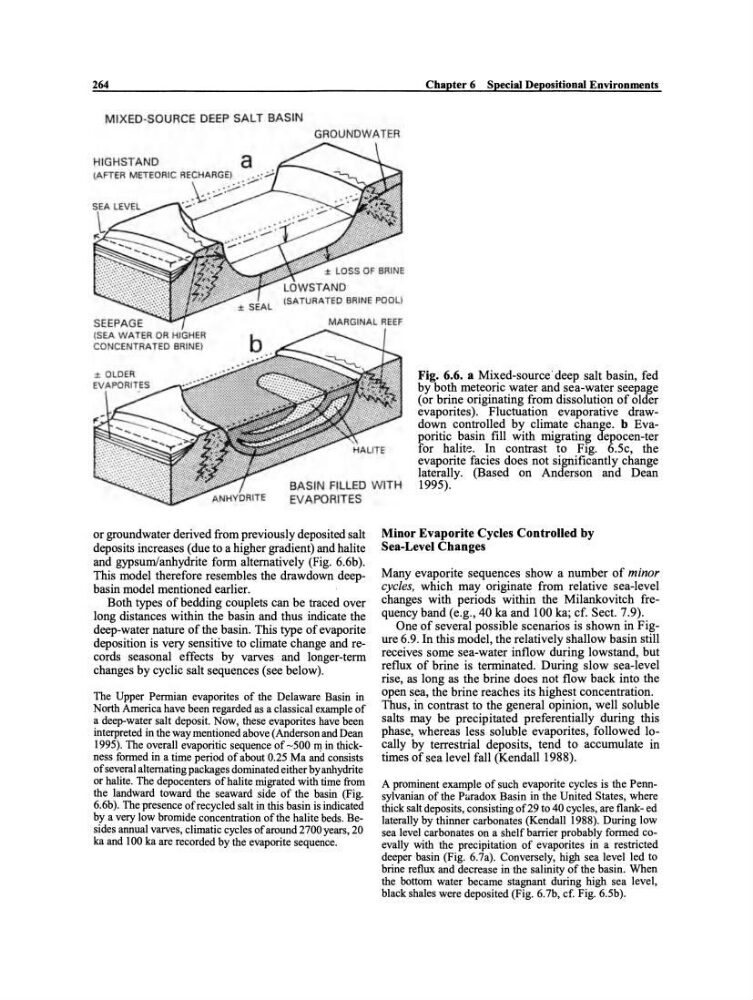
Fig. 6.6. a Mixed-source' deep salt basin, fed
by both meteoric water and sea-water seepage
(or brine originating from dissolution of older
evaporites). Fluctuation evaporative drawdown controlled by climate change. b Evaporitic basin fill with rnigrating depocen-ter
for halite. In contrast to Fig. 6.5c, the
evaporite facies does not significantly change
laterally. (Based on Anderson and Oean
1995).
or groundwater derived from previously deposited salt
deposits increases (due to a higher gradient) and halite
and gypsum/anhydrite form altematively (Fig. 6.6b).
This model therefore resembles the drawdown deepbasin model mentioned earlier.
Both types of bedding couplets can be traced over
long distances within the basin and thus indicate the
deep-water nature of the basin. This type of evaporite
deposition is very sensitive to climate change and records seasonal effects by varves and longer-term
changes by cyclic salt sequences (see below).
The Upper Pennian evaporites of the Delaware Basin in
North America have been regarded as a classical example of
a deep-water salt deposit. Now, these evaporites have been
interpreted in the way mentioned above (Anderson and Dean
1995). The overall evaporitic sequence of -500 min thickness fonned in a time period of about 0.25 Ma and consists
of several altemating packages dominated either byanhydrite
or halite. The depocenters ofhalite migrated with time from
the landward toward the seaward side of the basin (Fig.
6.6b). The presence ofrecycled salt in this basin is indicated
by a very low bromide concentration ofthe halite beds. Besides annual varves, climatic cycles of around 2700 years, 20
ka and 100 ka are recorded by the evaporite sequence.
Minor Evaporite Cycles Controlled by
Sea-Level Changes
Many evaporite sequences show a number of minor
cycles, which may originate from relative sea-level
changes with periods within the Milankovitch frequency band (e.g., 40 ka and 100 ka; cf. Sect. 7.9).
One of several possible scenarios is shown in Figure 6.9. In this model, the relatively shallow basin still
receives some sea-water inflow during lowstand, but
reflux of brine is terrninated. Ouring slow sea-level
rise, as long as the brine does not flow back into the
open sea, the brine reaches its highest concentration.
Thus, in contrast to the general opinion, weIl soluble
salts may be precipitated preferentially during this
phase, whereas less soluble evaporites, followed 10cally by terrestrial deposits, tend to accumulate in
times of sea level fall (Kendall 1988).
A prominent example of such evaporite cycles is the Pennsylvanian of the Paradox Basin in the Uni ted States, where
thick salt deposits, consisting of29 to 40 cycles, are flank- ed
laterally by thinner carbonates (Kendall 1988). During low
sea level carbonates on a shelf barrier probably formed coevally with the precipitation of evaporites in a restricted
deeper basin (Fig. 6.7a). Conversely, high sea level led to
brine reflux and decrease in the salinity of the basin. When
the bottom water became stagnant during high sea level,
black shales were deposited (Fig. 6.7b, cf. Fig. 6.5b).
Chapter 6 Special Depositional Environments
MIXED-SOURCE DEEP SAL T BASIN
GROUNDWATER
HIGHSTAND
a
(AFTER METEORIC RECHARGE)
. '.
\ .. -,;",/: :..--... ~ .
(SEA WATER OR HIGH ER
CONCENTRATED BRINE)
BASIN FILLED WITH
EVAPORITES
Fig. 6.6. a Mixed-source' deep salt basin, fed
by both meteoric water and sea-water seepage
(or brine originating from dissolution of older
evaporites). Fluctuation evaporative drawdown controlled by climate change. b Evaporitic basin fill with rnigrating depocen-ter
for halite. In contrast to Fig. 6.5c, the
evaporite facies does not significantly change
laterally. (Based on Anderson and Oean
1995).
or groundwater derived from previously deposited salt
deposits increases (due to a higher gradient) and halite
and gypsum/anhydrite form altematively (Fig. 6.6b).
This model therefore resembles the drawdown deepbasin model mentioned earlier.
Both types of bedding couplets can be traced over
long distances within the basin and thus indicate the
deep-water nature of the basin. This type of evaporite
deposition is very sensitive to climate change and records seasonal effects by varves and longer-term
changes by cyclic salt sequences (see below).
The Upper Pennian evaporites of the Delaware Basin in
North America have been regarded as a classical example of
a deep-water salt deposit. Now, these evaporites have been
interpreted in the way mentioned above (Anderson and Dean
1995). The overall evaporitic sequence of -500 min thickness fonned in a time period of about 0.25 Ma and consists
of several altemating packages dominated either byanhydrite
or halite. The depocenters ofhalite migrated with time from
the landward toward the seaward side of the basin (Fig.
6.6b). The presence ofrecycled salt in this basin is indicated
by a very low bromide concentration ofthe halite beds. Besides annual varves, climatic cycles of around 2700 years, 20
ka and 100 ka are recorded by the evaporite sequence.
Minor Evaporite Cycles Controlled by
Sea-Level Changes
Many evaporite sequences show a number of minor
cycles, which may originate from relative sea-level
changes with periods within the Milankovitch frequency band (e.g., 40 ka and 100 ka; cf. Sect. 7.9).
One of several possible scenarios is shown in Figure 6.9. In this model, the relatively shallow basin still
receives some sea-water inflow during lowstand, but
reflux of brine is terrninated. Ouring slow sea-level
rise, as long as the brine does not flow back into the
open sea, the brine reaches its highest concentration.
Thus, in contrast to the general opinion, weIl soluble
salts may be precipitated preferentially during this
phase, whereas less soluble evaporites, followed 10cally by terrestrial deposits, tend to accumulate in
times of sea level fall (Kendall 1988).
A prominent example of such evaporite cycles is the Pennsylvanian of the Paradox Basin in the Uni ted States, where
thick salt deposits, consisting of29 to 40 cycles, are flank- ed
laterally by thinner carbonates (Kendall 1988). During low
sea level carbonates on a shelf barrier probably formed coevally with the precipitation of evaporites in a restricted
deeper basin (Fig. 6.7a). Conversely, high sea level led to
brine reflux and decrease in the salinity of the basin. When
the bottom water became stagnant during high sea level,
black shales were deposited (Fig. 6.7b, cf. Fig. 6.5b).