

5.4 Gravity Mass Flow
233
a AMAZON DEEP-SEA FAN (MID-FAN REGION)
SAND SHEET (CHANNEl MOUTH, lOWER FAN lOBEI
E
W
MASS FlOW DEPOSIT
[500 m
~
MASS FlOW DEPOSIT
CAlCAREOUS MUD (lNTERGlAGIAl AND HOlOGENE) I
UPPER LEVEE COMPLEX
(90-10ka)
942
/ ---===~~-:::;:=~
MIDDLE lEVEE COMPLEX
/ _---.-~:.------t-(190-130 kat
LOWER LEVEE COMPLEX
BonOM LEVEE COMPLEX
1330-250 kat
(250-190 kaI
b CHANNEL CROSS SECTION
lOGAl SlUMPS AND DEBRIS FlOWS
GRAVI TY MASS FLOW DEPOSITS
(HOMOGENEOUS AND GHAOTIG SANDY MUD
WITH lARGE AND FOlDED MUD GlASTSI
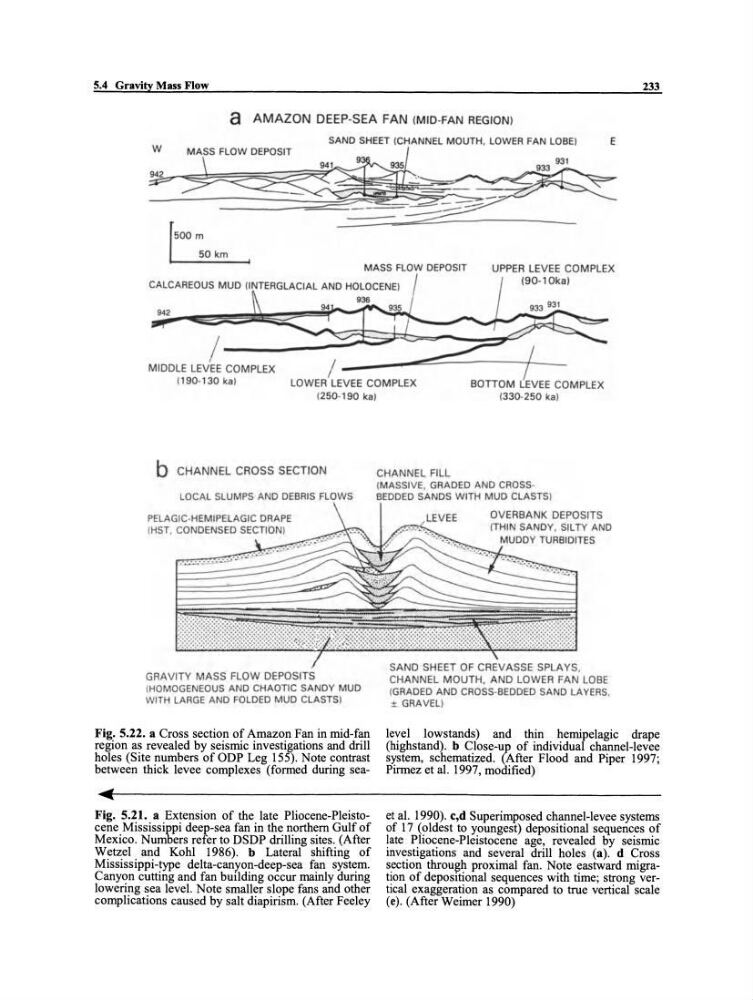
Fig. 5.22. a Cross seetion of Amazon Fan in mid-fan
region as revealed by seisrnic investigations and drill
holes (Site numbers of ODP Leg 155). Note contrast
between thick levee complexes (formed during seaFig. 5.21. a Extension of the late Pliocene-Pleistocene Mississippi deep-sea fan in the northem Gulf of
Mexico. Numbers refer to DSDP drilling sites. (After
Wetzel and Kohl 1986). b Lateral shifting of
Mississippi-type delta-canyon-deep-sea fan system.
Canyon cutting and fan building occur mainly during
lowering sea level. Note smaller slope fans and other
complications caused by salt diapirism. (After Feeley
CHANNEL FILl
(MASSIVE . GRADED AND GROSSBEDDED SANDS WITH MUD GLASTS)
OVERBANK DEPOSITS
(THIN SANDY, SllTY AND
MUDDY TURBIDITES
SAND SHEET OF CREVASSE SPLAYS,
CHANNEL MOUTH, AND LOWER FAN lOBE
(GRADED AND GROSS-BEDDED SAND l A VERS,
± GRAVEl)
level lowstands) and thin hernipelagic drape
(highstand). b Close-up of individual channel-levee
system, schernatized. (After Flood and Piper 1997;
Pirmez et al. 1997, modified)
et al. 1990). c,d Superimposed channel-levee systems
of 17 (oldest to youngest) depositional sequences of
late Pliocene-Pleistocene age, revealed by seisrnic
investigations and several drill holes (a). d Cross
section through proximal fan. Note eastward migration of depositional sequences with time; strong vertical exaggeration as compared to true vertical scale
(e). (After Weimer 1990)
233
a AMAZON DEEP-SEA FAN (MID-FAN REGION)
SAND SHEET (CHANNEl MOUTH, lOWER FAN lOBEI
E
W
MASS FlOW DEPOSIT
[500 m
~
MASS FlOW DEPOSIT
CAlCAREOUS MUD (lNTERGlAGIAl AND HOlOGENE) I
UPPER LEVEE COMPLEX
(90-10ka)
942
/ ---===~~-:::;:=~
MIDDLE lEVEE COMPLEX
/ _---.-~:.------t-(190-130 kat
LOWER LEVEE COMPLEX
BonOM LEVEE COMPLEX
1330-250 kat
(250-190 kaI
b CHANNEL CROSS SECTION
lOGAl SlUMPS AND DEBRIS FlOWS
GRAVI TY MASS FLOW DEPOSITS
(HOMOGENEOUS AND GHAOTIG SANDY MUD
WITH lARGE AND FOlDED MUD GlASTSI
Fig. 5.22. a Cross seetion of Amazon Fan in mid-fan
region as revealed by seisrnic investigations and drill
holes (Site numbers of ODP Leg 155). Note contrast
between thick levee complexes (formed during seaFig. 5.21. a Extension of the late Pliocene-Pleistocene Mississippi deep-sea fan in the northem Gulf of
Mexico. Numbers refer to DSDP drilling sites. (After
Wetzel and Kohl 1986). b Lateral shifting of
Mississippi-type delta-canyon-deep-sea fan system.
Canyon cutting and fan building occur mainly during
lowering sea level. Note smaller slope fans and other
complications caused by salt diapirism. (After Feeley
CHANNEL FILl
(MASSIVE . GRADED AND GROSSBEDDED SANDS WITH MUD GLASTS)
OVERBANK DEPOSITS
(THIN SANDY, SllTY AND
MUDDY TURBIDITES
SAND SHEET OF CREVASSE SPLAYS,
CHANNEL MOUTH, AND LOWER FAN lOBE
(GRADED AND GROSS-BEDDED SAND l A VERS,
± GRAVEl)
level lowstands) and thin hernipelagic drape
(highstand). b Close-up of individual channel-levee
system, schernatized. (After Flood and Piper 1997;
Pirmez et al. 1997, modified)
et al. 1990). c,d Superimposed channel-levee systems
of 17 (oldest to youngest) depositional sequences of
late Pliocene-Pleistocene age, revealed by seisrnic
investigations and several drill holes (a). d Cross
section through proximal fan. Note eastward migration of depositional sequences with time; strong vertical exaggeration as compared to true vertical scale
(e). (After Weimer 1990)