

224
Chapter 5 Oceanic Sediments
a
MUD TURBIDITES
DISTAL oE- - - - - - - - - - - - - - PROXIMAL
MUD FLOW
COMPLETELY
BIOTURBATED
b
"BIOGENIC GRADING"
( INCREASING CONTENT
bi
OF NANNOS, DIATOMS. ETC.) ,
gm
bi
1
Im
bi
L
A ..........
L
A
LUTITE ARENITE
d PELAGIC MUD TURBIDITES
T
1-5
dm
1
..
"- "PE
I
,
bi
TM(mv/ rn)
1
gm
T
gm
Im
A
r;',)
1·5
1-10
dm
m
10 m - -1
1
~
TS
L
A
C HE MI PELAGIC TO PELAGIC
MUD TURBIDITES
.."
RICH IN
BIOGENIC Si02
RICH IN CALCAREOUS
MICRO FOSSILS
REDEPOSITED
RICH IN ORGANIC
VOLCANIC ASH
MATTER (OM)
PE
bi INCREASE
PE
OM,
PE
TM
CLAY . bi
CHERT
'LAYERS
CHERT
TM
I IN NANNOS,
DECREASE
IN FORAMS
ALLOCHTM
TM
THONOUS
PE
bi
bi
TM
OM •.
+ BIOGENIC
PE
AUTOCH·
NODULES
i
INCREASE IN TM
BIOGENIC
CARBONATE
TM
'THONOUS
__ CARBONATE
(BLACK
SHALE)
OPAL
DISSOLVED
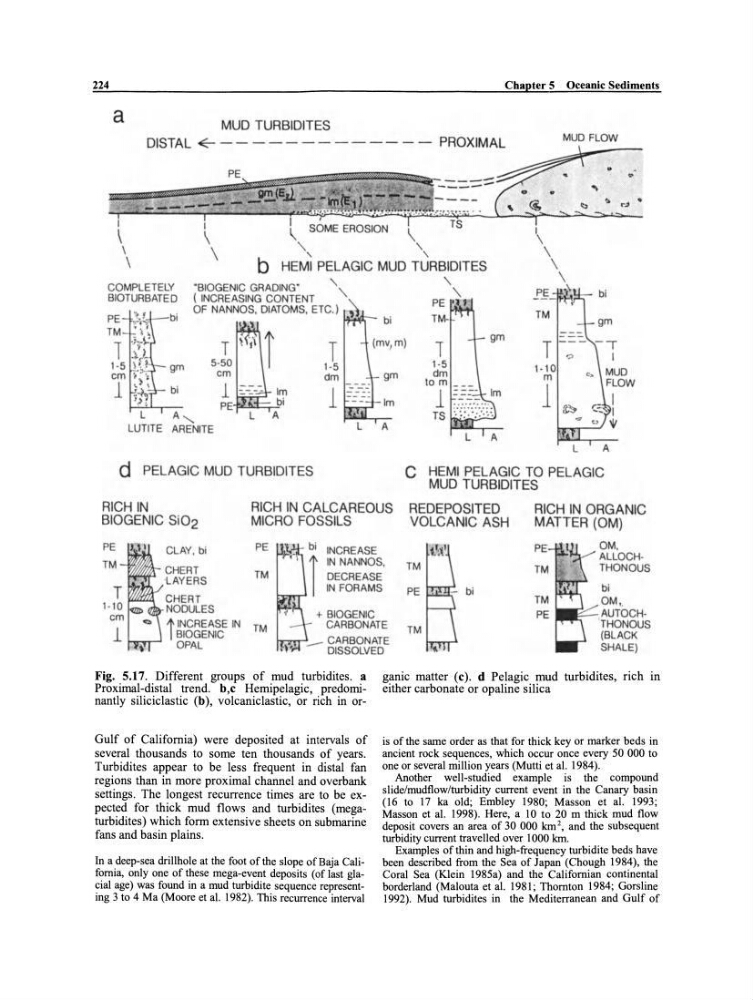
Fig. 5.17. Different groups of mud turbidites. a
Proximal-distal trend. b,e Hemipelagic, predominantly siliciclastic (b), volcaniclastic, or rich in orGulf of Califomia) were deposited at intervals of
several thousands to some ten thousands of years.
Turbidites appear to be less frequent in distal fan
regions than in more proximal channel and overbank
settings. The longest recurrence times are to be expected for thick mud flows and turbidites (megaturbidites) which form extensive sheets on submarine
fans and basin plains.
In a deep-sea drillhole at the foot of the slope of Baja Califomia, only one of these mega-event deposits (of last glacial age) was found in a mud turbidite sequence representing 3 to 4 Ma (Moore et al. 1982). This recurrence interval
ganic matter (e). d Pelagic mud turbidites, rich in
either carbonate or opaline silica
is of the same order as that for thick key or marker beds in
ancient rock sequences, which occur once every 50 000 to
one or several million years (Mutti et al. 1984).
Another well-studied example is the compound
slide/mudflow/turbidity current event in the Canary basin
(16 to 17 ka old; Embley 1980; Masson et al. 1993;
Masson et al. 1998). Here, a 10 to 20 m thick mud flow
deposit covers an area of 30000 km 2 , and the subsequent
turbidity current travelled over 1000 km.
Examples ofthin and high-frequency turbidite beds have
been described from the Sea of Japan (Chough 1984), the
Coral Sea (Klein 1985a) and the Califomian continental
borderland (Malouta et al. 1981; Thomton 1984; Gorsline
1992). Mud turbidites in the Mediterranean and Gulf of
Chapter 5 Oceanic Sediments
a
MUD TURBIDITES
DISTAL oE- - - - - - - - - - - - - - PROXIMAL
MUD FLOW
COMPLETELY
BIOTURBATED
b
"BIOGENIC GRADING"
( INCREASING CONTENT
bi
OF NANNOS, DIATOMS. ETC.) ,
gm
bi
1
Im
bi
L
A ..........
L
A
LUTITE ARENITE
d PELAGIC MUD TURBIDITES
T
1-5
dm
1
..
"- "PE
I
,
bi
TM(mv/ rn)
1
gm
T
gm
Im
A
r;',)
1·5
1-10
dm
m
10 m - -1
1
~
TS
L
A
C HE MI PELAGIC TO PELAGIC
MUD TURBIDITES
.."
RICH IN
BIOGENIC Si02
RICH IN CALCAREOUS
MICRO FOSSILS
REDEPOSITED
RICH IN ORGANIC
VOLCANIC ASH
MATTER (OM)
PE
bi INCREASE
PE
OM,
PE
TM
CLAY . bi
CHERT
'LAYERS
CHERT
TM
I IN NANNOS,
DECREASE
IN FORAMS
ALLOCHTM
TM
THONOUS
PE
bi
bi
TM
OM •.
+ BIOGENIC
PE
AUTOCH·
NODULES
i
INCREASE IN TM
BIOGENIC
CARBONATE
TM
'THONOUS
__ CARBONATE
(BLACK
SHALE)
OPAL
DISSOLVED
Fig. 5.17. Different groups of mud turbidites. a
Proximal-distal trend. b,e Hemipelagic, predominantly siliciclastic (b), volcaniclastic, or rich in orGulf of Califomia) were deposited at intervals of
several thousands to some ten thousands of years.
Turbidites appear to be less frequent in distal fan
regions than in more proximal channel and overbank
settings. The longest recurrence times are to be expected for thick mud flows and turbidites (megaturbidites) which form extensive sheets on submarine
fans and basin plains.
In a deep-sea drillhole at the foot of the slope of Baja Califomia, only one of these mega-event deposits (of last glacial age) was found in a mud turbidite sequence representing 3 to 4 Ma (Moore et al. 1982). This recurrence interval
ganic matter (e). d Pelagic mud turbidites, rich in
either carbonate or opaline silica
is of the same order as that for thick key or marker beds in
ancient rock sequences, which occur once every 50 000 to
one or several million years (Mutti et al. 1984).
Another well-studied example is the compound
slide/mudflow/turbidity current event in the Canary basin
(16 to 17 ka old; Embley 1980; Masson et al. 1993;
Masson et al. 1998). Here, a 10 to 20 m thick mud flow
deposit covers an area of 30000 km 2 , and the subsequent
turbidity current travelled over 1000 km.
Examples ofthin and high-frequency turbidite beds have
been described from the Sea of Japan (Chough 1984), the
Coral Sea (Klein 1985a) and the Califomian continental
borderland (Malouta et al. 1981; Thomton 1984; Gorsline
1992). Mud turbidites in the Mediterranean and Gulf of