

196
f
e
SUBSIDENCE
/
-CCD DROPPING
.--I
---... -...
-2 __ -:::,
-I
CARBONATE
PELAGIC
MARL TO
LIMESTONE,
SILICEOUS
TENDENCY
I
TO VARIATIONS
IN CARBONATE
CONTENT , ORG.
MATTER, ETC.
PELAGIC CLAY
PELAGIC MARL
(:!; SILICEOUS)
I
RELATIVE
SEDIMENTATION
RATE
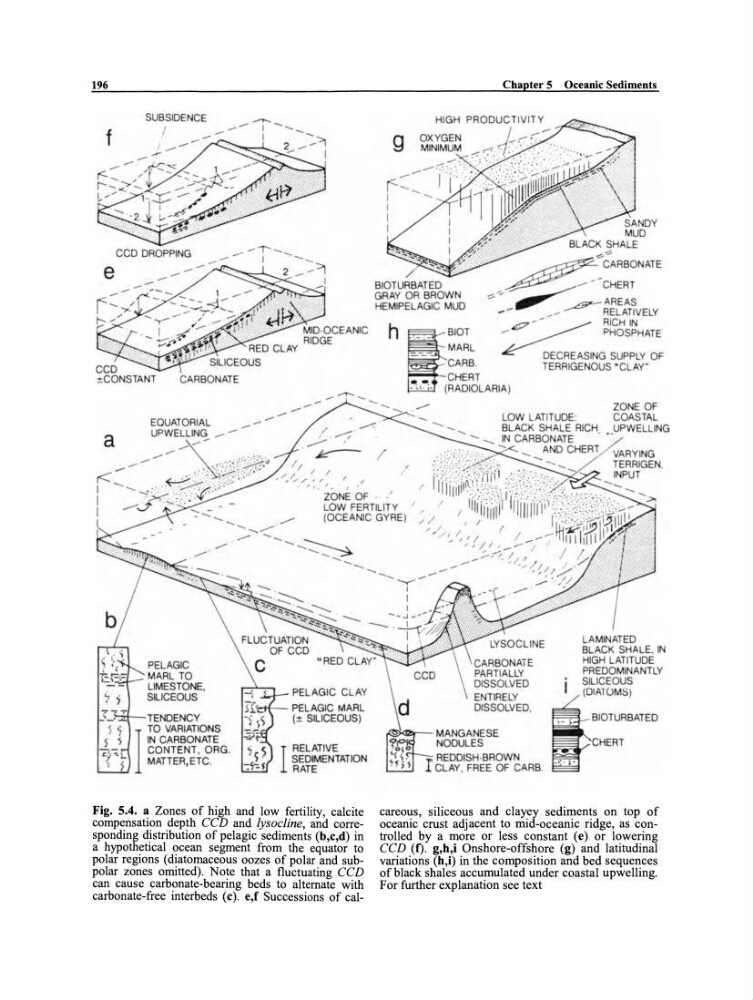
Fig. 5.4. a Zones of high and low fertility, calcite
compensation depth CCD and lysocline, and corresponding distribution of pelagic sediments (b,e,d) in
a hypothetical ocean segment from the equator to
polar regions (diatomaceous oozes of polar and subpolar zones ornitted). Note that a fluctuating CCD
can cause carbonate-bearing beds to alternate with
carbonate-free interbeds (e). e,f Successions of cal".- .=-__ - MARL
CARB.
e _
CHER T
Chapter 5 Oceanic Sediments
~ING SUPPLV OF
TERRIGENOUS ·CLAY ·
h I
BIOT
- " . '- (RADIOLARIA)
-
ZONE OF
LOW L ATI TUDE:
COASTAL
BL ACK SHALE RICH _ __ UPWELLING
.r.sD
REDDISH·BROWN
r CLAY , FREE OF CARB.
VARYING
L AMINATED
BLACK SHALE, IN
HIGH L ATITUDE
PREDOMINANTLY
,
SILICEOUS
I (DIATOMS)
t · - s BIOTURBATED
CHERT
-~ . icareous, siliceous and c1ayey sediments on top of
oceanic crost adjacent to mid-oceanic ridge, as controlled by a more or less constant (e) or lowering
CCD (f). g,h,i Onshore-offshore (g) and latitudinal
variations (h,i) in the composition and bed sequences
of black shales accumulated under coastal upwelling.
For further explanation see text
f
e
SUBSIDENCE
/
-CCD DROPPING
.--I
---... -...
-2 __ -:::,
-I
CARBONATE
PELAGIC
MARL TO
LIMESTONE,
SILICEOUS
TENDENCY
I
TO VARIATIONS
IN CARBONATE
CONTENT , ORG.
MATTER, ETC.
PELAGIC CLAY
PELAGIC MARL
(:!; SILICEOUS)
I
RELATIVE
SEDIMENTATION
RATE
Fig. 5.4. a Zones of high and low fertility, calcite
compensation depth CCD and lysocline, and corresponding distribution of pelagic sediments (b,e,d) in
a hypothetical ocean segment from the equator to
polar regions (diatomaceous oozes of polar and subpolar zones ornitted). Note that a fluctuating CCD
can cause carbonate-bearing beds to alternate with
carbonate-free interbeds (e). e,f Successions of cal".- .=-__ - MARL
CARB.
e _
CHER T
Chapter 5 Oceanic Sediments
~ING SUPPLV OF
TERRIGENOUS ·CLAY ·
h I
BIOT
- " . '- (RADIOLARIA)
-
ZONE OF
LOW L ATI TUDE:
COASTAL
BL ACK SHALE RICH _ __ UPWELLING
.r.sD
REDDISH·BROWN
r CLAY , FREE OF CARB.
VARYING
L AMINATED
BLACK SHALE, IN
HIGH L ATITUDE
PREDOMINANTLY
,
SILICEOUS
I (DIATOMS)
t · - s BIOTURBATED
CHERT
-~ . icareous, siliceous and c1ayey sediments on top of
oceanic crost adjacent to mid-oceanic ridge, as controlled by a more or less constant (e) or lowering
CCD (f). g,h,i Onshore-offshore (g) and latitudinal
variations (h,i) in the composition and bed sequences
of black shales accumulated under coastal upwelling.
For further explanation see text