

186
Chapter 5 Oceanic Sediments
a
SAUNITY (1cool
10
20
30
40
FREEZING POINT 90% OF
TEMPERATURE
OCEAN
OF MAXIMUM DENSITY
NORTHERN HEMISPHERE
COASTAL DOWNWELLING
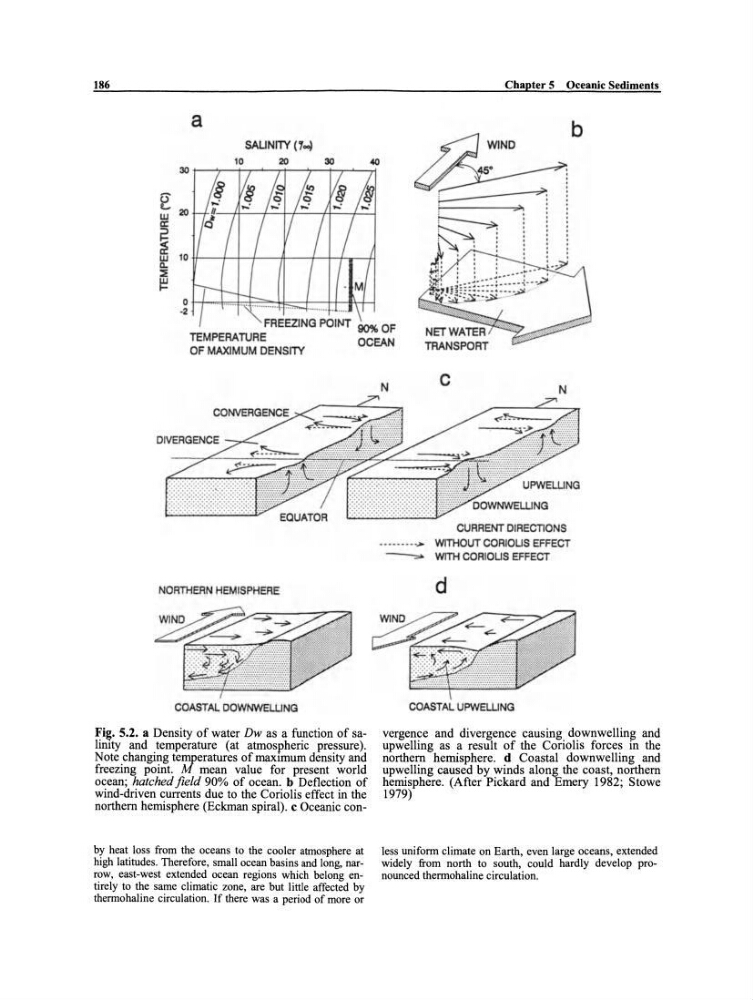
Fig. 5.2. a Density of water Dw as a function of salimty and temperature (at atmospheric pressure).
Note changing temperatures of maximum density and
freezing point. M mean value for present world
ocean; hatched field 90% of ocean. b Deflection of
wind-driven currents due to the Coriolis effect in the
northem hernisphere (Eckman spiral). c Oceanic conby heat loss from the oceans to the cooler atmosphere at
high latitudes. Therefore, small ocean basins and long, narrow, east-west extended ocean regions which belong entirely to the same clirnatic zone, are but little affected by
thennohaline circulation. If there was aperiod of more or
N
••••••••• ,>
---==c
CURRENT DIRECnONS
WlTHOUT CORIOUS EFFECT
WITH CORIOUS EFFECT
d
COASTAL UPWELLING
vergence and divergence causing downwelling and
upwelling as a result of the Coriolis forces in the
northem hemisphere. d Coastal downwelling and
upwelling caused by winds along the coast, northem
hernisphere. (After Pickard and Emery 1982; Stowe
1979)
less unifonn climate on Earth, even large oceans, extended
widely from north to south, could hardly develop pronounced thennohaline circulation.
Chapter 5 Oceanic Sediments
a
SAUNITY (1cool
10
20
30
40
FREEZING POINT 90% OF
TEMPERATURE
OCEAN
OF MAXIMUM DENSITY
NORTHERN HEMISPHERE
COASTAL DOWNWELLING
Fig. 5.2. a Density of water Dw as a function of salimty and temperature (at atmospheric pressure).
Note changing temperatures of maximum density and
freezing point. M mean value for present world
ocean; hatched field 90% of ocean. b Deflection of
wind-driven currents due to the Coriolis effect in the
northem hernisphere (Eckman spiral). c Oceanic conby heat loss from the oceans to the cooler atmosphere at
high latitudes. Therefore, small ocean basins and long, narrow, east-west extended ocean regions which belong entirely to the same clirnatic zone, are but little affected by
thennohaline circulation. If there was aperiod of more or
N
••••••••• ,>
---==c
CURRENT DIRECnONS
WlTHOUT CORIOUS EFFECT
WITH CORIOUS EFFECT
d
COASTAL UPWELLING
vergence and divergence causing downwelling and
upwelling as a result of the Coriolis forces in the
northem hemisphere. d Coastal downwelling and
upwelling caused by winds along the coast, northem
hernisphere. (After Pickard and Emery 1982; Stowe
1979)
less unifonn climate on Earth, even large oceans, extended
widely from north to south, could hardly develop pronounced thennohaline circulation.