

162
CONSTRUCTION OF
INDIVIDUAL DELTA
LOBES
Chapter 3 Coastal and Shallow Sea Sediments
2
DISTRIBUTARY CHANNEL
MOUTH BAR SANDS
CREVASSE SPLAY
SANDS AND SILTS
TRANSGRESSIVE
SANDS (REWORKED,
PARTIALLY SHELL
BEDS, MIXED FAUNA)
MUDS OF PROTECTED
BAYS, LAGOONS,
LAKES, MuD FLATS,
MARSH (VARYING FAUNA,
PARTIALLY PEAT)
MARINE SILTS
AND CLAYS (DELTA
FRONT, PRODELTA,
AND OLDER SHELF
SEDIMENTS)
TRUNCATED
MOUTH BAR AND
DELTA FRONT SANDS
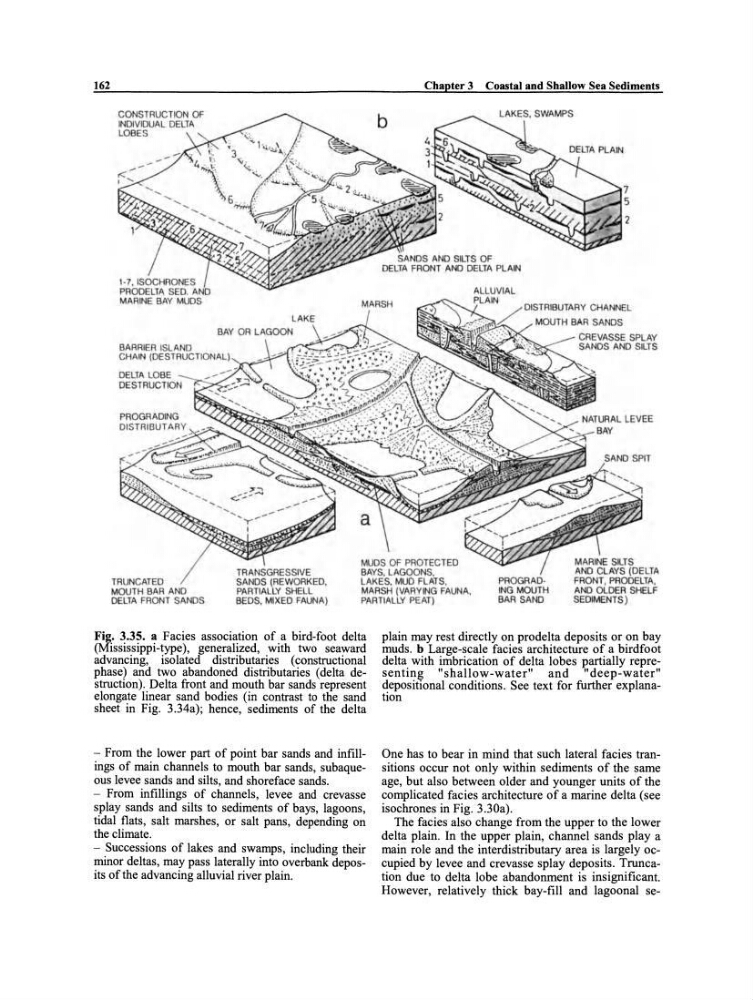
Fig. 3.35. a Facies association of a bird-foot delta
(Mississippi-type), generalized, with two seaward
advancing, isolated distributaries (constructional
phase) and two abandoned distributaries (delta destruction). Delta front and mouth bar sands represent
elongate linear sand bodies (in contrast to the sand
sheet in Fig. 3.34a); hence, sediments of the delta
- From the lower part of point bar sands and infillings of main channels to mouth bar sands, subaqueous levee sands and silts, and shoreface sands.
- From infillings of channels, levee and crevasse
splay sands and silts to sediments of bays, lagoons,
tidal flats, salt marshes, or salt pans, depending on
the climate.
- Successions of lakes and swamps, including their
minor deltas, may pass laterally into overbank deposits of the advancing alluvial river plain.
plain may rest directly on pro delta deposits or on bay
muds. b Large-scale facies architecture of a birdfoot
delta with imbrication of delta lobes partially representing "shallow-water" and "deep-water"
depositional conditions. See text for further explanation
One has to bear in mind that such lateral facies transitions occur not only within sediments of the same
age, but also between older and younger units of the
complicated facies architecture of a marine delta (see
isochrones in Fig. 3.30a).
The facies also change from the upper to the lower
delta plain. In the upper plain, channel sands playa
main role and the interdistributary area is largely occupied by levee and crevasse splay deposits. Truncation due to delta lobe abandonment is insignificant.
However, relatively thick bay-fill and lagoonal se-
CONSTRUCTION OF
INDIVIDUAL DELTA
LOBES
Chapter 3 Coastal and Shallow Sea Sediments
2
DISTRIBUTARY CHANNEL
MOUTH BAR SANDS
CREVASSE SPLAY
SANDS AND SILTS
TRANSGRESSIVE
SANDS (REWORKED,
PARTIALLY SHELL
BEDS, MIXED FAUNA)
MUDS OF PROTECTED
BAYS, LAGOONS,
LAKES, MuD FLATS,
MARSH (VARYING FAUNA,
PARTIALLY PEAT)
MARINE SILTS
AND CLAYS (DELTA
FRONT, PRODELTA,
AND OLDER SHELF
SEDIMENTS)
TRUNCATED
MOUTH BAR AND
DELTA FRONT SANDS
Fig. 3.35. a Facies association of a bird-foot delta
(Mississippi-type), generalized, with two seaward
advancing, isolated distributaries (constructional
phase) and two abandoned distributaries (delta destruction). Delta front and mouth bar sands represent
elongate linear sand bodies (in contrast to the sand
sheet in Fig. 3.34a); hence, sediments of the delta
- From the lower part of point bar sands and infillings of main channels to mouth bar sands, subaqueous levee sands and silts, and shoreface sands.
- From infillings of channels, levee and crevasse
splay sands and silts to sediments of bays, lagoons,
tidal flats, salt marshes, or salt pans, depending on
the climate.
- Successions of lakes and swamps, including their
minor deltas, may pass laterally into overbank deposits of the advancing alluvial river plain.
plain may rest directly on pro delta deposits or on bay
muds. b Large-scale facies architecture of a birdfoot
delta with imbrication of delta lobes partially representing "shallow-water" and "deep-water"
depositional conditions. See text for further explanation
One has to bear in mind that such lateral facies transitions occur not only within sediments of the same
age, but also between older and younger units of the
complicated facies architecture of a marine delta (see
isochrones in Fig. 3.30a).
The facies also change from the upper to the lower
delta plain. In the upper plain, channel sands playa
main role and the interdistributary area is largely occupied by levee and crevasse splay deposits. Truncation due to delta lobe abandonment is insignificant.
However, relatively thick bay-fill and lagoonal se-