

146
Chapter 3 Coastal and Shallow Sea Sediments
a
Y ANGTZE PLA TFORM
PLATFORM MARGIN
BASIN CROSS-SECTION
LATEST PERMIAN/EARL Y TRIASSIC)
OEEPER
BASIN
\
BASIN EVOLVING FROM
DROWNING OF FORMER PLATFORM
,
b
SKELETAL· PELOIDAL
PACKST.-GRAINST.,
HIGH-RELIEF
ESCARPMENT
STAGE
AGGRADING .
REEF-RIMMED
STAGE
CRYPT ALGAL LAMINITE
LOW-RELIEF
BANK STAGE
MAINLY SKELETAL PACKST. TO GAAINST.,
OA SlliCEOUS LUTITE , SOME PATCH AEEFS
GREAT BANK OF GIUZHOU
OÜLlTE
c
LATEMAR BUILDUP
L
AVALANCHE AND ROCK FALL
1 km
(- 50 % OF BUILDUP VOLUME)
1 km
_ /
· ~a&~I' !!!mi~~~,-GRAVITY
FLÜWS
MUD-RICH , UPWARD
STEEPENING SLOPES
VOMUME OF MARGIN SEDIMENTS
-10 % OF TOTAL BUILDUP
MUD-POOR, ANGLE -
OF· REPOSE SLOPE
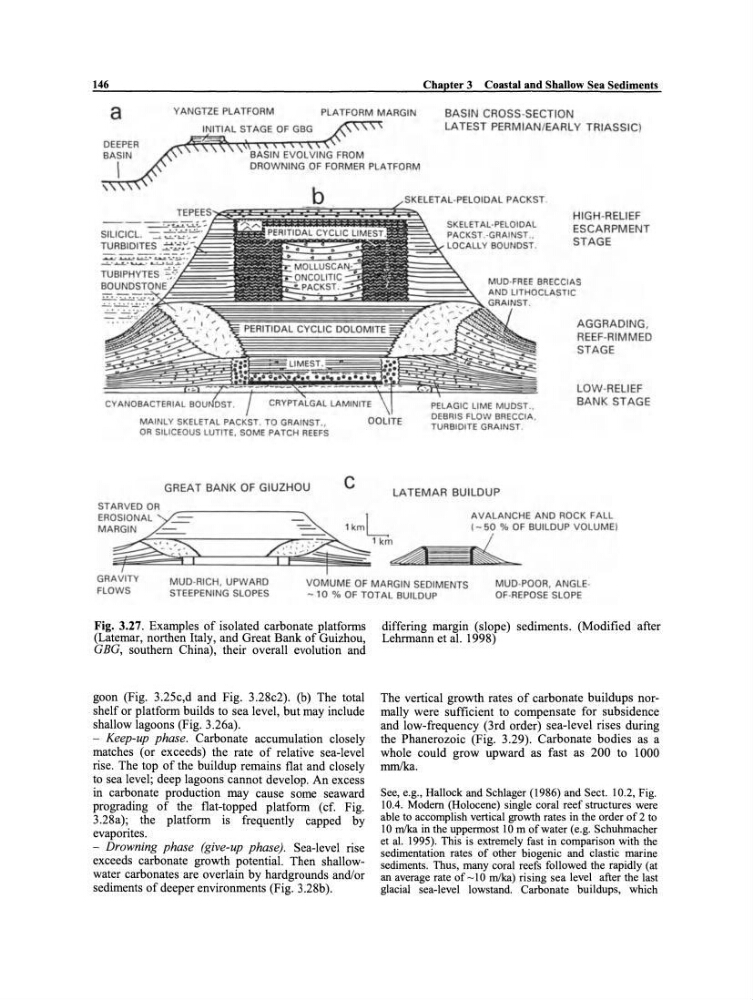
Fig. 3.27. Examples of isolated carbonate platforms
(Latemar, northen Italy, and Great Bank of Guizhou,
GBG, southem China), their overall evolution and
goon (Fig. 3.25c,d and Fig. 3.28c2). (b) The total
shelf or platform builds to sea level, but may include
shallow lagoons (Fig. 3.26a).
- Keep-up phase. Carbonate accumulation closely
matches (or exceeds) the rate of relative sea-level
rise. The top of the buildup remains flat and closely
to sea level; deep lagoons cannot develop. An excess
in carbonate production may cause some seaward
prograding of the flat-topped platform (cf. Fig.
3.28a); the platform is frequently capped by
evaporites.
- Drowning phase (give-up phase). Sea-level rise
exceeds carbonate growth potential. Then shallowwater carbonates are overlain by hardgrounds andJor
sediments of deeper environments (Fig. 3.28b).
differing margin (slope) sediments. (Modified after
Lehrmann et al. 1998)
The vertical growth rates of carbonate buildups normally were sufficient to compensate for subsidence
and low-frequency (3rd order) sea-level rises during
the Phanerozoic (Fig. 3.29). Carbonate bodies as a
whole could grow upward as fast as 200 to 1000
nun/ka.
See, e.g., Hallock and Schlager (1986) and Sect. 10.2, Fig.
10.4. Modern (Holocene) single cora1 reef structures were
ab1e to accomplish vertical growth rates in the order of 2 to
10 mika in the uppermost 10 m ofwater (e.g. Schuhmacher
et al. 1995). This is extreme1y fast in comparison with the
sedimentation rates of other biogenic and c1astic marine
sediments. Thus, many cora1 reefs followed the rapid1y (at
an average rate of ~ 1 0 mlka) rising sea level after the last
glacial sea-1evel lowstand. Carbonate buildups, which
Chapter 3 Coastal and Shallow Sea Sediments
a
Y ANGTZE PLA TFORM
PLATFORM MARGIN
BASIN CROSS-SECTION
LATEST PERMIAN/EARL Y TRIASSIC)
OEEPER
BASIN
\
BASIN EVOLVING FROM
DROWNING OF FORMER PLATFORM
,
b
SKELETAL· PELOIDAL
PACKST.-GRAINST.,
HIGH-RELIEF
ESCARPMENT
STAGE
AGGRADING .
REEF-RIMMED
STAGE
CRYPT ALGAL LAMINITE
LOW-RELIEF
BANK STAGE
MAINLY SKELETAL PACKST. TO GAAINST.,
OA SlliCEOUS LUTITE , SOME PATCH AEEFS
GREAT BANK OF GIUZHOU
OÜLlTE
c
LATEMAR BUILDUP
L
AVALANCHE AND ROCK FALL
1 km
(- 50 % OF BUILDUP VOLUME)
1 km
_ /
· ~a&~I' !!!mi~~~,-GRAVITY
FLÜWS
MUD-RICH , UPWARD
STEEPENING SLOPES
VOMUME OF MARGIN SEDIMENTS
-10 % OF TOTAL BUILDUP
MUD-POOR, ANGLE -
OF· REPOSE SLOPE
Fig. 3.27. Examples of isolated carbonate platforms
(Latemar, northen Italy, and Great Bank of Guizhou,
GBG, southem China), their overall evolution and
goon (Fig. 3.25c,d and Fig. 3.28c2). (b) The total
shelf or platform builds to sea level, but may include
shallow lagoons (Fig. 3.26a).
- Keep-up phase. Carbonate accumulation closely
matches (or exceeds) the rate of relative sea-level
rise. The top of the buildup remains flat and closely
to sea level; deep lagoons cannot develop. An excess
in carbonate production may cause some seaward
prograding of the flat-topped platform (cf. Fig.
3.28a); the platform is frequently capped by
evaporites.
- Drowning phase (give-up phase). Sea-level rise
exceeds carbonate growth potential. Then shallowwater carbonates are overlain by hardgrounds andJor
sediments of deeper environments (Fig. 3.28b).
differing margin (slope) sediments. (Modified after
Lehrmann et al. 1998)
The vertical growth rates of carbonate buildups normally were sufficient to compensate for subsidence
and low-frequency (3rd order) sea-level rises during
the Phanerozoic (Fig. 3.29). Carbonate bodies as a
whole could grow upward as fast as 200 to 1000
nun/ka.
See, e.g., Hallock and Schlager (1986) and Sect. 10.2, Fig.
10.4. Modern (Holocene) single cora1 reef structures were
ab1e to accomplish vertical growth rates in the order of 2 to
10 mika in the uppermost 10 m ofwater (e.g. Schuhmacher
et al. 1995). This is extreme1y fast in comparison with the
sedimentation rates of other biogenic and c1astic marine
sediments. Thus, many cora1 reefs followed the rapid1y (at
an average rate of ~ 1 0 mlka) rising sea level after the last
glacial sea-1evel lowstand. Carbonate buildups, which