

3.4 Carbonates
139
INNER RAMP
a
OUT ER RAMP
SHALLOW RAMP
BUILDUPS.
OOUTIC AND
PELOID SANDS
LAGOONAL AND TIDAL FLAT
CARBONATES (LOCAL COAL
SEA MS OR EVAPOR ITES)
-LlME MUD
OR MARL.
INTENSELY
BIOTURBATED
b
CALCARENITE
SHEETS. TE MPESTITES
OR MUDDY SKEL ETAL
U MESTONE.
BIOTURBATED
RAMP (1) TO SHELF (3 )
EVOLUTION
GRAVITY MASS
FLOW DEPOS ITS
TALUS FROM REEF
STRUCTURES
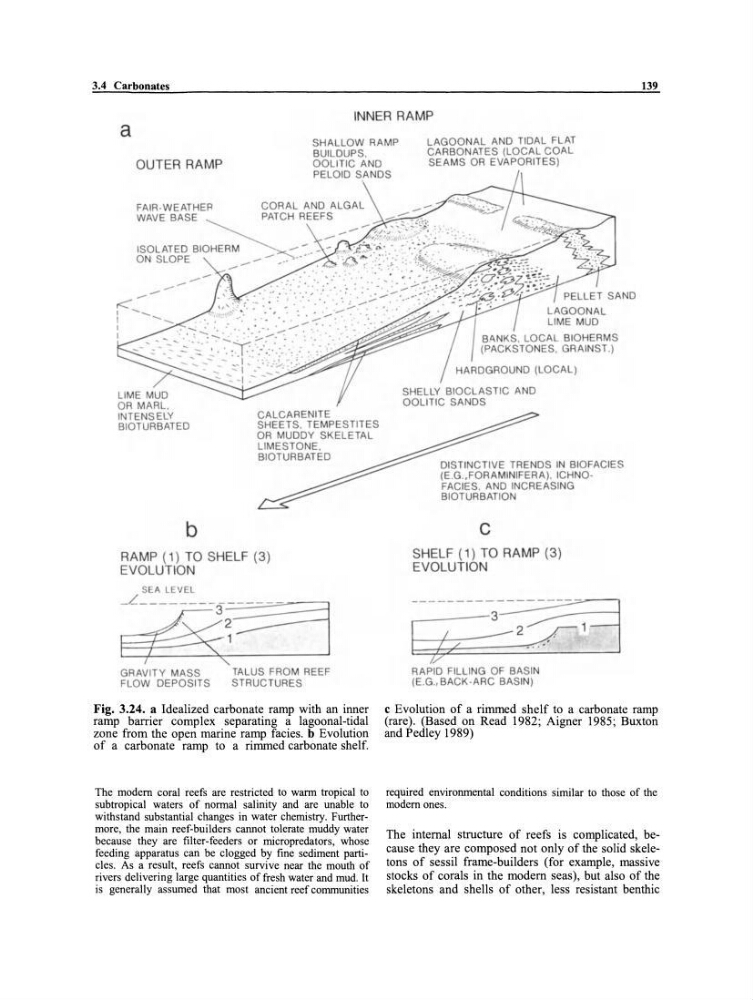
Fig. 3.24. a Idealized carbonate ramp with an inner
ramp barrier complex separating a lagoonal-tidal
zone from the open marine ramp facies. b Evolution
of a carbonate ramp to a rimmed carbonate shelf.
The modem coral reefs are restricted to warm tropical to
subtropical waters of normal salinity and are unable to
withstand substantial changes in water chemistry. Furthermore, the main reef-builders cannot tolerate muddy water
because they are filter-feeders or micropredators, whose
feeding apparatus can be clogged by fine sediment particles. As a result, reefs cannot survive near the mouth of
rivers delivering large quantities offresh water and mud. It
is generally assumed that most ancient reef communities
PELLET SAND
LAGOONAL
!
UME MUD
BANKS. LOCAL BIOHERMS
(PACKSTONES, GRAINST .)
HARDGROUND (LOCAL )
SHELLY BIOCLASTIC AND
OOLITIC SANDS
DISTINCTIVE TRENDS IN BIOFACIES
(E .G .• FORAMINIF ERA) . ICHNO ·
FACIES . AND INCREASING
BIOTURBATION
C
SHELF (1) TO RAMP (3)
EVOLUTION
RAPID FILLING OF BASIN
(E .G .• BACK · ARC BASIN)
c Evolution of a rimmed shelf to a carbonate ramp
(rare). (Based on Read 1982; Aigner 1985; Buxton
and Pedley 1989)
required environmental conditions similar to those of the
modem ones.
The internal structure of reefs is complicated, because they are composed not only of the solid skeletons of sessil frame-builders (for example, massive
stocks of corals in the modem seas), but also of the
skeletons and shells of other, less resistant benthic
139
INNER RAMP
a
OUT ER RAMP
SHALLOW RAMP
BUILDUPS.
OOUTIC AND
PELOID SANDS
LAGOONAL AND TIDAL FLAT
CARBONATES (LOCAL COAL
SEA MS OR EVAPOR ITES)
-LlME MUD
OR MARL.
INTENSELY
BIOTURBATED
b
CALCARENITE
SHEETS. TE MPESTITES
OR MUDDY SKEL ETAL
U MESTONE.
BIOTURBATED
RAMP (1) TO SHELF (3 )
EVOLUTION
GRAVITY MASS
FLOW DEPOS ITS
TALUS FROM REEF
STRUCTURES
Fig. 3.24. a Idealized carbonate ramp with an inner
ramp barrier complex separating a lagoonal-tidal
zone from the open marine ramp facies. b Evolution
of a carbonate ramp to a rimmed carbonate shelf.
The modem coral reefs are restricted to warm tropical to
subtropical waters of normal salinity and are unable to
withstand substantial changes in water chemistry. Furthermore, the main reef-builders cannot tolerate muddy water
because they are filter-feeders or micropredators, whose
feeding apparatus can be clogged by fine sediment particles. As a result, reefs cannot survive near the mouth of
rivers delivering large quantities offresh water and mud. It
is generally assumed that most ancient reef communities
PELLET SAND
LAGOONAL
!
UME MUD
BANKS. LOCAL BIOHERMS
(PACKSTONES, GRAINST .)
HARDGROUND (LOCAL )
SHELLY BIOCLASTIC AND
OOLITIC SANDS
DISTINCTIVE TRENDS IN BIOFACIES
(E .G .• FORAMINIF ERA) . ICHNO ·
FACIES . AND INCREASING
BIOTURBATION
C
SHELF (1) TO RAMP (3)
EVOLUTION
RAPID FILLING OF BASIN
(E .G .• BACK · ARC BASIN)
c Evolution of a rimmed shelf to a carbonate ramp
(rare). (Based on Read 1982; Aigner 1985; Buxton
and Pedley 1989)
required environmental conditions similar to those of the
modem ones.
The internal structure of reefs is complicated, because they are composed not only of the solid skeletons of sessil frame-builders (for example, massive
stocks of corals in the modem seas), but also of the
skeletons and shells of other, less resistant benthic