

3.4 Carbonates
LATITUDES, N & S
COMMUNITIES
GROUPS OF
BIOTA
135
POLAR
-.,.I.~,,-:-r-t- co RA LU NE AL G AE,
MOlLUSCS,
BARNACLES.
BRYOZOANS,
ECHI NOOERMS ,
SERPULlOS,
BRACHIOPODS ,
CORAlS
70·
MOLLUSCS, BRYOZOANS
----~
60
MELT WATER I:.::: ...... .
.... , .. .
-......,.~
SUBPOLAR
BRYOZOANS, BRACHIOPODS
~_-~ATOMS'
50 - - - - - - - - - - -
40
20
10
TEMPERATE
SILlCI -
CLASTICS
WET
TROPICAL
SPONGES
BRYOMOL
(COOLER)
FORAMOL
(WARMER)
UPWELLING
IN PLACES :
CHlORAlGAl
BRYOZOANS.
MOllUSCS
FORAMINIFERA.
MOLlUSCS ,
BARNAClES ,
BRYOZOANS ,
CAlCAREOUS
RED AlGAE
r-I OTHER
GREEN I COMP.
AlGAE , I
CORAlS "
ANO
OTHERS I
I
I
OOIOS ,
PELLETS
ANO
PElOIDS
o
EQUATOR-----L~·~--~·~·-·---L------------~~~--~------~----~
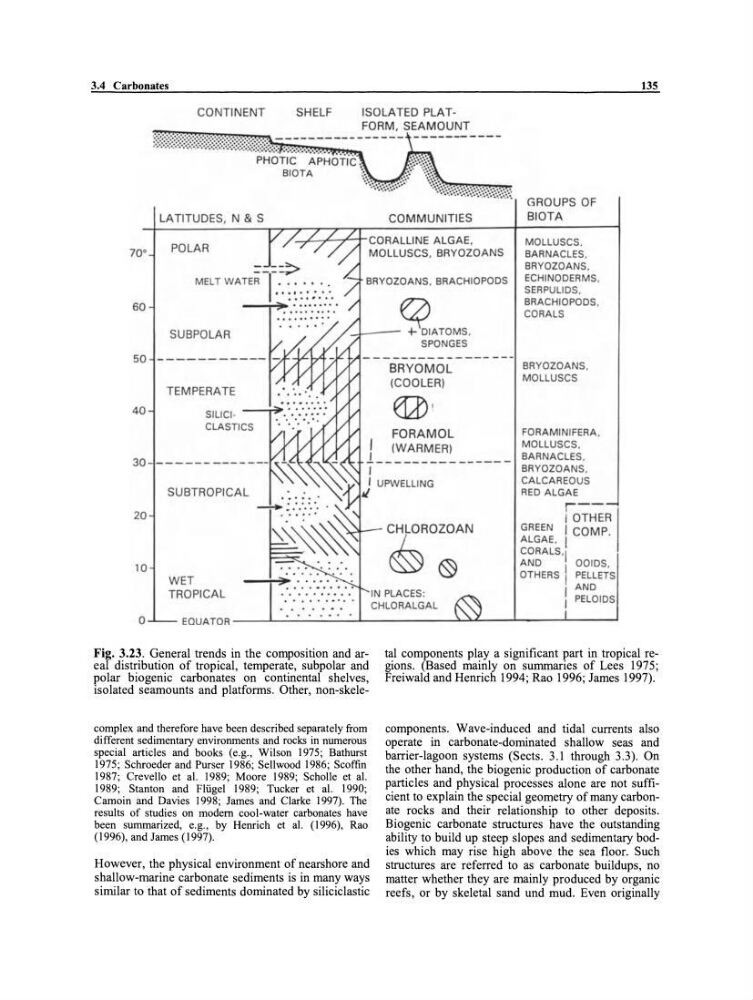
Fig. 3.23. General trends in the composition and areal distribution of tropical, temperate, subpolar and
polar biogenic carbonates on continental shelves,
isolated seamounts and platforms. Other, non-skelecomplex and therefore have been described separately from
different sedimentary environments and rocks in numerous
special articles and books (e.g., Wilson 1975; Bathurst
1975; Schroeder and Purser 1986; Sellwood 1986; Scoffin
1987; Crevello et al. 1989; Moore 1989; Scholle et al.
1989; Stanton and Flügel 1989; Tucker et al. 1990;
Camoin and Davies 1998; James and Clarke 1997). The
results of studies on modem cool-water carbonates have
been summarized, e.g., by Henrich et al. (1996), Rao
(1996), and James (1997).
However, the physical environment of nearshore and
shallow-marine carbonate sediments is in many ways
similar to that of sediments dominated by silicic1astic
tal components play a significant part in tropical regions. (Based main1y on summaries of Lees 1975;
Freiwald and Henrich 1994; Rao 1996; James 1997).
components. Wave-induced and tidal currents also
operate in carbonate-dominated shallow seas and
barrier-1agoon systems (Sects. 3.1 through 3.3). On
the other hand, the biogenic production of carbonate
partic1es and physica1 processes alone are not sufficient to exp1ain the special geometry of many carbonate rocks and their relationship to other deposits.
Biogenic carbonate structures have the outstanding
ability to bui1d up steep slopes and sedimentary bodies wh ich may rise high above the sea floor. Such
structures are referred to as carbonate buildups, no
matter whether they are main1y produced by organic
reefs, or by skeletal sand und mud. Even originally
LATITUDES, N & S
COMMUNITIES
GROUPS OF
BIOTA
135
POLAR
-.,.I.~,,-:-r-t- co RA LU NE AL G AE,
MOlLUSCS,
BARNACLES.
BRYOZOANS,
ECHI NOOERMS ,
SERPULlOS,
BRACHIOPODS ,
CORAlS
70·
MOLLUSCS, BRYOZOANS
----~
60
MELT WATER I:.::: ...... .
.... , .. .
-......,.~
SUBPOLAR
BRYOZOANS, BRACHIOPODS
~_-~ATOMS'
50 - - - - - - - - - - -
40
20
10
TEMPERATE
SILlCI -
CLASTICS
WET
TROPICAL
SPONGES
BRYOMOL
(COOLER)
FORAMOL
(WARMER)
UPWELLING
IN PLACES :
CHlORAlGAl
BRYOZOANS.
MOllUSCS
FORAMINIFERA.
MOLlUSCS ,
BARNAClES ,
BRYOZOANS ,
CAlCAREOUS
RED AlGAE
r-I OTHER
GREEN I COMP.
AlGAE , I
CORAlS "
ANO
OTHERS I
I
I
OOIOS ,
PELLETS
ANO
PElOIDS
o
EQUATOR-----L~·~--~·~·-·---L------------~~~--~------~----~
Fig. 3.23. General trends in the composition and areal distribution of tropical, temperate, subpolar and
polar biogenic carbonates on continental shelves,
isolated seamounts and platforms. Other, non-skelecomplex and therefore have been described separately from
different sedimentary environments and rocks in numerous
special articles and books (e.g., Wilson 1975; Bathurst
1975; Schroeder and Purser 1986; Sellwood 1986; Scoffin
1987; Crevello et al. 1989; Moore 1989; Scholle et al.
1989; Stanton and Flügel 1989; Tucker et al. 1990;
Camoin and Davies 1998; James and Clarke 1997). The
results of studies on modem cool-water carbonates have
been summarized, e.g., by Henrich et al. (1996), Rao
(1996), and James (1997).
However, the physical environment of nearshore and
shallow-marine carbonate sediments is in many ways
similar to that of sediments dominated by silicic1astic
tal components play a significant part in tropical regions. (Based main1y on summaries of Lees 1975;
Freiwald and Henrich 1994; Rao 1996; James 1997).
components. Wave-induced and tidal currents also
operate in carbonate-dominated shallow seas and
barrier-1agoon systems (Sects. 3.1 through 3.3). On
the other hand, the biogenic production of carbonate
partic1es and physica1 processes alone are not sufficient to exp1ain the special geometry of many carbonate rocks and their relationship to other deposits.
Biogenic carbonate structures have the outstanding
ability to bui1d up steep slopes and sedimentary bodies wh ich may rise high above the sea floor. Such
structures are referred to as carbonate buildups, no
matter whether they are main1y produced by organic
reefs, or by skeletal sand und mud. Even originally