

12 Managing the Ecology and Economy of Modified Estuaries
135
rents in the stagnant lakes have promoted the development of benthic macrophytes.
Herbivorous swans, geese and dabbling ducks have been attracted to these areas. However, the loss of intertidal areas has resulted in a significant decrease in shorebird
populations (Meire et al. 1989; Schekkerman et al. 1994).
12.2.1.2
Productivity
Primary production in the Oosterschelde has been maintained because the phytoplankton community has adapted (Scholten and van der To11994; Wetsteijn and Kromkamp
1994). As the growth of shellfish is significantly correlated with primary production,
the carrying capacity for shellfish culture has also been maintained (Smaal and
Nienhuis 1992; van Stralen and Dijkema 1994). Primary production is generally low in
the Westerschelde estuary, owing to the high turbidity. In the stagnant eutrophic areas
(Table 12.1) there are high densities of Uiva (Lake Veere) and microcystis (freshwater
areas; de Hoog and Steenkamp 1989). The high nutrient turnover in the oligotrophic
Lake Grevelingen supports a considerable primary production. Thus, the ecological
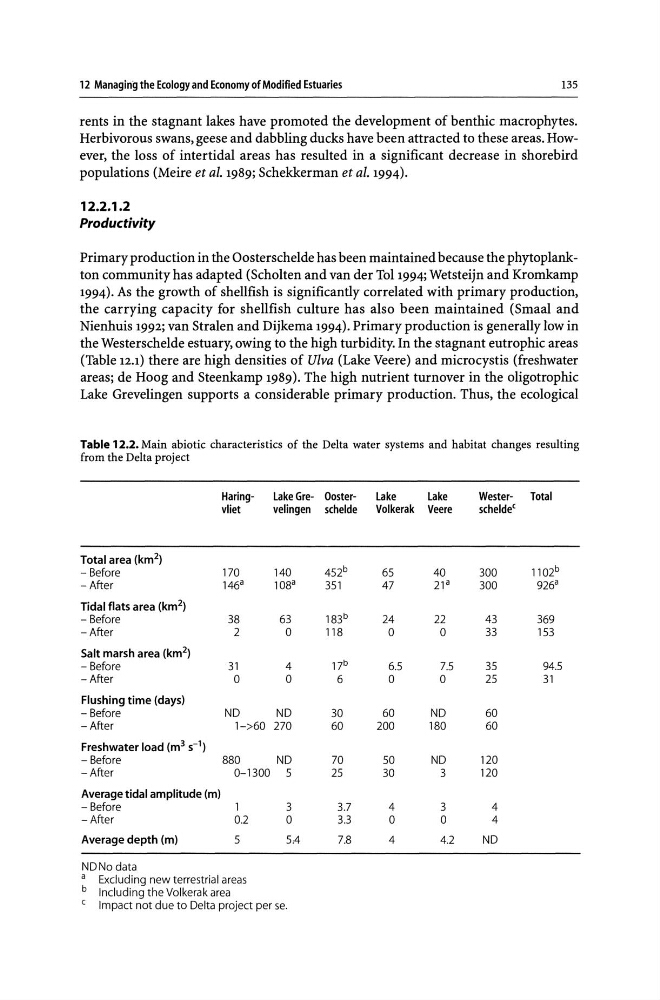
Table 12.2. Main abiotic characteristics of the Delta water systems and habitat changes resulting
from the Delta project
HaringLakeGre- OosterLake
Lake
Wester- Total
vliet
velingen schelde
Volkerak Veere
schelde c
Total area (km 2 )
- Before
170
140
452 b
65
40
300
1102 b
- After
146 a
108 a
351
47
21 a
300
926 a
Tidal flats area (km 2 )
- Before
38
63
183 b
24
22
43
369
- After
2
0
118
0
0
33
153
Salt marsh area (km 2 )
- Before
31
4
17 b
6.5
7.5
35
94.5
- After
0
0
6
0
0
25
31
Flushing time (days)
- Before
ND
ND
30
60
ND
60
- After
1->60 270
60
200
180
60
Freshwater load (m 3 S-l)
- Before
880
ND
70
50
ND
120
- After
0-1300 5
25
30
3
120
Average tidal amplitude (m)
- Before
1
3
3.7
4
3
4
- After
0.2
0
3.3
0
0
4
Average depth (m)
5
SA
7.8
4
4.2
ND
NDNodata
a Excluding new terrestrial areas
b Including the Volkerak area
c Impact not due to Delta project per se.
135
rents in the stagnant lakes have promoted the development of benthic macrophytes.
Herbivorous swans, geese and dabbling ducks have been attracted to these areas. However, the loss of intertidal areas has resulted in a significant decrease in shorebird
populations (Meire et al. 1989; Schekkerman et al. 1994).
12.2.1.2
Productivity
Primary production in the Oosterschelde has been maintained because the phytoplankton community has adapted (Scholten and van der To11994; Wetsteijn and Kromkamp
1994). As the growth of shellfish is significantly correlated with primary production,
the carrying capacity for shellfish culture has also been maintained (Smaal and
Nienhuis 1992; van Stralen and Dijkema 1994). Primary production is generally low in
the Westerschelde estuary, owing to the high turbidity. In the stagnant eutrophic areas
(Table 12.1) there are high densities of Uiva (Lake Veere) and microcystis (freshwater
areas; de Hoog and Steenkamp 1989). The high nutrient turnover in the oligotrophic
Lake Grevelingen supports a considerable primary production. Thus, the ecological
Table 12.2. Main abiotic characteristics of the Delta water systems and habitat changes resulting
from the Delta project
HaringLakeGre- OosterLake
Lake
Wester- Total
vliet
velingen schelde
Volkerak Veere
schelde c
Total area (km 2 )
- Before
170
140
452 b
65
40
300
1102 b
- After
146 a
108 a
351
47
21 a
300
926 a
Tidal flats area (km 2 )
- Before
38
63
183 b
24
22
43
369
- After
2
0
118
0
0
33
153
Salt marsh area (km 2 )
- Before
31
4
17 b
6.5
7.5
35
94.5
- After
0
0
6
0
0
25
31
Flushing time (days)
- Before
ND
ND
30
60
ND
60
- After
1->60 270
60
200
180
60
Freshwater load (m 3 S-l)
- Before
880
ND
70
50
ND
120
- After
0-1300 5
25
30
3
120
Average tidal amplitude (m)
- Before
1
3
3.7
4
3
4
- After
0.2
0
3.3
0
0
4
Average depth (m)
5
SA
7.8
4
4.2
ND
NDNodata
a Excluding new terrestrial areas
b Including the Volkerak area
c Impact not due to Delta project per se.