

72
Y. Fouquet
diagenetic nodules, with a rough surface, generated from elements contained in
manganese-rich sediment. The first type, which lie on the sediment, are low in manganese (Mn/Fe < 2.5) while the second, partially buried in the sediment, are high in
manganese (Mn/Fe > 4). Certain intermediate types have a smooth upper surface of
hydrogenetic origin and a rough lower surface of diagenetic origin. When cross-sectioned, nodules appear to be formed of concentric layers illustrating their growth.
The core is often composed of former nodules, rocky fragments (basalt, limestone),
animal remains and sometimes shark teeth.
Cobalt-Rich Crusts
Location Ferromanganese oxide crusts have been identified in all the oceans
(Fig. 4.4) in environments where the combination of currents and low sedimentation rates has prevented sediment deposit for tens of millions of years. In general,
they are associated with intraplate submarine elevations, isolated seamounts and
volcanic chains. These crusts range from a few centimetres to 25 cm in thickness
and cover surface areas of several square kilometres. They are generally deposited
Nodules
Crusts
Hydrothermal
sulphides
Clipperton
Pacific Pacific Polynesia
SW
pacific
East
pacific
Atlantic
%
Iron
6.90 12.70 15.99 15.08 11.22 25.45 27.64
Mn
25.40 18.50 21.95 19.48
0.18 0.05 0.04
Copper
0.82 0.42
0.09
0.27
3.48 3.85 8.49
Zinc
0.14 0.09
0.07
0.06 16.28 10.46 6.64
Cobalt
0.24 0.24
0.69
0.79
0.00 0.04 0.11
Nickel
1.28 0.63
0.41
0.38
0.00 0.00
0.02
Titanium 0.53 0.78
1.20
0.93 –
–
–
Sulphur –
–
–
–
21.46 33.34 31.59
Barium
0.28 0.20
0.18
0.14 12.19 1.99 3.35
Silica
7.60 8.80
4.14
2.40 14.84 11.48
8.24
Grams/
tonne
Lead
450 820
1626 1163 14493 1180 450
Platinum 0.10 0.10
0.64
1.05 –
–
–
Gold
–
–
–
–
2.44 0.61 3.40
Silver
< 0.2 < 0.2 < 0.2 < 10
404
115
81
Arsenic 159 159
272
248
1484 351
211
Cerium 530 530
1605 702
–
–
–
Molybdenum
520 360
442
307
132
103
55
Zirconium
350 620
618
484
–
–
–
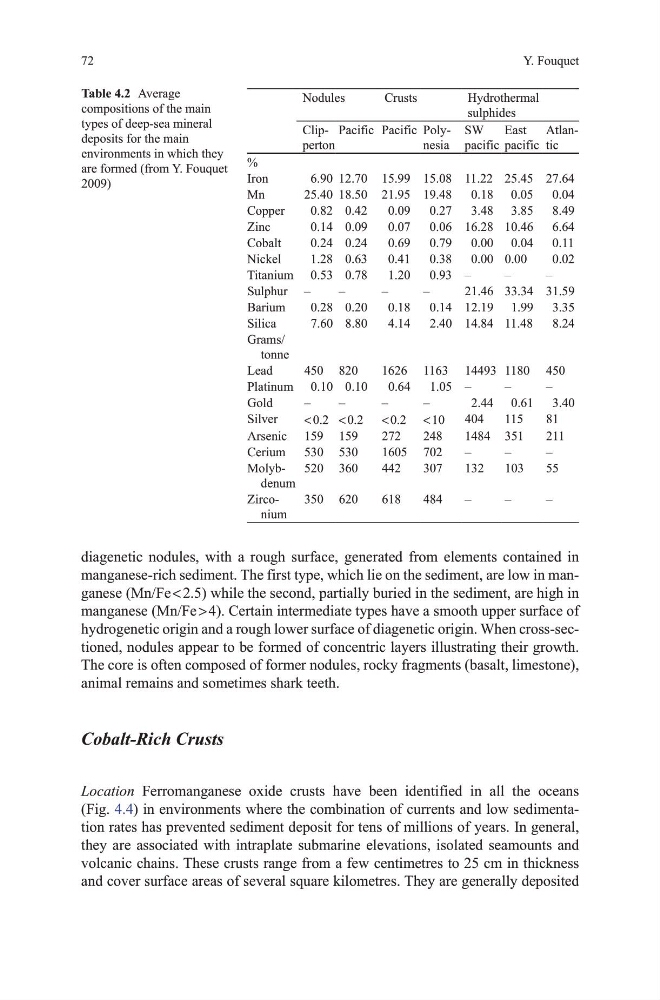
Table 4.2 Average
compositions of the main
types of deep-sea mineral
deposits for the main
environments in which they
are formed (from Y. Fouquet
2009)
Y. Fouquet
diagenetic nodules, with a rough surface, generated from elements contained in
manganese-rich sediment. The first type, which lie on the sediment, are low in manganese (Mn/Fe < 2.5) while the second, partially buried in the sediment, are high in
manganese (Mn/Fe > 4). Certain intermediate types have a smooth upper surface of
hydrogenetic origin and a rough lower surface of diagenetic origin. When cross-sectioned, nodules appear to be formed of concentric layers illustrating their growth.
The core is often composed of former nodules, rocky fragments (basalt, limestone),
animal remains and sometimes shark teeth.
Cobalt-Rich Crusts
Location Ferromanganese oxide crusts have been identified in all the oceans
(Fig. 4.4) in environments where the combination of currents and low sedimentation rates has prevented sediment deposit for tens of millions of years. In general,
they are associated with intraplate submarine elevations, isolated seamounts and
volcanic chains. These crusts range from a few centimetres to 25 cm in thickness
and cover surface areas of several square kilometres. They are generally deposited
Nodules
Crusts
Hydrothermal
sulphides
Clipperton
Pacific Pacific Polynesia
SW
pacific
East
pacific
Atlantic
%
Iron
6.90 12.70 15.99 15.08 11.22 25.45 27.64
Mn
25.40 18.50 21.95 19.48
0.18 0.05 0.04
Copper
0.82 0.42
0.09
0.27
3.48 3.85 8.49
Zinc
0.14 0.09
0.07
0.06 16.28 10.46 6.64
Cobalt
0.24 0.24
0.69
0.79
0.00 0.04 0.11
Nickel
1.28 0.63
0.41
0.38
0.00 0.00
0.02
Titanium 0.53 0.78
1.20
0.93 –
–
–
Sulphur –
–
–
–
21.46 33.34 31.59
Barium
0.28 0.20
0.18
0.14 12.19 1.99 3.35
Silica
7.60 8.80
4.14
2.40 14.84 11.48
8.24
Grams/
tonne
Lead
450 820
1626 1163 14493 1180 450
Platinum 0.10 0.10
0.64
1.05 –
–
–
Gold
–
–
–
–
2.44 0.61 3.40
Silver
< 0.2 < 0.2 < 0.2 < 10
404
115
81
Arsenic 159 159
272
248
1484 351
211
Cerium 530 530
1605 702
–
–
–
Molybdenum
520 360
442
307
132
103
55
Zirconium
350 620
618
484
–
–
–
Table 4.2 Average
compositions of the main
types of deep-sea mineral
deposits for the main
environments in which they
are formed (from Y. Fouquet
2009)