

may reside in different schools within the same university. In essence, the
principles used to guide the transition are in the information technology
discipline which includes the field of Decision Science. These principles are
taught to a large degree within the schools of management, business, and to
a lesser degree within the schools of government and economics. Concepts
dealt with here are those of operations management and strategic planning so
critical to the overall success of any organization. Also, if environmental
information is to be mainstreamed within the company “process”,
organizational change may have to occur in which the structure of
organizations changes to follow the information “flow”. This is the
subdiscipline of Business Process Reengineering. The last issue is one of
market understanding. Virtually every business is impacted by weather.
Obtaining enhanced atmospheric and ocean information to improve the
meteorological forecast accuracy is of highest priority. This engages inland
users as well as coastal users and forces the land bound nations to invest in
global earth observing as well.
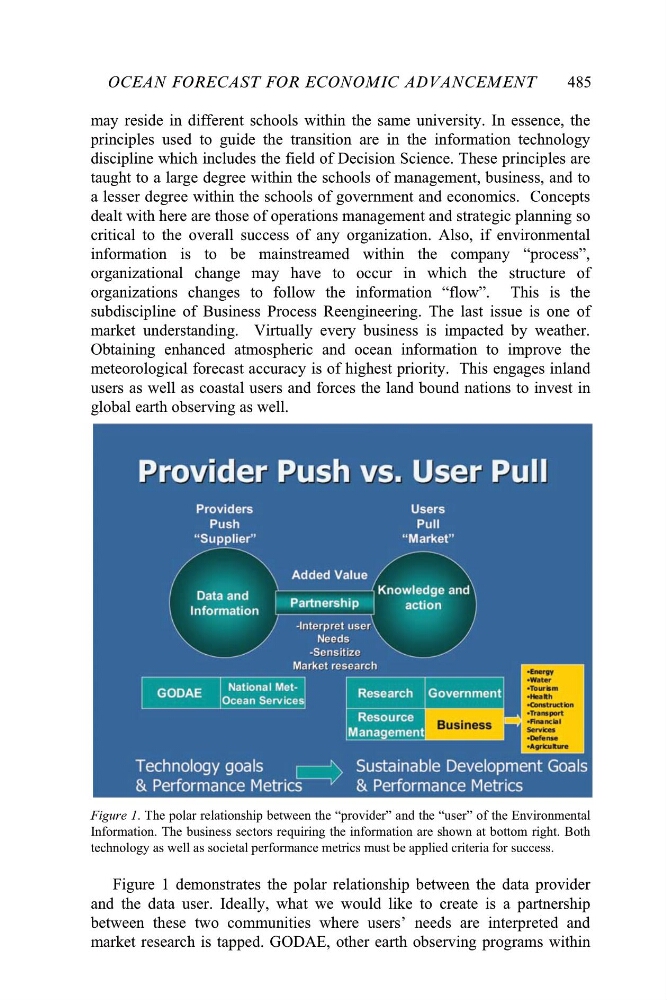
Figure 1. The polar relationship between the “provider” and the “user” of the Environmental
Information. The business sectors requiring the information are shown at bottom right. Both
technology as well as societal performance metrics must be applied criteria for success.
Figure 1 demonstrates the polar relationship between the data provider
and the data user. Ideally, what we would like to create is a partnership
between these two communities where users’ needs are interpreted and
market research is tapped. GODAE, other earth observing programs within
485
OCEAN FORECAST FOR ECONOMIC ADVANCEMENT
principles used to guide the transition are in the information technology
discipline which includes the field of Decision Science. These principles are
taught to a large degree within the schools of management, business, and to
a lesser degree within the schools of government and economics. Concepts
dealt with here are those of operations management and strategic planning so
critical to the overall success of any organization. Also, if environmental
information is to be mainstreamed within the company “process”,
organizational change may have to occur in which the structure of
organizations changes to follow the information “flow”. This is the
subdiscipline of Business Process Reengineering. The last issue is one of
market understanding. Virtually every business is impacted by weather.
Obtaining enhanced atmospheric and ocean information to improve the
meteorological forecast accuracy is of highest priority. This engages inland
users as well as coastal users and forces the land bound nations to invest in
global earth observing as well.
Figure 1. The polar relationship between the “provider” and the “user” of the Environmental
Information. The business sectors requiring the information are shown at bottom right. Both
technology as well as societal performance metrics must be applied criteria for success.
Figure 1 demonstrates the polar relationship between the data provider
and the data user. Ideally, what we would like to create is a partnership
between these two communities where users’ needs are interpreted and
market research is tapped. GODAE, other earth observing programs within
485
OCEAN FORECAST FOR ECONOMIC ADVANCEMENT