

348
FLORENCE RABIER
tendency between various observations to adjust the model, which is
particularly beneficial in the case of rapidly-developing weather systems
(Järvinen et al, 1999). It is then particularly suited to the use of a large
number of observations spread in time.
0. 01
0. 1
1
10
1997 1998 1999 2000 2001 2002 2003
6h 3D
6h 4D
12h 4D
25r 4/26r 1
A IR S
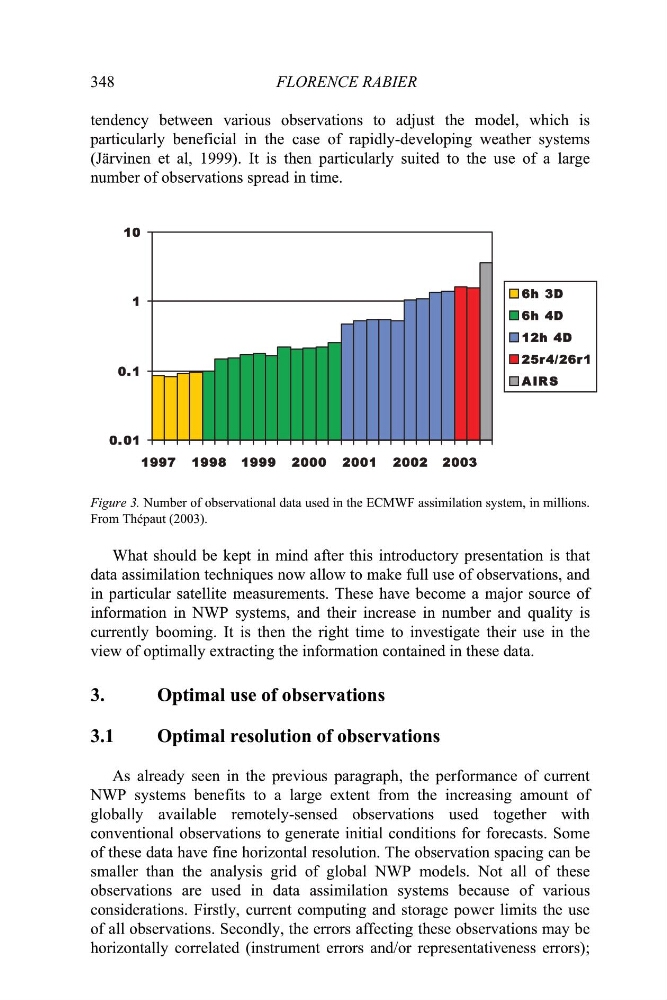
Figure 3. Number of observational data used in the ECMWF assimilation system, in millions.
From Thépaut (2003).
What should be kept in mind after this introductory presentation is that
data assimilation techniques now allow to make full use of observations, and
in particular satellite measurements. These have become a major source of
information in NWP systems, and their increase in number and quality is
currently booming. It is then the right time to investigate their use in the
view of optimally extracting the information contained in these data.
3.
Optimal use of observations
3.1
Optimal resolution of observations
As already seen in the previous paragraph, the performance of current
NWP systems benefits to a large extent from the increasing amount of
globally available remotely-sensed observations used together with
conventional observations to generate initial conditions for forecasts. Some
of these data have fine horizontal resolution. The observation spacing can be
smaller than the analysis grid of global NWP models. Not all of these
observations are used in data assimilation systems because of various
considerations. Firstly, current computing and storage power limits the use
of all observations. Secondly, the errors affecting these observations may be
horizontally correlated (instrument errors and/or representativeness errors);
FLORENCE RABIER
tendency between various observations to adjust the model, which is
particularly beneficial in the case of rapidly-developing weather systems
(Järvinen et al, 1999). It is then particularly suited to the use of a large
number of observations spread in time.
0. 01
0. 1
1
10
1997 1998 1999 2000 2001 2002 2003
6h 3D
6h 4D
12h 4D
25r 4/26r 1
A IR S
Figure 3. Number of observational data used in the ECMWF assimilation system, in millions.
From Thépaut (2003).
What should be kept in mind after this introductory presentation is that
data assimilation techniques now allow to make full use of observations, and
in particular satellite measurements. These have become a major source of
information in NWP systems, and their increase in number and quality is
currently booming. It is then the right time to investigate their use in the
view of optimally extracting the information contained in these data.
3.
Optimal use of observations
3.1
Optimal resolution of observations
As already seen in the previous paragraph, the performance of current
NWP systems benefits to a large extent from the increasing amount of
globally available remotely-sensed observations used together with
conventional observations to generate initial conditions for forecasts. Some
of these data have fine horizontal resolution. The observation spacing can be
smaller than the analysis grid of global NWP models. Not all of these
observations are used in data assimilation systems because of various
considerations. Firstly, current computing and storage power limits the use
of all observations. Secondly, the errors affecting these observations may be
horizontally correlated (instrument errors and/or representativeness errors);