

IN SITU OBSERVATIONS: SYSTEMS AND MANAGEMENT
219
Data exchanges between DACs and GDAC are performed using a common
data format. The main objective is for the users to access a unique data
source (in this case, we have two servers for reliability/redundancy). A
central website provides an extensive set of tools to query, retrieve, plot and
compare the profiling float data dynamically. They also provide an FTP
access for easy automatic data retrieval by users
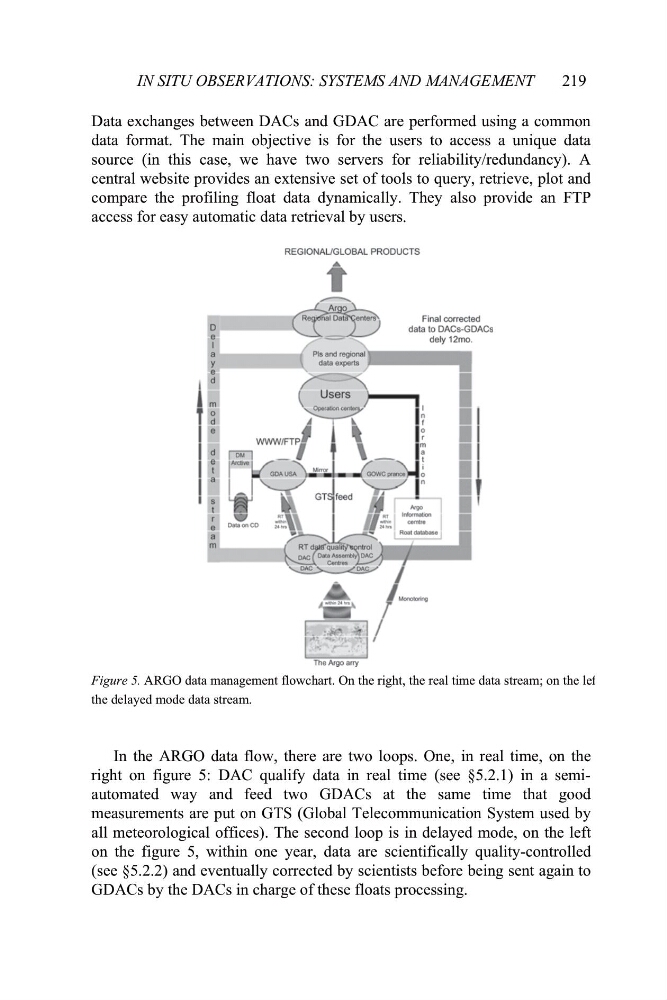
Figure 5. ARGO data management flowchart. On the right, the real time data stream; on the lef
the delayed mode data stream.
In the ARGO data flow, there are two loops. One, in real time, on the
right on figure 5: DAC qualify data in real time (see §5.2.1) in a semiautomated way and feed two GDACs at the same time that good
measurements are put on GTS (Global Telecommunication System used by
all meteorological offices). The second loop is in delayed mode, on the left
on the figure 5, within one year, data are scientifically quality-controlled
(see §5.2.2) and eventually corrected by scientists before being sent again to
GDACs by the DACs in charge of these floats processing.
.
219
Data exchanges between DACs and GDAC are performed using a common
data format. The main objective is for the users to access a unique data
source (in this case, we have two servers for reliability/redundancy). A
central website provides an extensive set of tools to query, retrieve, plot and
compare the profiling float data dynamically. They also provide an FTP
access for easy automatic data retrieval by users
Figure 5. ARGO data management flowchart. On the right, the real time data stream; on the lef
the delayed mode data stream.
In the ARGO data flow, there are two loops. One, in real time, on the
right on figure 5: DAC qualify data in real time (see §5.2.1) in a semiautomated way and feed two GDACs at the same time that good
measurements are put on GTS (Global Telecommunication System used by
all meteorological offices). The second loop is in delayed mode, on the left
on the figure 5, within one year, data are scientifically quality-controlled
(see §5.2.2) and eventually corrected by scientists before being sent again to
GDACs by the DACs in charge of these floats processing.
.