

IN SITU OBSERVATIONS: SYSTEMS AND MANAGEMENT
213
years. Assimilated in models together with Sea Surface Height Anomalies
from altimetry, they have become an essential network for operational
models. This program started from an initiative of a group of scientists who
were convinced of the importance of such a network. It was and is still
partially funded on research money but a lot of work is done at the intergovernmental level to find funds to sustain such a network. A float costs
about 15.000$, so the setting up of the array will cost about 50.000.000$ and
about 10.000.000$ is needed each year to maintain it (700 new floats each
year to replace the dead ones). These numbers do not include any additional
cost to deploy these floats as the deployments are often done through free
opportunities.
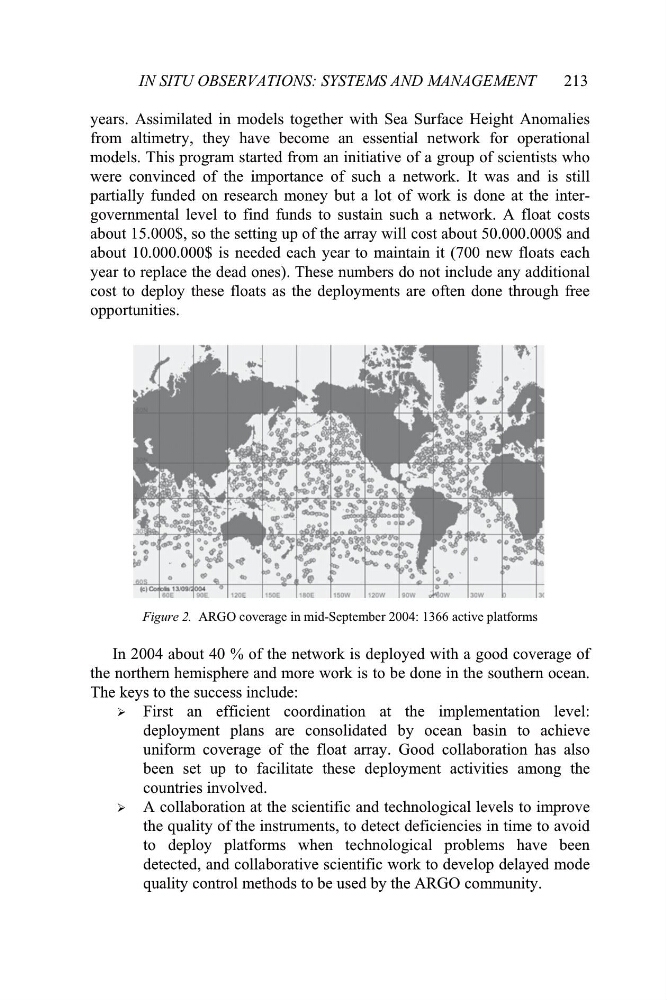
Figure 2. ARGO coverage in mid-September 2004: 1366 active platforms
In 2004 about 40 % of the network is deployed with a good coverage of
the northern hemisphere and more work is to be done in the southern ocean.
The keys to the success include:
¾ First an efficient coordination at the implementation level:
deployment plans are consolidated by ocean basin to achieve
uniform coverage of the float array. Good collaboration has also
been set up to facilitate these deployment activities among the
countries involved.
¾ A collaboration at the scientific and technological levels to improve
the quality of the instruments, to detect deficiencies in time to avoid
to deploy platforms when technological problems have been
detected, and collaborative scientific work to develop delayed mode
quality control methods to be used by the ARGO community.
213
years. Assimilated in models together with Sea Surface Height Anomalies
from altimetry, they have become an essential network for operational
models. This program started from an initiative of a group of scientists who
were convinced of the importance of such a network. It was and is still
partially funded on research money but a lot of work is done at the intergovernmental level to find funds to sustain such a network. A float costs
about 15.000$, so the setting up of the array will cost about 50.000.000$ and
about 10.000.000$ is needed each year to maintain it (700 new floats each
year to replace the dead ones). These numbers do not include any additional
cost to deploy these floats as the deployments are often done through free
opportunities.
Figure 2. ARGO coverage in mid-September 2004: 1366 active platforms
In 2004 about 40 % of the network is deployed with a good coverage of
the northern hemisphere and more work is to be done in the southern ocean.
The keys to the success include:
¾ First an efficient coordination at the implementation level:
deployment plans are consolidated by ocean basin to achieve
uniform coverage of the float array. Good collaboration has also
been set up to facilitate these deployment activities among the
countries involved.
¾ A collaboration at the scientific and technological levels to improve
the quality of the instruments, to detect deficiencies in time to avoid
to deploy platforms when technological problems have been
detected, and collaborative scientific work to develop delayed mode
quality control methods to be used by the ARGO community.