

148
IAN ROBINSON
megabytes of data around the globe in seconds, has expanded the vision of
ocean scientists so that we are now contemplating the creation of ocean
forecasting systems for operational applications. We envisage systems in
which observational data from sensors on satellites and in situ platforms are
fed in near-real time into numerical models which describe the state of the
ocean. Just as meteorologists look to numerical models, supplied by the
global meteorological observations network, to give them the most complete
and reliable view of what is happening in the atmosphere, so we expect that
in future the output of ocean forecasting models will greatly improve the
daily knowledge of the state of the ocean needed by operational users to
manage the marine environment and to save life at sea.
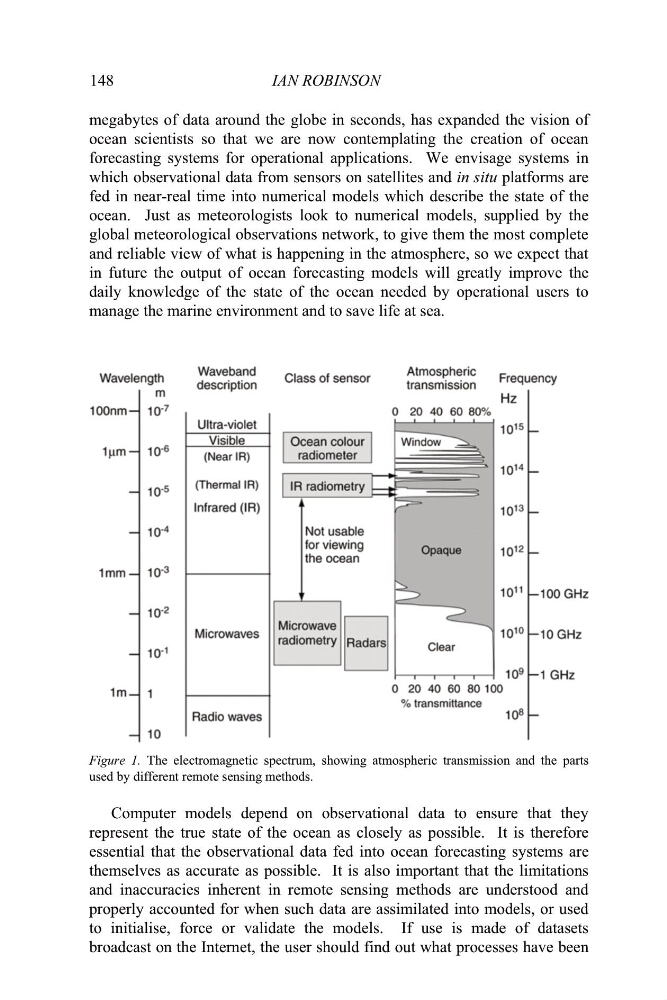
Figure 1. The electromagnetic spectrum, showing atmospheric transmission and the parts
used by different remote sensing methods.
Computer models depend on observational data to ensure that they
represent the true state of the ocean as closely as possible. It is therefore
essential that the observational data fed into ocean forecasting systems are
themselves as accurate as possible. It is also important that the limitations
and inaccuracies inherent in remote sensing methods are understood and
properly accounted for when such data are assimilated into models, or used
to initialise, force or validate the models. If use is made of datasets
broadcast on the Internet, the user should find out what processes have been
IAN ROBINSON
megabytes of data around the globe in seconds, has expanded the vision of
ocean scientists so that we are now contemplating the creation of ocean
forecasting systems for operational applications. We envisage systems in
which observational data from sensors on satellites and in situ platforms are
fed in near-real time into numerical models which describe the state of the
ocean. Just as meteorologists look to numerical models, supplied by the
global meteorological observations network, to give them the most complete
and reliable view of what is happening in the atmosphere, so we expect that
in future the output of ocean forecasting models will greatly improve the
daily knowledge of the state of the ocean needed by operational users to
manage the marine environment and to save life at sea.
Figure 1. The electromagnetic spectrum, showing atmospheric transmission and the parts
used by different remote sensing methods.
Computer models depend on observational data to ensure that they
represent the true state of the ocean as closely as possible. It is therefore
essential that the observational data fed into ocean forecasting systems are
themselves as accurate as possible. It is also important that the limitations
and inaccuracies inherent in remote sensing methods are understood and
properly accounted for when such data are assimilated into models, or used
to initialise, force or validate the models. If use is made of datasets
broadcast on the Internet, the user should find out what processes have been