

130
ERIC BLAYO AND LAURENT DEBREU
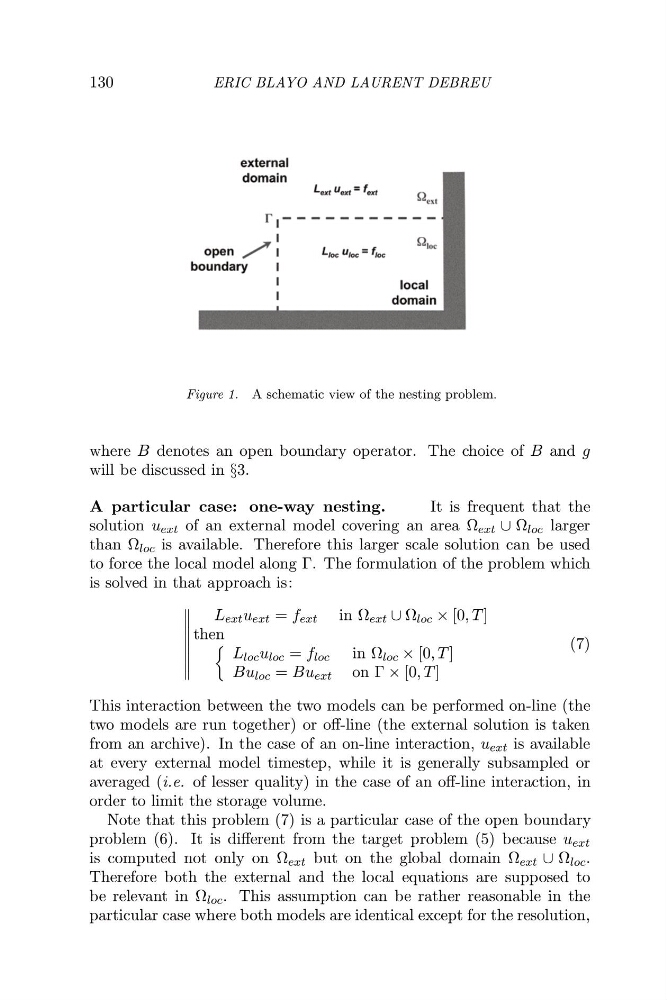
Figure 1. A schematic view of the nesting problem
where B denotes an open boundary operator. The choice of B and g
will be discussed in §3.
A particular case: one-way nesting.
It is frequent that the
solution u ext of an external model covering an area Ω ext ∪ Ω loc larger
than Ω loc is available. Therefore this larger scale solution can be used
to force the local model along Γ. The formulation of the problem which
is solved in that approach is:
L ext u ext = f ext in Ω ext ∪ Ω loc × [0, T ]
then L loc u loc = f loc in Ω loc × [0, T ]
Bu loc = Bu ext on Γ × [0, T ]
(7)
This interaction between the two models can be performed on-line (the
two models are run together) or off-line (the external solution is taken
from an archive). In the case of an on-line interaction, u ext is available
at every external model timestep, while it is generally subsampled or
averaged (i.e. of lesser quality) in the case of an off-line interaction, in
order to limit the storage volume.
Note that this problem (7) is a particular case of the open boundary
problem (6). It is different from the target problem (5) because u ext
is computed not only on Ω ext but on the global domain Ω ext ∪ Ω loc .
Therefore both the external and the local equations are supposed to
be relevant in Ω loc . This assumption can be rather reasonable in the
particular case where both models are identical except for the resolution,
.
ERIC BLAYO AND LAURENT DEBREU
Figure 1. A schematic view of the nesting problem
where B denotes an open boundary operator. The choice of B and g
will be discussed in §3.
A particular case: one-way nesting.
It is frequent that the
solution u ext of an external model covering an area Ω ext ∪ Ω loc larger
than Ω loc is available. Therefore this larger scale solution can be used
to force the local model along Γ. The formulation of the problem which
is solved in that approach is:
L ext u ext = f ext in Ω ext ∪ Ω loc × [0, T ]
then L loc u loc = f loc in Ω loc × [0, T ]
Bu loc = Bu ext on Γ × [0, T ]
(7)
This interaction between the two models can be performed on-line (the
two models are run together) or off-line (the external solution is taken
from an archive). In the case of an on-line interaction, u ext is available
at every external model timestep, while it is generally subsampled or
averaged (i.e. of lesser quality) in the case of an off-line interaction, in
order to limit the storage volume.
Note that this problem (7) is a particular case of the open boundary
problem (6). It is different from the target problem (5) because u ext
is computed not only on Ω ext but on the global domain Ω ext ∪ Ω loc .
Therefore both the external and the local equations are supposed to
be relevant in Ω loc . This assumption can be rather reasonable in the
particular case where both models are identical except for the resolution,
.