

94
ANNE-MARIE TREGUIER
54
56
58
60
62
64
66
27.85
27.9
27.95
28
28.05
28.1
Latitude
Potential density
ATL6 no BBL
ATL6 BBL
Climatology
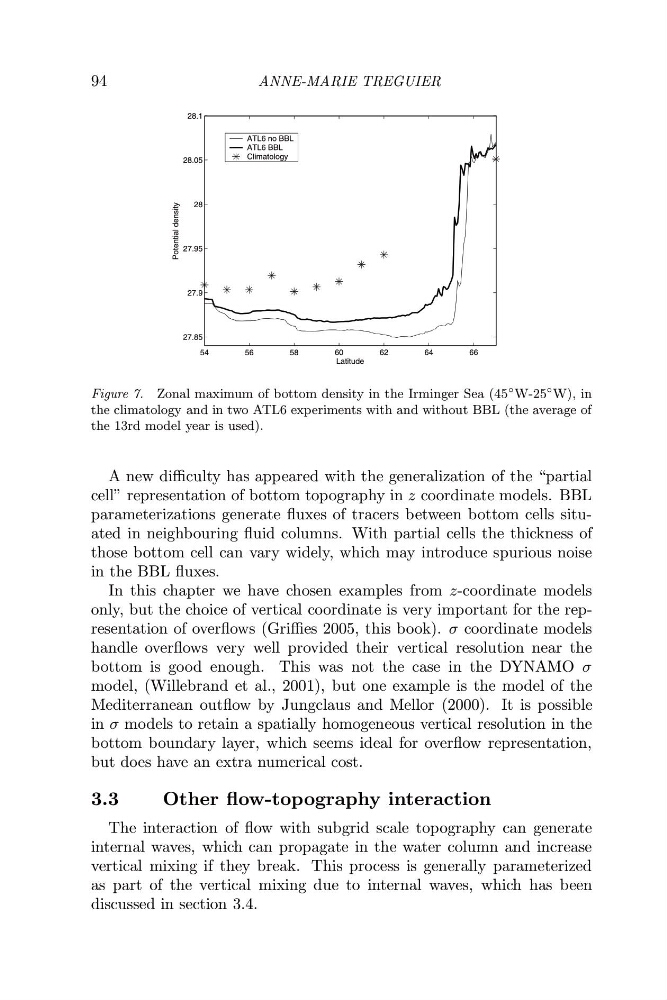
Figure 7. Zonal maximum of bottom density in the Irminger Sea (45
◦ W-25
◦ W), in
the climatology and in two ATL6 experiments with and without BBL (the average of
the 13rd model year is used).
A new difficulty has appeared with the generalization of the “partial
cell” representation of bottom topography in z coordinate models. BBL
parameterizations generate fluxes of tracers between bottom cells situated in neighbouring fluid columns. With partial cells the thickness of
those bottom cell can vary widely, which may introduce spurious noise
in the BBL fluxes.
In this chapter we have chosen examples from z-coordinate models
only, but the choice of vertical coordinate is very important for the representation of overflows (Griffies 2005, this book). σ coordinate models
handle overflows very well provided their vertical resolution near the
bottom is good enough. This was not the case in the DYNAMO σ
model, (Willebrand et al., 2001), but one example is the model of the
Mediterranean outflow by Jungclaus and Mellor (2000). It is possible
in σ models to retain a spatially homogeneous vertical resolution in the
bottom boundary layer, which seems ideal for overflow representation,
but does have an extra numerical cost.
3.3
Other flow-topography interaction
The interaction of flow with subgrid scale topography can generate
internal waves, which can propagate in the water column and increase
vertical mixing if they break. This process is generally parameterized
as part of the vertical mixing due to internal waves, which has been
discussed in section 3.4.
ANNE-MARIE TREGUIER
54
56
58
60
62
64
66
27.85
27.9
27.95
28
28.05
28.1
Latitude
Potential density
ATL6 no BBL
ATL6 BBL
Climatology
Figure 7. Zonal maximum of bottom density in the Irminger Sea (45
◦ W-25
◦ W), in
the climatology and in two ATL6 experiments with and without BBL (the average of
the 13rd model year is used).
A new difficulty has appeared with the generalization of the “partial
cell” representation of bottom topography in z coordinate models. BBL
parameterizations generate fluxes of tracers between bottom cells situated in neighbouring fluid columns. With partial cells the thickness of
those bottom cell can vary widely, which may introduce spurious noise
in the BBL fluxes.
In this chapter we have chosen examples from z-coordinate models
only, but the choice of vertical coordinate is very important for the representation of overflows (Griffies 2005, this book). σ coordinate models
handle overflows very well provided their vertical resolution near the
bottom is good enough. This was not the case in the DYNAMO σ
model, (Willebrand et al., 2001), but one example is the model of the
Mediterranean outflow by Jungclaus and Mellor (2000). It is possible
in σ models to retain a spatially homogeneous vertical resolution in the
bottom boundary layer, which seems ideal for overflow representation,
but does have an extra numerical cost.
3.3
Other flow-topography interaction
The interaction of flow with subgrid scale topography can generate
internal waves, which can propagate in the water column and increase
vertical mixing if they break. This process is generally parameterized
as part of the vertical mixing due to internal waves, which has been
discussed in section 3.4.