

38
3 Basics of Geophysical Fluid Dynamics
that the objects digs into the seafloo or pops out of the water column. The easiest
solution is to make these boundaries impermeable.
3.10.7 Sample Code and Animation Script
The FORTRAN 95 source code for this exercise, called “buoyant f95”, and the
SciLab animation script, called “buoyant.sce” can be found in the folder “Exercise
3” on the CD-ROM. The f le “info.txt” contains additional information.
3.10.8 Discussion of Results
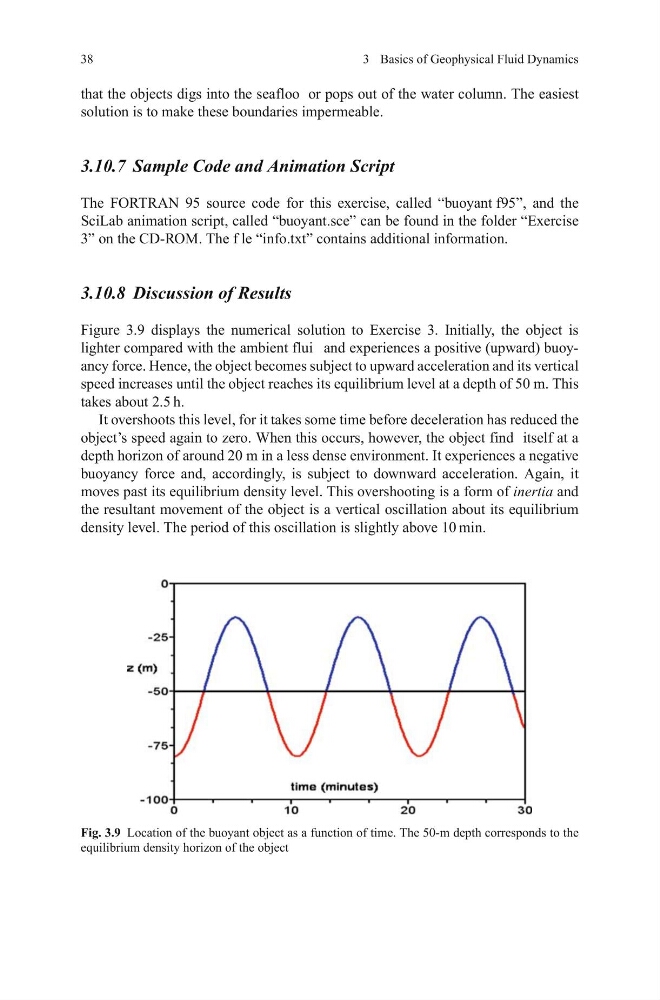
Figure 3.9 displays the numerical solution to Exercise 3. Initially, the object is
lighter compared with the ambient flui and experiences a positive (upward) buoyancy force. Hence, the object becomes subject to upward acceleration and its vertical
speed increases until the object reaches its equilibrium level at a depth of 50 m. This
takes about 2.5 h.
It overshoots this level, for it takes some time before deceleration has reduced the
object’s speed again to zero. When this occurs, however, the object find itself at a
depth horizon of around 20 m in a less dense environment. It experiences a negative
buoyancy force and, accordingly, is subject to downward acceleration. Again, it
moves past its equilibrium density level. This overshooting is a form of inertia and
the resultant movement of the object is a vertical oscillation about its equilibrium
density level. The period of this oscillation is slightly above 10 min.
Fig. 3.9 Location of the buoyant object as a function of time. The 50-m depth corresponds to the
equilibrium density horizon of the object
3 Basics of Geophysical Fluid Dynamics
that the objects digs into the seafloo or pops out of the water column. The easiest
solution is to make these boundaries impermeable.
3.10.7 Sample Code and Animation Script
The FORTRAN 95 source code for this exercise, called “buoyant f95”, and the
SciLab animation script, called “buoyant.sce” can be found in the folder “Exercise
3” on the CD-ROM. The f le “info.txt” contains additional information.
3.10.8 Discussion of Results
Figure 3.9 displays the numerical solution to Exercise 3. Initially, the object is
lighter compared with the ambient flui and experiences a positive (upward) buoyancy force. Hence, the object becomes subject to upward acceleration and its vertical
speed increases until the object reaches its equilibrium level at a depth of 50 m. This
takes about 2.5 h.
It overshoots this level, for it takes some time before deceleration has reduced the
object’s speed again to zero. When this occurs, however, the object find itself at a
depth horizon of around 20 m in a less dense environment. It experiences a negative
buoyancy force and, accordingly, is subject to downward acceleration. Again, it
moves past its equilibrium density level. This overshooting is a form of inertia and
the resultant movement of the object is a vertical oscillation about its equilibrium
density level. The period of this oscillation is slightly above 10 min.
Fig. 3.9 Location of the buoyant object as a function of time. The 50-m depth corresponds to the
equilibrium density horizon of the object