

The temperature driven convection indicates that the interior of the earth is still
extremely hot. This heat has been preserved since the early formation of the Earth
and it is continuously being alimented by the energy release due to the radioactive
decay of long-lived radioactive isotopes such as
236
U,
235 U,
238 U,
232 Th and
40
K.
The average air temperature on the Earth’s surface is about 13 °C. In the Earth’s
interior, the temperature differences between the core (inner and outer core) at
5,000–7,000 °C, the lower mantle at about 2,000 °C and the upper mantle at about
500–600 °C are responsible for generating the mechanism of heat convection and
the subsequent transfer of matter throughout the Earth’s interior (Wilson 2005;
White 2013). The temperature increases with depth and there is also a relationship
with the interior’s increasing pressure. When critical depth has been reached, the
rocks will approach their melting point (about 1000 °C) near the upper mantle (in
the lithosphere), so they will become ductile and have lower seismic wave
velocities. This coincides with the beginning of what is known as the asthenosphere, at 670–700 km depth, where convection currents are the dominant mode of
heat repartition and heat flow. The thermal energy radiating from the core will be
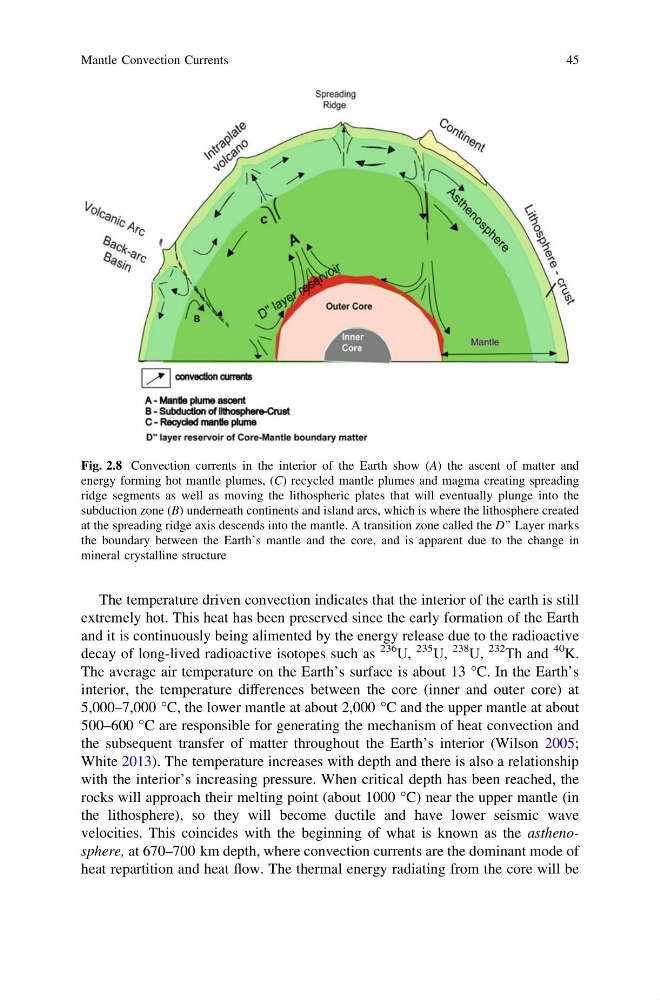
Fig. 2.8 Convection currents in the interior of the Earth show (A) the ascent of matter and
energy forming hot mantle plumes, (C) recycled mantle plumes and magma creating spreading
ridge segments as well as moving the lithospheric plates that will eventually plunge into the
subduction zone (B) underneath continents and island arcs, which is where the lithosphere created
at the spreading ridge axis descends into the mantle. A transition zone called the D’’ Layer marks
the boundary between the Earth’s mantle and the core, and is apparent due to the change in
mineral crystalline structure
Mantle Convection Currents
45
extremely hot. This heat has been preserved since the early formation of the Earth
and it is continuously being alimented by the energy release due to the radioactive
decay of long-lived radioactive isotopes such as
236
U,
235 U,
238 U,
232 Th and
40
K.
The average air temperature on the Earth’s surface is about 13 °C. In the Earth’s
interior, the temperature differences between the core (inner and outer core) at
5,000–7,000 °C, the lower mantle at about 2,000 °C and the upper mantle at about
500–600 °C are responsible for generating the mechanism of heat convection and
the subsequent transfer of matter throughout the Earth’s interior (Wilson 2005;
White 2013). The temperature increases with depth and there is also a relationship
with the interior’s increasing pressure. When critical depth has been reached, the
rocks will approach their melting point (about 1000 °C) near the upper mantle (in
the lithosphere), so they will become ductile and have lower seismic wave
velocities. This coincides with the beginning of what is known as the asthenosphere, at 670–700 km depth, where convection currents are the dominant mode of
heat repartition and heat flow. The thermal energy radiating from the core will be
Fig. 2.8 Convection currents in the interior of the Earth show (A) the ascent of matter and
energy forming hot mantle plumes, (C) recycled mantle plumes and magma creating spreading
ridge segments as well as moving the lithospheric plates that will eventually plunge into the
subduction zone (B) underneath continents and island arcs, which is where the lithosphere created
at the spreading ridge axis descends into the mantle. A transition zone called the D’’ Layer marks
the boundary between the Earth’s mantle and the core, and is apparent due to the change in
mineral crystalline structure
Mantle Convection Currents
45