

related rocks followed by lower temperature (\1000 °C), more viscous flows of
silica-enriched lava such as trachyandesite and trachyte. These latter flows have
ended their eruption with explosive activity giving rise to pyroclastic debris.
As differentiation takes place in a magma chamber, the volatile-enriched and
low-temperature melt will be concentrated in a higher level of the reservoir. This
will lower the melt’s density and facilitate the extrusion of low temperature lava.
During each volcanic cycle, after their extrusion the individual flows have
extended for a relatively short distance, less than 300 m in length, when compared
to subaerial eruptions, which could reach distances covering one or more kilometers. This is due to the limited extent of magma delivery and to the sea floor
environment where there is seawater and a higher pressure that could cause a more
rapid cooling of the flows. The observed sequential volcanism forming the volcanic edifices is due to individualized volcanic pulses taking place on the flanks
and the summits of the volcanoes. This observation has reinforced the idea of the
importance of sequential volcanism as being responsible for the construction of the
tall edifices.
My dive (PN13) was made along the southern slope of a small (\500 meters
tall) adventive cone located near Bounty’s base, at 3000 m depth, and on the lower
flank of the Bounty. The reason for this dive was to find out if the recent volcanic
activity known to occur on the summit of the edifice was also taking place on the
volcano’s flank. The other reason for Dive PN13 was to sample more rocks and
compare their composition to those found on the main edifice. To my surprise, the
adventive cone was essentially made of silica-rich lava, that is to say, trachyte and
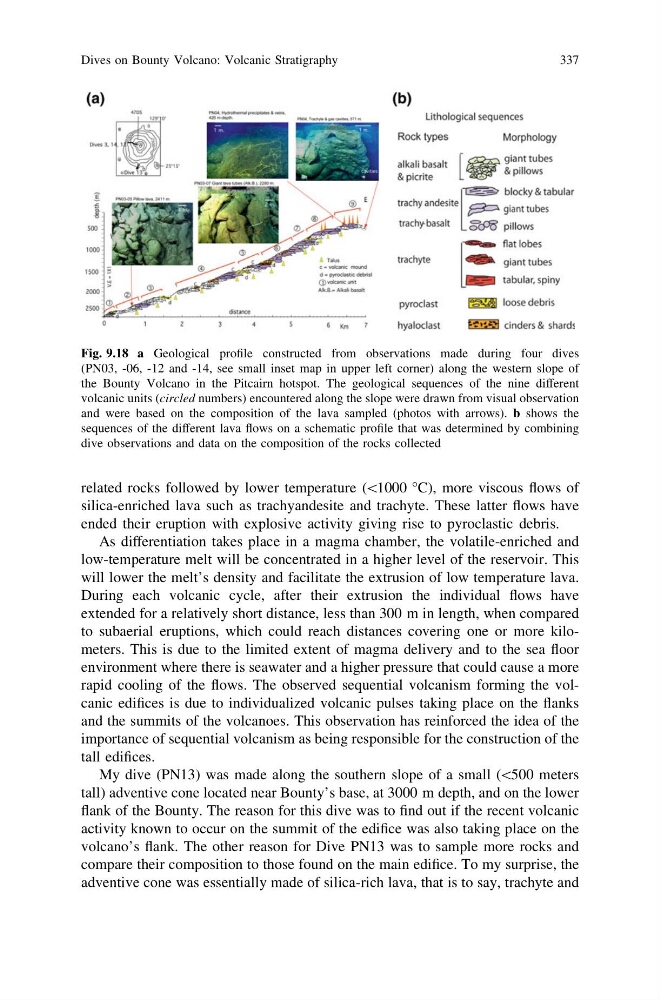
Fig. 9.18 a Geological profile constructed from observations made during four dives
(PN03, -06, -12 and -14, see small inset map in upper left corner) along the western slope of
the Bounty Volcano in the Pitcairn hotspot. The geological sequences of the nine different
volcanic units (circled numbers) encountered along the slope were drawn from visual observation
and were based on the composition of the lava sampled (photos with arrows). b shows the
sequences of the different lava flows on a schematic profile that was determined by combining
dive observations and data on the composition of the rocks collected
Dives on Bounty Volcano: Volcanic Stratigraphy
337
silica-enriched lava such as trachyandesite and trachyte. These latter flows have
ended their eruption with explosive activity giving rise to pyroclastic debris.
As differentiation takes place in a magma chamber, the volatile-enriched and
low-temperature melt will be concentrated in a higher level of the reservoir. This
will lower the melt’s density and facilitate the extrusion of low temperature lava.
During each volcanic cycle, after their extrusion the individual flows have
extended for a relatively short distance, less than 300 m in length, when compared
to subaerial eruptions, which could reach distances covering one or more kilometers. This is due to the limited extent of magma delivery and to the sea floor
environment where there is seawater and a higher pressure that could cause a more
rapid cooling of the flows. The observed sequential volcanism forming the volcanic edifices is due to individualized volcanic pulses taking place on the flanks
and the summits of the volcanoes. This observation has reinforced the idea of the
importance of sequential volcanism as being responsible for the construction of the
tall edifices.
My dive (PN13) was made along the southern slope of a small (\500 meters
tall) adventive cone located near Bounty’s base, at 3000 m depth, and on the lower
flank of the Bounty. The reason for this dive was to find out if the recent volcanic
activity known to occur on the summit of the edifice was also taking place on the
volcano’s flank. The other reason for Dive PN13 was to sample more rocks and
compare their composition to those found on the main edifice. To my surprise, the
adventive cone was essentially made of silica-rich lava, that is to say, trachyte and
Fig. 9.18 a Geological profile constructed from observations made during four dives
(PN03, -06, -12 and -14, see small inset map in upper left corner) along the western slope of
the Bounty Volcano in the Pitcairn hotspot. The geological sequences of the nine different
volcanic units (circled numbers) encountered along the slope were drawn from visual observation
and were based on the composition of the lava sampled (photos with arrows). b shows the
sequences of the different lava flows on a schematic profile that was determined by combining
dive observations and data on the composition of the rocks collected
Dives on Bounty Volcano: Volcanic Stratigraphy
337