

under water. Because of its volcanic nature, the soil is fertile and the climate is
moderate all year around.
Pitcairn Island became the place of refuge for the mutineers of the HMS Bounty
on January 23, 1790, until it was found again in 1808, by captain Mathew Folger
on board the US vessel TOPAZ.
Pitcairn Island entered into history when Fletcher Christian, the second in
charge of the HMS Bounty, rebelled against Captain William Bligh in 1789, near
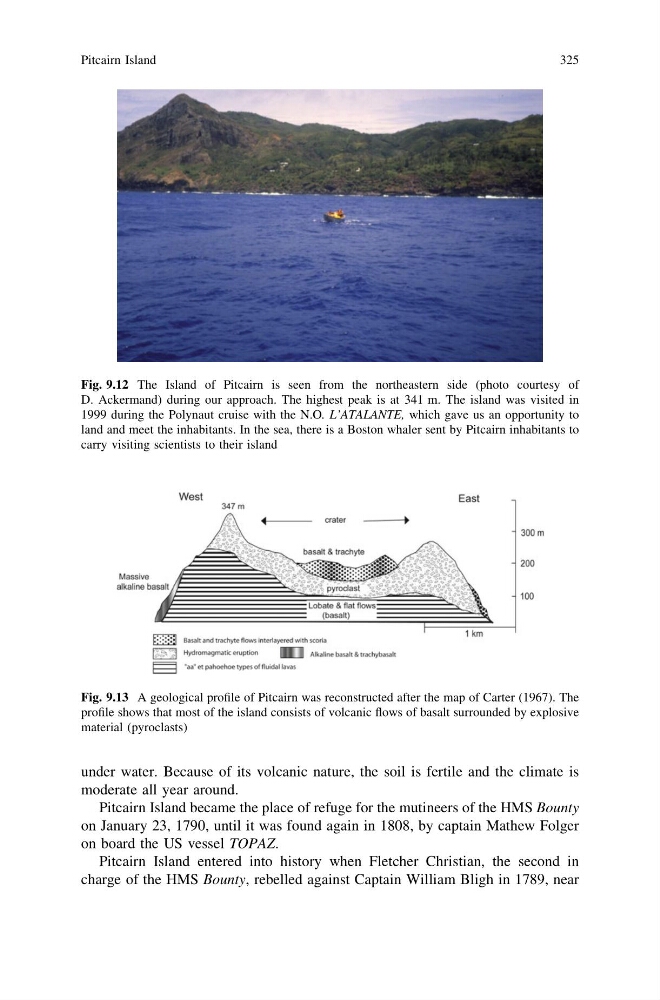
Fig. 9.12 The Island of Pitcairn is seen from the northeastern side (photo courtesy of
D. Ackermand) during our approach. The highest peak is at 341 m. The island was visited in
1999 during the Polynaut cruise with the N.O. L’ATALANTE, which gave us an opportunity to
land and meet the inhabitants. In the sea, there is a Boston whaler sent by Pitcairn inhabitants to
carry visiting scientists to their island
Fig. 9.13 A geological profile of Pitcairn was reconstructed after the map of Carter (1967). The
profile shows that most of the island consists of volcanic flows of basalt surrounded by explosive
material (pyroclasts)
Pitcairn Island
325
moderate all year around.
Pitcairn Island became the place of refuge for the mutineers of the HMS Bounty
on January 23, 1790, until it was found again in 1808, by captain Mathew Folger
on board the US vessel TOPAZ.
Pitcairn Island entered into history when Fletcher Christian, the second in
charge of the HMS Bounty, rebelled against Captain William Bligh in 1789, near
Fig. 9.12 The Island of Pitcairn is seen from the northeastern side (photo courtesy of
D. Ackermand) during our approach. The highest peak is at 341 m. The island was visited in
1999 during the Polynaut cruise with the N.O. L’ATALANTE, which gave us an opportunity to
land and meet the inhabitants. In the sea, there is a Boston whaler sent by Pitcairn inhabitants to
carry visiting scientists to their island
Fig. 9.13 A geological profile of Pitcairn was reconstructed after the map of Carter (1967). The
profile shows that most of the island consists of volcanic flows of basalt surrounded by explosive
material (pyroclasts)
Pitcairn Island
325