

These factors are the supply rate, the rate of magma ascent, size of the conduit, the
fluid density and the time scale of the eruptive cycles. The total lava flow delivered
along the belt of submarine mountain ranges formed at the spreading ridge segments around the World is on the order of about 4 km
3 /year. It is assumed that
during passive upwelling, the average rate of mantle flow is about 13 mm a year
along the MAR. Such upwelling rates vary according to the tectonics of spreading
and the supply of mantle plume-driven decompression melting, which could give
rise to hotspot volcanoes. The magma ascent velocity for the Mt. St. Helen’s
eruption was about 2–3 m/s in May 1980 and dropped to 0.08 m/s 5 months later.
The seismic monitoring and field observation of volcanic edifices has permitted
us to propose an estimation concerning their growth rate. Earthquakes are commonly associated with magma ascent giving rise to volcanic eruptions. Thus, the
construction of an isolated submarine volcanic edifice starts on the surface of the
sea floor and it will take between 10,000 and 1 million years to built a sizable
([1000 m high) structure. It is calculated that building a submarine edifice of
3500 m tall such as the Bounty Island in the Pitcairn hotspot region, took about
58,000 years with an eruption rate of about 0.54 km
3 per 100 years. The Kilauea
volcano on the Big Island of Hawaii is one of the most active volcanoes on Earth.
It is about 1000 m above sea level and about 6000 m above the sea floor, yet it was
built in less than 1 million years since we know that the present day lava eruptions
are about 10–18 km
3 per 100 years (Clague et al. 2000). From geodetic and
seismological observations, it has been suggested that magma rises through conduits located underneath volcanic edifices and propagates through fissures in rift
zones. The supply of magma to the rift zones is sometimes accompanied by
shallow (1–4 km depth) swarms of earthquakes corresponding to magma intrusion
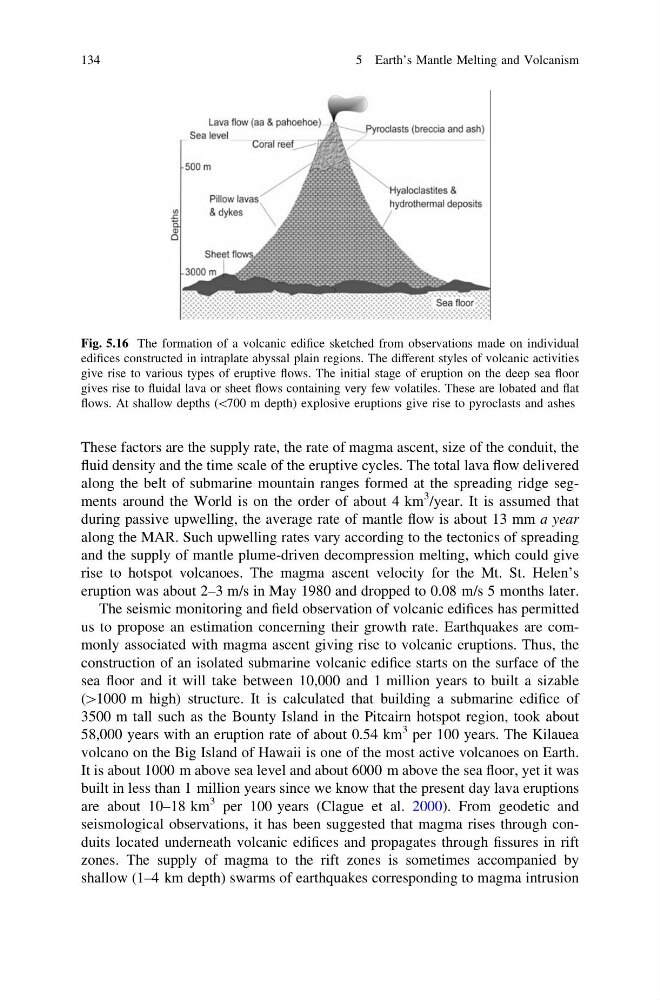
Fig. 5.16 The formation of a volcanic edifice sketched from observations made on individual
edifices constructed in intraplate abyssal plain regions. The different styles of volcanic activities
give rise to various types of eruptive flows. The initial stage of eruption on the deep sea floor
gives rise to fluidal lava or sheet flows containing very few volatiles. These are lobated and flat
flows. At shallow depths (\700 m depth) explosive eruptions give rise to pyroclasts and ashes
134
5 Earth’s Mantle Melting and Volcanism
fluid density and the time scale of the eruptive cycles. The total lava flow delivered
along the belt of submarine mountain ranges formed at the spreading ridge segments around the World is on the order of about 4 km
3 /year. It is assumed that
during passive upwelling, the average rate of mantle flow is about 13 mm a year
along the MAR. Such upwelling rates vary according to the tectonics of spreading
and the supply of mantle plume-driven decompression melting, which could give
rise to hotspot volcanoes. The magma ascent velocity for the Mt. St. Helen’s
eruption was about 2–3 m/s in May 1980 and dropped to 0.08 m/s 5 months later.
The seismic monitoring and field observation of volcanic edifices has permitted
us to propose an estimation concerning their growth rate. Earthquakes are commonly associated with magma ascent giving rise to volcanic eruptions. Thus, the
construction of an isolated submarine volcanic edifice starts on the surface of the
sea floor and it will take between 10,000 and 1 million years to built a sizable
([1000 m high) structure. It is calculated that building a submarine edifice of
3500 m tall such as the Bounty Island in the Pitcairn hotspot region, took about
58,000 years with an eruption rate of about 0.54 km
3 per 100 years. The Kilauea
volcano on the Big Island of Hawaii is one of the most active volcanoes on Earth.
It is about 1000 m above sea level and about 6000 m above the sea floor, yet it was
built in less than 1 million years since we know that the present day lava eruptions
are about 10–18 km
3 per 100 years (Clague et al. 2000). From geodetic and
seismological observations, it has been suggested that magma rises through conduits located underneath volcanic edifices and propagates through fissures in rift
zones. The supply of magma to the rift zones is sometimes accompanied by
shallow (1–4 km depth) swarms of earthquakes corresponding to magma intrusion
Fig. 5.16 The formation of a volcanic edifice sketched from observations made on individual
edifices constructed in intraplate abyssal plain regions. The different styles of volcanic activities
give rise to various types of eruptive flows. The initial stage of eruption on the deep sea floor
gives rise to fluidal lava or sheet flows containing very few volatiles. These are lobated and flat
flows. At shallow depths (\700 m depth) explosive eruptions give rise to pyroclasts and ashes
134
5 Earth’s Mantle Melting and Volcanism