

the noble gas contents such as helium (He) and argon (Ar) and they also discovered that traces of these noble gases are associated with the vesicles containing
mantle-derived CO 2 . Other ‘‘popping rocks’’ of basaltic composition with a vesicle
content up to about 17 % in volume were recovered at about 3,500 m depth on the
Mid-Atlantic Ridge rift valley near 14°N. The gaseous phases of these samples
consisted essentially of H 2 O (23–26 %) and CO 2 (29–77 %) and were studied by
Javoy and Pineau (1991).
Hyaloclasts and Pyroclasts: Their Origin
Explosive and/or forceful eruption of lava on the ocean floor is evidenced by the
presence of both hyaloclastites and pyroclast debris found close to their source.
The increase in CO 2 forming bubble pockets on top of the magma column is the
primary cause for the formation of vesicles in a mush-like (partially solid/partially
liquid) magmatic environment. In this type of environment, the gaseous phases,
H 2 O (in the melt) and CO 2 (forming bubbles that can create vesicles in solid rock)
are separate from the melt. An explosion is initiated at the top of the magmatic
column after any gas vesicles or gas pockets have broken up.
During an explosive magma extrusion on the sea floor, the larger droplets of hot
melt containing gas bubbles are quickly chilled and fragmented at contact with
seawater. The vesicle walls will then break and form small glassy shards, which,
after deposit and a subsequent mixing with sediment and/or rock debris, will become
cemented together on the sea floor due to the action of hydrothermalism. A hardened
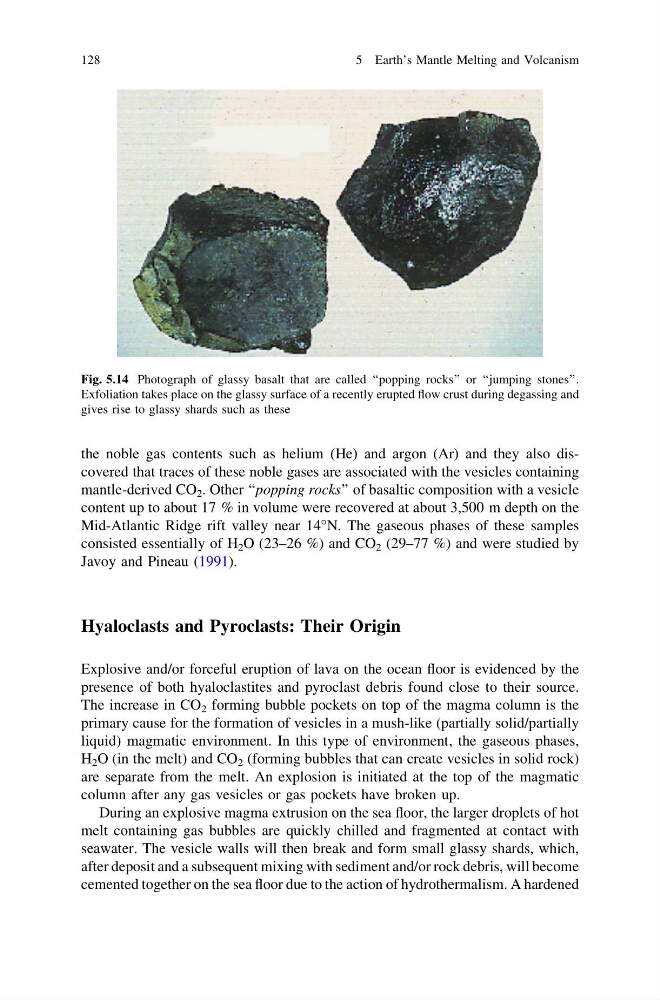
Fig. 5.14 Photograph of glassy basalt that are called ‘‘popping rocks’’ or ‘‘jumping stones’’.
Exfoliation takes place on the glassy surface of a recently erupted flow crust during degassing and
gives rise to glassy shards such as these
128
5 Earth’s Mantle Melting and Volcanism
mantle-derived CO 2 . Other ‘‘popping rocks’’ of basaltic composition with a vesicle
content up to about 17 % in volume were recovered at about 3,500 m depth on the
Mid-Atlantic Ridge rift valley near 14°N. The gaseous phases of these samples
consisted essentially of H 2 O (23–26 %) and CO 2 (29–77 %) and were studied by
Javoy and Pineau (1991).
Hyaloclasts and Pyroclasts: Their Origin
Explosive and/or forceful eruption of lava on the ocean floor is evidenced by the
presence of both hyaloclastites and pyroclast debris found close to their source.
The increase in CO 2 forming bubble pockets on top of the magma column is the
primary cause for the formation of vesicles in a mush-like (partially solid/partially
liquid) magmatic environment. In this type of environment, the gaseous phases,
H 2 O (in the melt) and CO 2 (forming bubbles that can create vesicles in solid rock)
are separate from the melt. An explosion is initiated at the top of the magmatic
column after any gas vesicles or gas pockets have broken up.
During an explosive magma extrusion on the sea floor, the larger droplets of hot
melt containing gas bubbles are quickly chilled and fragmented at contact with
seawater. The vesicle walls will then break and form small glassy shards, which,
after deposit and a subsequent mixing with sediment and/or rock debris, will become
cemented together on the sea floor due to the action of hydrothermalism. A hardened
Fig. 5.14 Photograph of glassy basalt that are called ‘‘popping rocks’’ or ‘‘jumping stones’’.
Exfoliation takes place on the glassy surface of a recently erupted flow crust during degassing and
gives rise to glassy shards such as these
128
5 Earth’s Mantle Melting and Volcanism