

8 Perspectives on Oil Spill Detection Using Synthetic Aperture Radar
141
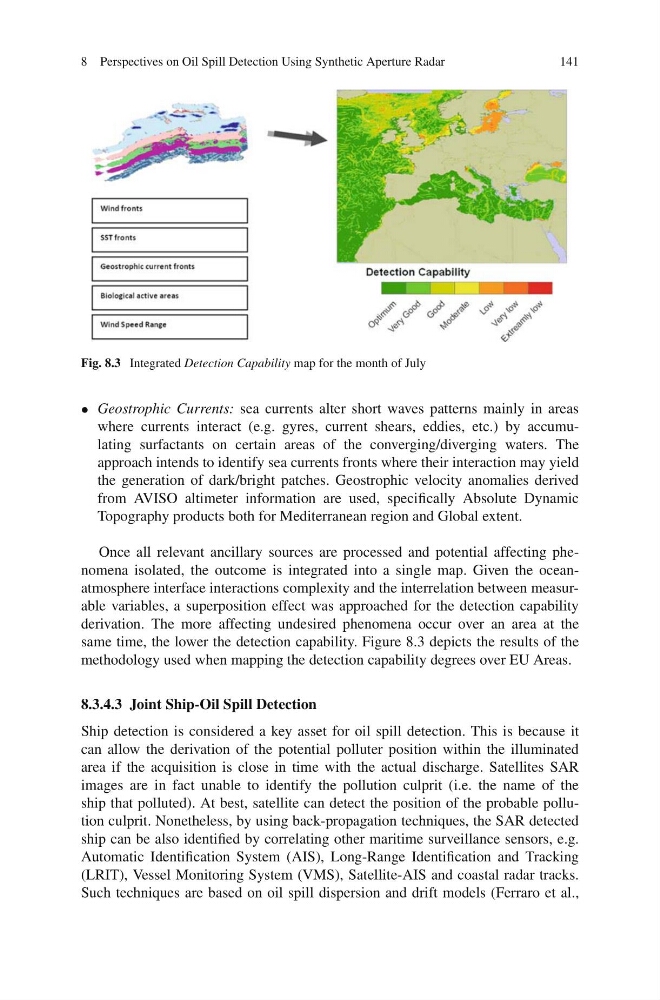
Fig. 8.3 Integrated Detection Capability map for the month of July
• Geostrophic Currents: sea currents alter short waves patterns mainly in areas
where currents interact (e.g. gyres, current shears, eddies, etc.) by accumulating surfactants on certain areas of the converging/diverging waters. The
approach intends to identify sea currents fronts where their interaction may yield
the generation of dark/bright patches. Geostrophic velocity anomalies derived
from AVISO altimeter information are used, specifically Absolute Dynamic
Topography products both for Mediterranean region and Global extent.
Once all relevant ancillary sources are processed and potential affecting phenomena isolated, the outcome is integrated into a single map. Given the oceanatmosphere interface interactions complexity and the interrelation between measurable variables, a superposition effect was approached for the detection capability
derivation. The more affecting undesired phenomena occur over an area at the
same time, the lower the detection capability. Figure 8.3 depicts the results of the
methodology used when mapping the detection capability degrees over EU Areas.
8.3.4.3 Joint Ship-Oil Spill Detection
Ship detection is considered a key asset for oil spill detection. This is because it
can allow the derivation of the potential polluter position within the illuminated
area if the acquisition is close in time with the actual discharge. Satellites SAR
images are in fact unable to identify the pollution culprit (i.e. the name of the
ship that polluted). At best, satellite can detect the position of the probable pollution culprit. Nonetheless, by using back-propagation techniques, the SAR detected
ship can be also identified by correlating other maritime surveillance sensors, e.g.
Automatic Identification System (AIS), Long-Range Identification and Tracking
(LRIT), Vessel Monitoring System (VMS), Satellite-AIS and coastal radar tracks.
Such techniques are based on oil spill dispersion and drift models (Ferraro et al.,
141
Fig. 8.3 Integrated Detection Capability map for the month of July
• Geostrophic Currents: sea currents alter short waves patterns mainly in areas
where currents interact (e.g. gyres, current shears, eddies, etc.) by accumulating surfactants on certain areas of the converging/diverging waters. The
approach intends to identify sea currents fronts where their interaction may yield
the generation of dark/bright patches. Geostrophic velocity anomalies derived
from AVISO altimeter information are used, specifically Absolute Dynamic
Topography products both for Mediterranean region and Global extent.
Once all relevant ancillary sources are processed and potential affecting phenomena isolated, the outcome is integrated into a single map. Given the oceanatmosphere interface interactions complexity and the interrelation between measurable variables, a superposition effect was approached for the detection capability
derivation. The more affecting undesired phenomena occur over an area at the
same time, the lower the detection capability. Figure 8.3 depicts the results of the
methodology used when mapping the detection capability degrees over EU Areas.
8.3.4.3 Joint Ship-Oil Spill Detection
Ship detection is considered a key asset for oil spill detection. This is because it
can allow the derivation of the potential polluter position within the illuminated
area if the acquisition is close in time with the actual discharge. Satellites SAR
images are in fact unable to identify the pollution culprit (i.e. the name of the
ship that polluted). At best, satellite can detect the position of the probable pollution culprit. Nonetheless, by using back-propagation techniques, the SAR detected
ship can be also identified by correlating other maritime surveillance sensors, e.g.
Automatic Identification System (AIS), Long-Range Identification and Tracking
(LRIT), Vessel Monitoring System (VMS), Satellite-AIS and coastal radar tracks.
Such techniques are based on oil spill dispersion and drift models (Ferraro et al.,