

52
3 The Oceanographic Context
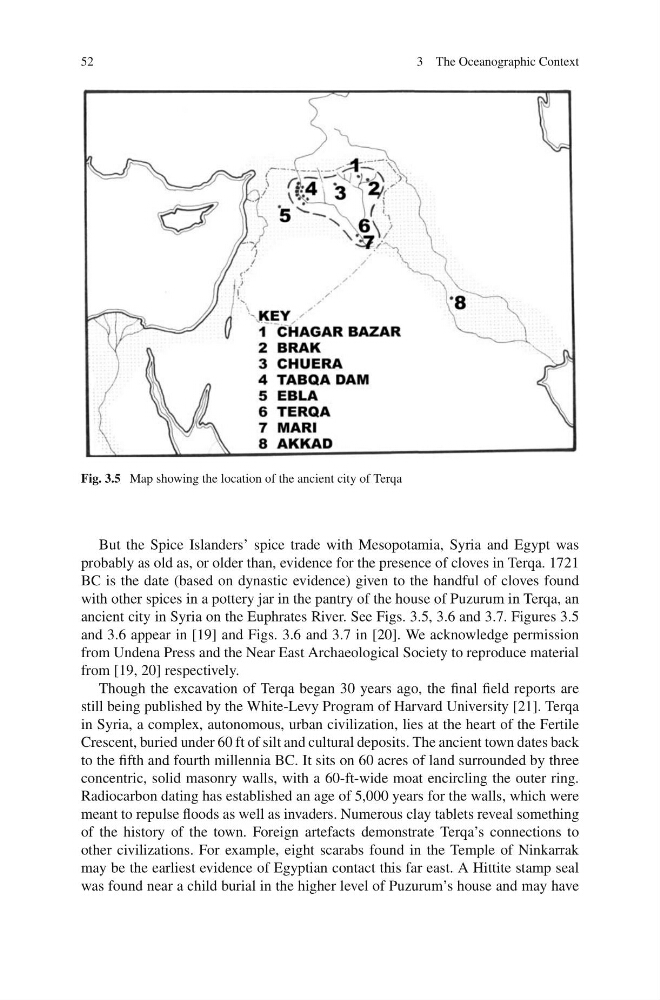
Fig. 3.5 Map showing the location of the ancient city of Terqa
But the Spice Islanders’ spice trade with Mesopotamia, Syria and Egypt was
probably as old as, or older than, evidence for the presence of cloves in Terqa. 1721
BC is the date (based on dynastic evidence) given to the handful of cloves found
with other spices in a pottery jar in the pantry of the house of Puzurum in Terqa, an
ancient city in Syria on the Euphrates River. See Figs. 3.5, 3.6 and 3.7. Figures 3.5
and 3.6 appear in [19] and Figs. 3.6 and 3.7 in [20]. We acknowledge permission
from Undena Press and the Near East Archaeological Society to reproduce material
from [19, 20] respectively.
Though the excavation of Terqa began 30 years ago, the final field reports are
still being published by the White-Levy Program of Harvard University [21]. Terqa
in Syria, a complex, autonomous, urban civilization, lies at the heart of the Fertile
Crescent, buried under 60 ft of silt and cultural deposits. The ancient town dates back
to the fifth and fourth millennia BC. It sits on 60 acres of land surrounded by three
concentric, solid masonry walls, with a 60-ft-wide moat encircling the outer ring.
Radiocarbon dating has established an age of 5,000 years for the walls, which were
meant to repulse floods as well as invaders. Numerous clay tablets reveal something
of the history of the town. Foreign artefacts demonstrate Terqa’s connections to
other civilizations. For example, eight scarabs found in the Temple of Ninkarrak
may be the earliest evidence of Egyptian contact this far east. A Hittite stamp seal
was found near a child burial in the higher level of Puzurum’s house and may have
3 The Oceanographic Context
Fig. 3.5 Map showing the location of the ancient city of Terqa
But the Spice Islanders’ spice trade with Mesopotamia, Syria and Egypt was
probably as old as, or older than, evidence for the presence of cloves in Terqa. 1721
BC is the date (based on dynastic evidence) given to the handful of cloves found
with other spices in a pottery jar in the pantry of the house of Puzurum in Terqa, an
ancient city in Syria on the Euphrates River. See Figs. 3.5, 3.6 and 3.7. Figures 3.5
and 3.6 appear in [19] and Figs. 3.6 and 3.7 in [20]. We acknowledge permission
from Undena Press and the Near East Archaeological Society to reproduce material
from [19, 20] respectively.
Though the excavation of Terqa began 30 years ago, the final field reports are
still being published by the White-Levy Program of Harvard University [21]. Terqa
in Syria, a complex, autonomous, urban civilization, lies at the heart of the Fertile
Crescent, buried under 60 ft of silt and cultural deposits. The ancient town dates back
to the fifth and fourth millennia BC. It sits on 60 acres of land surrounded by three
concentric, solid masonry walls, with a 60-ft-wide moat encircling the outer ring.
Radiocarbon dating has established an age of 5,000 years for the walls, which were
meant to repulse floods as well as invaders. Numerous clay tablets reveal something
of the history of the town. Foreign artefacts demonstrate Terqa’s connections to
other civilizations. For example, eight scarabs found in the Temple of Ninkarrak
may be the earliest evidence of Egyptian contact this far east. A Hittite stamp seal
was found near a child burial in the higher level of Puzurum’s house and may have