

352
20 Dating the First Migration to New Zealand
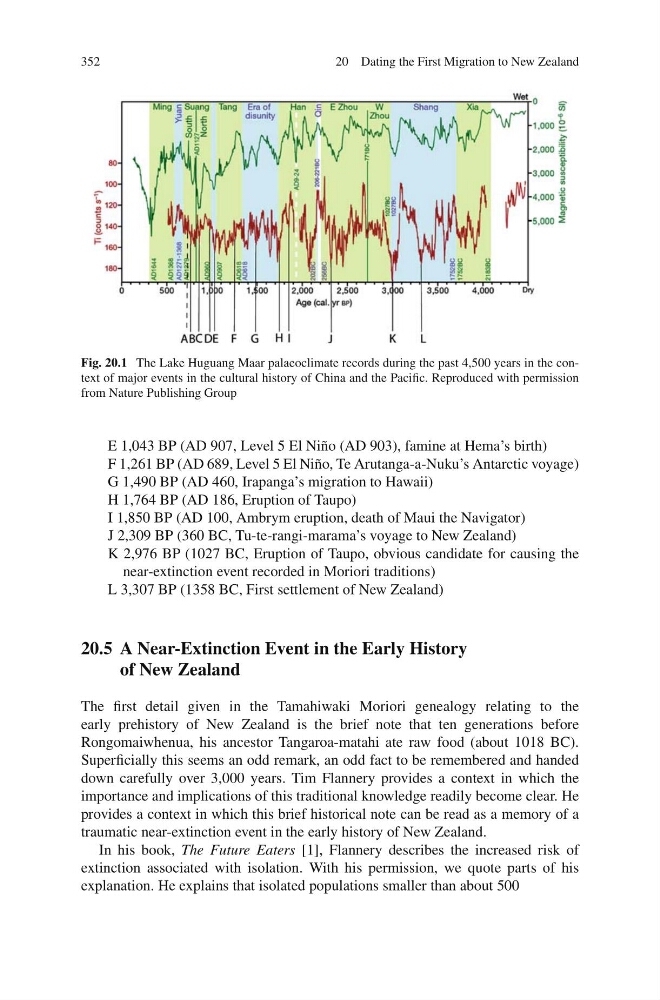
Fig. 20.1 The Lake Huguang Maar palaeoclimate records during the past 4,500 years in the context of major events in the cultural history of China and the Pacific. Reproduced with permission
from Nature Publishing Group
E 1,043 BP (AD 907, Level 5 El Niño (AD 903), famine at Hema’s birth)
F 1,261 BP (AD 689, Level 5 El Niño, Te Arutanga-a-Nuku’s Antarctic voyage)
G 1,490 BP (AD 460, Irapanga’s migration to Hawaii)
H 1,764 BP (AD 186, Eruption of Taupo)
I 1,850 BP (AD 100, Ambrym eruption, death of Maui the Navigator)
J 2,309 BP (360 BC, Tu-te-rangi-marama’s voyage to New Zealand)
K 2,976 BP (1027 BC, Eruption of Taupo, obvious candidate for causing the
near-extinction event recorded in Moriori traditions)
L 3,307 BP (1358 BC, First settlement of New Zealand)
20.5 A Near-Extinction Event in the Early History
of New Zealand
The first detail given in the Tamahiwaki Moriori genealogy relating to the
early prehistory of New Zealand is the brief note that ten generations before
Rongomaiwhenua, his ancestor Tangaroa-matahi ate raw food (about 1018 BC).
Superficially this seems an odd remark, an odd fact to be remembered and handed
down carefully over 3,000 years. Tim Flannery provides a context in which the
importance and implications of this traditional knowledge readily become clear. He
provides a context in which this brief historical note can be read as a memory of a
traumatic near-extinction event in the early history of New Zealand.
In his book, The Future Eaters [1], Flannery describes the increased risk of
extinction associated with isolation. With his permission, we quote parts of his
explanation. He explains that isolated populations smaller than about 500
20 Dating the First Migration to New Zealand
Fig. 20.1 The Lake Huguang Maar palaeoclimate records during the past 4,500 years in the context of major events in the cultural history of China and the Pacific. Reproduced with permission
from Nature Publishing Group
E 1,043 BP (AD 907, Level 5 El Niño (AD 903), famine at Hema’s birth)
F 1,261 BP (AD 689, Level 5 El Niño, Te Arutanga-a-Nuku’s Antarctic voyage)
G 1,490 BP (AD 460, Irapanga’s migration to Hawaii)
H 1,764 BP (AD 186, Eruption of Taupo)
I 1,850 BP (AD 100, Ambrym eruption, death of Maui the Navigator)
J 2,309 BP (360 BC, Tu-te-rangi-marama’s voyage to New Zealand)
K 2,976 BP (1027 BC, Eruption of Taupo, obvious candidate for causing the
near-extinction event recorded in Moriori traditions)
L 3,307 BP (1358 BC, First settlement of New Zealand)
20.5 A Near-Extinction Event in the Early History
of New Zealand
The first detail given in the Tamahiwaki Moriori genealogy relating to the
early prehistory of New Zealand is the brief note that ten generations before
Rongomaiwhenua, his ancestor Tangaroa-matahi ate raw food (about 1018 BC).
Superficially this seems an odd remark, an odd fact to be remembered and handed
down carefully over 3,000 years. Tim Flannery provides a context in which the
importance and implications of this traditional knowledge readily become clear. He
provides a context in which this brief historical note can be read as a memory of a
traumatic near-extinction event in the early history of New Zealand.
In his book, The Future Eaters [1], Flannery describes the increased risk of
extinction associated with isolation. With his permission, we quote parts of his
explanation. He explains that isolated populations smaller than about 500