

13.2 Evidence from Early European Descriptions of Maori Pa
221
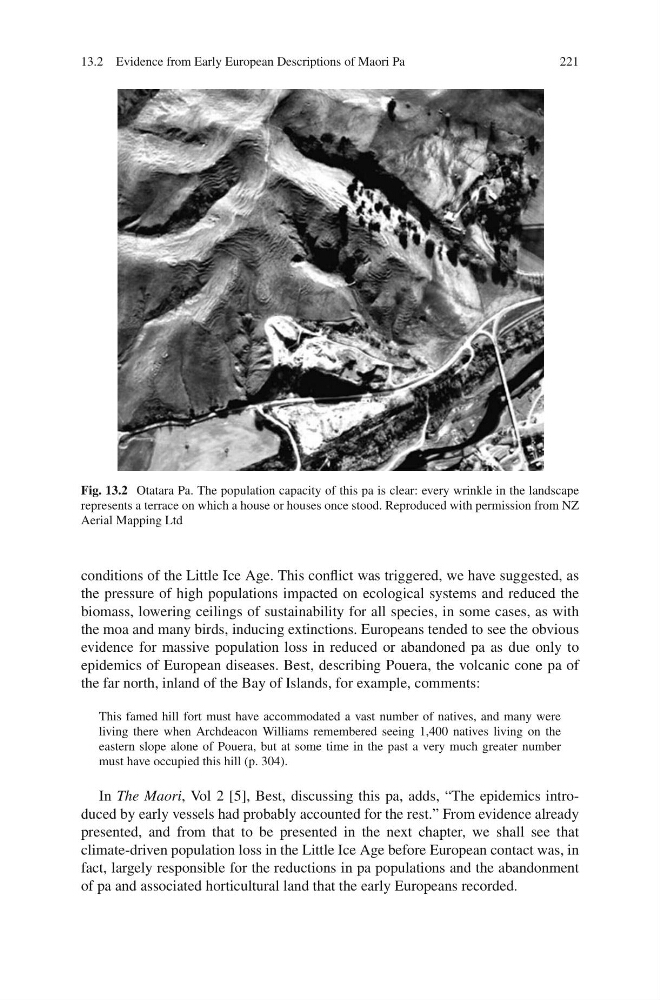
Fig. 13.2 Otatara Pa. The population capacity of this pa is clear: every wrinkle in the landscape
represents a terrace on which a house or houses once stood. Reproduced with permission from NZ
Aerial Mapping Ltd
conditions of the Little Ice Age. This conflict was triggered, we have suggested, as
the pressure of high populations impacted on ecological systems and reduced the
biomass, lowering ceilings of sustainability for all species, in some cases, as with
the moa and many birds, inducing extinctions. Europeans tended to see the obvious
evidence for massive population loss in reduced or abandoned pa as due only to
epidemics of European diseases. Best, describing Pouera, the volcanic cone pa of
the far north, inland of the Bay of Islands, for example, comments:
This famed hill fort must have accommodated a vast number of natives, and many were
living there when Archdeacon Williams remembered seeing 1,400 natives living on the
eastern slope alone of Pouera, but at some time in the past a very much greater number
must have occupied this hill (p. 304).
In The Maori, Vol 2 [5], Best, discussing this pa, adds, “The epidemics introduced by early vessels had probably accounted for the rest.” From evidence already
presented, and from that to be presented in the next chapter, we shall see that
climate-driven population loss in the Little Ice Age before European contact was, in
fact, largely responsible for the reductions in pa populations and the abandonment
of pa and associated horticultural land that the early Europeans recorded.
221
Fig. 13.2 Otatara Pa. The population capacity of this pa is clear: every wrinkle in the landscape
represents a terrace on which a house or houses once stood. Reproduced with permission from NZ
Aerial Mapping Ltd
conditions of the Little Ice Age. This conflict was triggered, we have suggested, as
the pressure of high populations impacted on ecological systems and reduced the
biomass, lowering ceilings of sustainability for all species, in some cases, as with
the moa and many birds, inducing extinctions. Europeans tended to see the obvious
evidence for massive population loss in reduced or abandoned pa as due only to
epidemics of European diseases. Best, describing Pouera, the volcanic cone pa of
the far north, inland of the Bay of Islands, for example, comments:
This famed hill fort must have accommodated a vast number of natives, and many were
living there when Archdeacon Williams remembered seeing 1,400 natives living on the
eastern slope alone of Pouera, but at some time in the past a very much greater number
must have occupied this hill (p. 304).
In The Maori, Vol 2 [5], Best, discussing this pa, adds, “The epidemics introduced by early vessels had probably accounted for the rest.” From evidence already
presented, and from that to be presented in the next chapter, we shall see that
climate-driven population loss in the Little Ice Age before European contact was, in
fact, largely responsible for the reductions in pa populations and the abandonment
of pa and associated horticultural land that the early Europeans recorded.