

12.9 Cannibalism in New Zealand
209
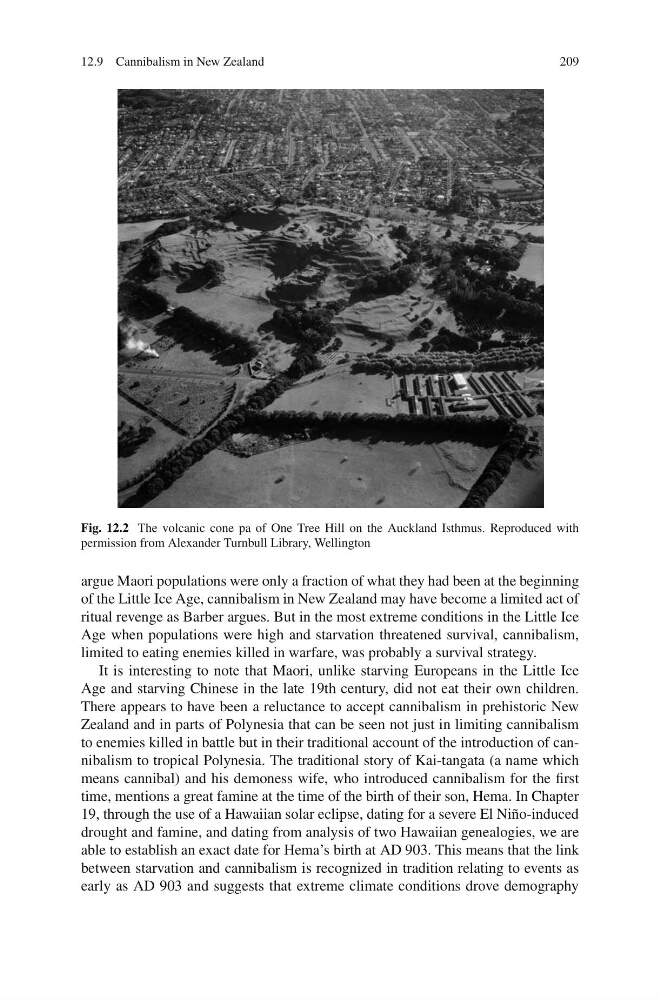
Fig. 12.2 The volcanic cone pa of One Tree Hill on the Auckland Isthmus. Reproduced with
permission from Alexander Turnbull Library, Wellington
argue Maori populations were only a fraction of what they had been at the beginning
of the Little Ice Age, cannibalism in New Zealand may have become a limited act of
ritual revenge as Barber argues. But in the most extreme conditions in the Little Ice
Age when populations were high and starvation threatened survival, cannibalism,
limited to eating enemies killed in warfare, was probably a survival strategy.
It is interesting to note that Maori, unlike starving Europeans in the Little Ice
Age and starving Chinese in the late 19th century, did not eat their own children.
There appears to have been a reluctance to accept cannibalism in prehistoric New
Zealand and in parts of Polynesia that can be seen not just in limiting cannibalism
to enemies killed in battle but in their traditional account of the introduction of cannibalism to tropical Polynesia. The traditional story of Kai-tangata (a name which
means cannibal) and his demoness wife, who introduced cannibalism for the first
time, mentions a great famine at the time of the birth of their son, Hema. In Chapter
19, through the use of a Hawaiian solar eclipse, dating for a severe El Niño-induced
drought and famine, and dating from analysis of two Hawaiian genealogies, we are
able to establish an exact date for Hema’s birth at AD 903. This means that the link
between starvation and cannibalism is recognized in tradition relating to events as
early as AD 903 and suggests that extreme climate conditions drove demography
209
Fig. 12.2 The volcanic cone pa of One Tree Hill on the Auckland Isthmus. Reproduced with
permission from Alexander Turnbull Library, Wellington
argue Maori populations were only a fraction of what they had been at the beginning
of the Little Ice Age, cannibalism in New Zealand may have become a limited act of
ritual revenge as Barber argues. But in the most extreme conditions in the Little Ice
Age when populations were high and starvation threatened survival, cannibalism,
limited to eating enemies killed in warfare, was probably a survival strategy.
It is interesting to note that Maori, unlike starving Europeans in the Little Ice
Age and starving Chinese in the late 19th century, did not eat their own children.
There appears to have been a reluctance to accept cannibalism in prehistoric New
Zealand and in parts of Polynesia that can be seen not just in limiting cannibalism
to enemies killed in battle but in their traditional account of the introduction of cannibalism to tropical Polynesia. The traditional story of Kai-tangata (a name which
means cannibal) and his demoness wife, who introduced cannibalism for the first
time, mentions a great famine at the time of the birth of their son, Hema. In Chapter
19, through the use of a Hawaiian solar eclipse, dating for a severe El Niño-induced
drought and famine, and dating from analysis of two Hawaiian genealogies, we are
able to establish an exact date for Hema’s birth at AD 903. This means that the link
between starvation and cannibalism is recognized in tradition relating to events as
early as AD 903 and suggests that extreme climate conditions drove demography