

148
9 Exploration Strategies, Settlement Sequence and the Evolution of Canoe Design
by the extent of part or whole of the turning current, the size of the island drawing
the current to it or the fact that he was reaching a continent.
Because part of a major ocean current changes direction as it approaches a landmass, such a change would immediately alert an explorer to the nearness of land.
Prehistoric explorers following the East Australian Current that flows south past
New Caledonia along the eastern coast of Australia, for example, would have known
as soon as a large part of the current at its eastern edge turned towards the South
Island of New Zealand that this signalled the presence of land. They would also
have known what to expect if they followed that part of the current as it moved
towards the land and, reversing direction, flowed along its length. They would have
realized that the reversed current would carry them back at least some way towards
their homeland or the starting point for their journey. And, from the very width of
that part of the southward flowing current that diverted to flow towards the South
Island, they would have realized that the land they were about to discover was no
mere pinprick in the ocean but very large indeed.
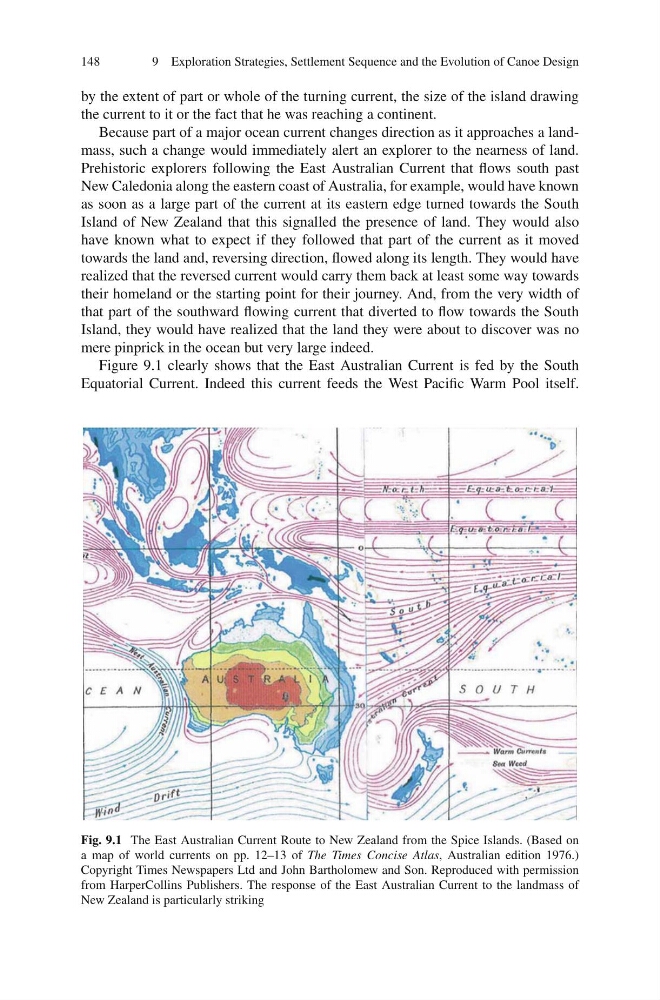
Figure 9.1 clearly shows that the East Australian Current is fed by the South
Equatorial Current. Indeed this current feeds the West Pacific Warm Pool itself.
Fig. 9.1 The East Australian Current Route to New Zealand from the Spice Islands. (Based on
a map of world currents on pp. 12–13 of The Times Concise Atlas, Australian edition 1976.)
Copyright Times Newspapers Ltd and John Bartholomew and Son. Reproduced with permission
from HarperCollins Publishers. The response of the East Australian Current to the landmass of
New Zealand is particularly striking
9 Exploration Strategies, Settlement Sequence and the Evolution of Canoe Design
by the extent of part or whole of the turning current, the size of the island drawing
the current to it or the fact that he was reaching a continent.
Because part of a major ocean current changes direction as it approaches a landmass, such a change would immediately alert an explorer to the nearness of land.
Prehistoric explorers following the East Australian Current that flows south past
New Caledonia along the eastern coast of Australia, for example, would have known
as soon as a large part of the current at its eastern edge turned towards the South
Island of New Zealand that this signalled the presence of land. They would also
have known what to expect if they followed that part of the current as it moved
towards the land and, reversing direction, flowed along its length. They would have
realized that the reversed current would carry them back at least some way towards
their homeland or the starting point for their journey. And, from the very width of
that part of the southward flowing current that diverted to flow towards the South
Island, they would have realized that the land they were about to discover was no
mere pinprick in the ocean but very large indeed.
Figure 9.1 clearly shows that the East Australian Current is fed by the South
Equatorial Current. Indeed this current feeds the West Pacific Warm Pool itself.
Fig. 9.1 The East Australian Current Route to New Zealand from the Spice Islands. (Based on
a map of world currents on pp. 12–13 of The Times Concise Atlas, Australian edition 1976.)
Copyright Times Newspapers Ltd and John Bartholomew and Son. Reproduced with permission
from HarperCollins Publishers. The response of the East Australian Current to the landmass of
New Zealand is particularly striking