

8.4 Estimating the Frequency of Transpacific Voyages
141
used, especially if double-outriggers or sailing rafts were involved. The disadvantage of the low carrying capacity of sailing rafts and double-outriggers is obvious
compared either with later Polynesian double-canoes or the Chinese junk. But transfers of beans and seeds and tubers, as of spices, involved low volume. We have
seen that probably by 6,000 years ago Spice Island mariners had access through
a coastal trading route to India and probably by 3,500 years ago had access using
the Cinnamon Route and Africa to the Middle East and Europe. Certainly it could
be claimed that by 1500 BC Spice Islanders were in a position to carry out lowvolume trade spanning two oceans. Sorenson and Johannessen’s evidence implies
Spice Island contact with America by 1600 BC.
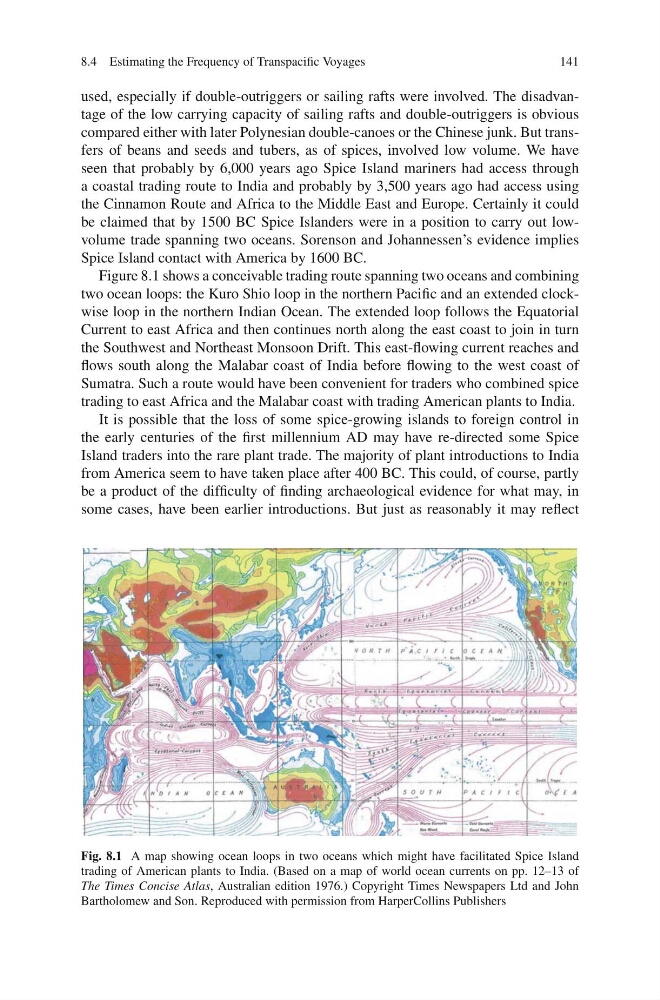
Figure 8.1 shows a conceivable trading route spanning two oceans and combining
two ocean loops: the Kuro Shio loop in the northern Pacific and an extended clockwise loop in the northern Indian Ocean. The extended loop follows the Equatorial
Current to east Africa and then continues north along the east coast to join in turn
the Southwest and Northeast Monsoon Drift. This east-flowing current reaches and
flows south along the Malabar coast of India before flowing to the west coast of
Sumatra. Such a route would have been convenient for traders who combined spice
trading to east Africa and the Malabar coast with trading American plants to India.
It is possible that the loss of some spice-growing islands to foreign control in
the early centuries of the first millennium AD may have re-directed some Spice
Island traders into the rare plant trade. The majority of plant introductions to India
from America seem to have taken place after 400 BC. This could, of course, partly
be a product of the difficulty of finding archaeological evidence for what may, in
some cases, have been earlier introductions. But just as reasonably it may reflect
Fig. 8.1 A map showing ocean loops in two oceans which might have facilitated Spice Island
trading of American plants to India. (Based on a map of world ocean currents on pp. 12–13 of
The Times Concise Atlas, Australian edition 1976.) Copyright Times Newspapers Ltd and John
Bartholomew and Son. Reproduced with permission from HarperCollins Publishers
141
used, especially if double-outriggers or sailing rafts were involved. The disadvantage of the low carrying capacity of sailing rafts and double-outriggers is obvious
compared either with later Polynesian double-canoes or the Chinese junk. But transfers of beans and seeds and tubers, as of spices, involved low volume. We have
seen that probably by 6,000 years ago Spice Island mariners had access through
a coastal trading route to India and probably by 3,500 years ago had access using
the Cinnamon Route and Africa to the Middle East and Europe. Certainly it could
be claimed that by 1500 BC Spice Islanders were in a position to carry out lowvolume trade spanning two oceans. Sorenson and Johannessen’s evidence implies
Spice Island contact with America by 1600 BC.
Figure 8.1 shows a conceivable trading route spanning two oceans and combining
two ocean loops: the Kuro Shio loop in the northern Pacific and an extended clockwise loop in the northern Indian Ocean. The extended loop follows the Equatorial
Current to east Africa and then continues north along the east coast to join in turn
the Southwest and Northeast Monsoon Drift. This east-flowing current reaches and
flows south along the Malabar coast of India before flowing to the west coast of
Sumatra. Such a route would have been convenient for traders who combined spice
trading to east Africa and the Malabar coast with trading American plants to India.
It is possible that the loss of some spice-growing islands to foreign control in
the early centuries of the first millennium AD may have re-directed some Spice
Island traders into the rare plant trade. The majority of plant introductions to India
from America seem to have taken place after 400 BC. This could, of course, partly
be a product of the difficulty of finding archaeological evidence for what may, in
some cases, have been earlier introductions. But just as reasonably it may reflect
Fig. 8.1 A map showing ocean loops in two oceans which might have facilitated Spice Island
trading of American plants to India. (Based on a map of world ocean currents on pp. 12–13 of
The Times Concise Atlas, Australian edition 1976.) Copyright Times Newspapers Ltd and John
Bartholomew and Son. Reproduced with permission from HarperCollins Publishers