

4.6 A Replica Voyage from Java to Africa
81
4.6 A Replica Voyage from Java to Africa
In 2003, a navy-trained, London fund manager, Philip Beale, left his job to fulfil his
dream of creating a replica of the Borobudur ship, the Halmaherian double-outrigger
shown in bas-relief carvings on the walls of the 8th century temple of Borobudur in
Java. Haddon and Hornell tell us that five of the eight ships pictured at Borobudur
are double-masted double-outriggers and claim that the bas-reliefs at Borobudur are
the oldest archaeological evidence for such ships from the Indonesian area [24].
There is no doubt that Halmaherian double-outriggers sailed the Cinnamon
Route, possibly as long as 3,500 years ago, and that, till the 20th century, doubleoutriggers were still to be seen in Madagascar and on the east coast of Africa. That
their origin was Indonesian was clear to Haddon and Hornell from their Javanese
lashings.
For constructing his replica, Beale had the assistance of a marine archaeologist,
Nick Burningham, and assistance from the Indonesian government, interested in
commemorating the 20th anniversary of the UNESCO restoration of the Borobudur
temple. Beale commissioned Saad Abdullah, a ship builder from the Kangean
islands, aged 69, to construct the 18 m long boat. It took six months for a team of
26 to build the wood and bamboo ship which was built without using a single nail.
On 15 August 2003, the ship left Java for the Seychelles. In Beale’s words from
his website, “We flew across in 26 days, an average speed of 5.3 knots for the 3500
miles” [25].
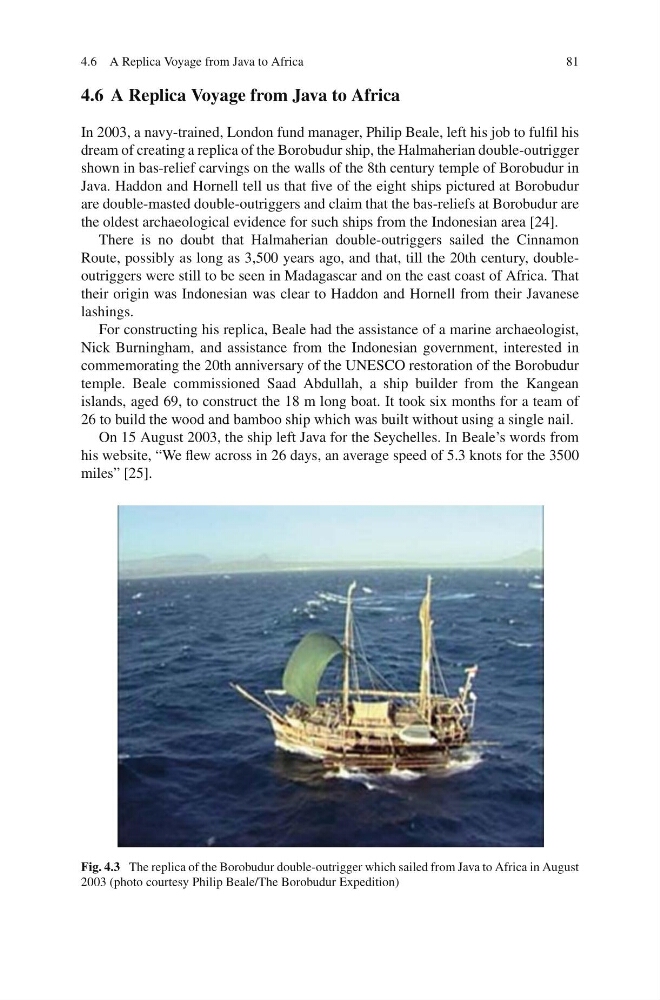
Fig. 4.3 The replica of the Borobudur double-outrigger which sailed from Java to Africa in August
2003 (photo courtesy Philip Beale/The Borobudur Expedition)
81
4.6 A Replica Voyage from Java to Africa
In 2003, a navy-trained, London fund manager, Philip Beale, left his job to fulfil his
dream of creating a replica of the Borobudur ship, the Halmaherian double-outrigger
shown in bas-relief carvings on the walls of the 8th century temple of Borobudur in
Java. Haddon and Hornell tell us that five of the eight ships pictured at Borobudur
are double-masted double-outriggers and claim that the bas-reliefs at Borobudur are
the oldest archaeological evidence for such ships from the Indonesian area [24].
There is no doubt that Halmaherian double-outriggers sailed the Cinnamon
Route, possibly as long as 3,500 years ago, and that, till the 20th century, doubleoutriggers were still to be seen in Madagascar and on the east coast of Africa. That
their origin was Indonesian was clear to Haddon and Hornell from their Javanese
lashings.
For constructing his replica, Beale had the assistance of a marine archaeologist,
Nick Burningham, and assistance from the Indonesian government, interested in
commemorating the 20th anniversary of the UNESCO restoration of the Borobudur
temple. Beale commissioned Saad Abdullah, a ship builder from the Kangean
islands, aged 69, to construct the 18 m long boat. It took six months for a team of
26 to build the wood and bamboo ship which was built without using a single nail.
On 15 August 2003, the ship left Java for the Seychelles. In Beale’s words from
his website, “We flew across in 26 days, an average speed of 5.3 knots for the 3500
miles” [25].
Fig. 4.3 The replica of the Borobudur double-outrigger which sailed from Java to Africa in August
2003 (photo courtesy Philip Beale/The Borobudur Expedition)