

556
Land-Ocean Systems in the Siberian Arctic: Dynamics and History
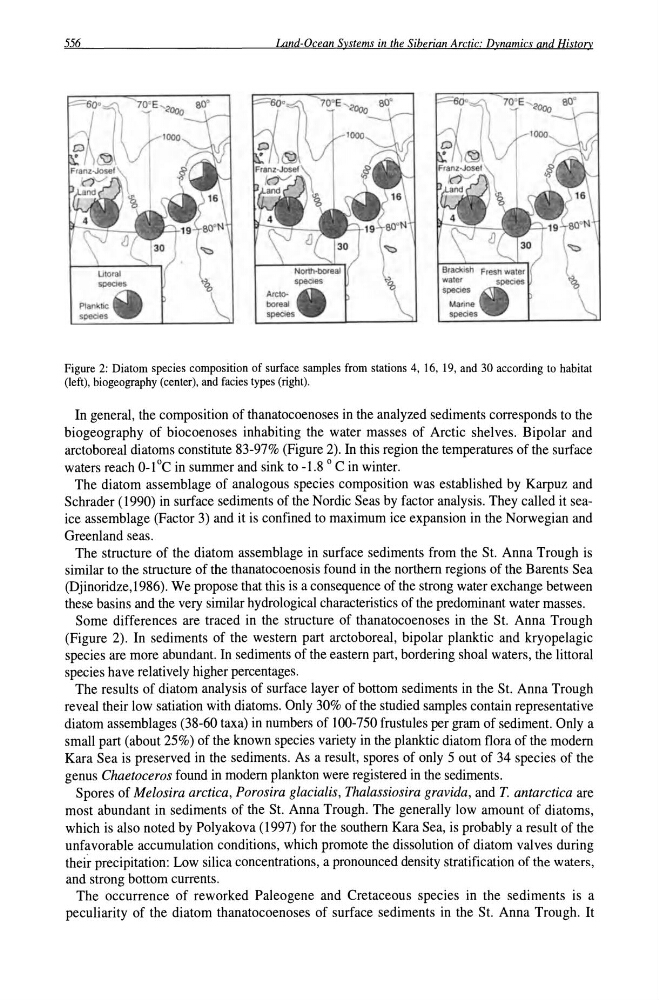
Figure 2: Diatom species composition of surface samples from stations 4, 16, 19, and 30 according to habitat
(left), biogeography (center), and facies types (right).
In general, the composition of thanatocoenoses in the analyzed sediments corresponds to the
biogeography of biocoenoses inhabiting the water masses of Arctic shelves. Bipolar and
arctoboreal diatoms constitute 83-97% (Figure 2). In this region the temperatures of the surface
waters reach 0-1 °c in summer and sink to -1.8 0 C in winter.
The diatom assemblage of analogous species composition was established by Karpuz and
Schrader (1990) in surface sediments of the Nordic Seas by factor analysis. They called it seaice assemblage (Factor 3) and it is confined to maximum ice expansion in the Norwegian and
Greenland seas.
The structure of the diatom assemblage in surface sediments from the St. Anna Trough is
similar to the structure of the thanatocoenosis found in the northern regions of the Barents Sea
(Djinoridze, 1986) . We propose that this is a consequence of the strong water exchange between
these basins and the very similar hydrological characteristics of the predominant water masses.
Some differences are traced in the structure of thanatocoenoses in the St. Anna Trough
(Figure 2). In sediments of the western part arctoboreal, bipolar planktic and kryopelagic
species are more abundant. In sediments of the eastern part, bordering shoal waters, the littoral
species have relatively higher percentages.
The results of diatom analysis of surface layer of bottom sediments in the St. Anna Trough
reveal their low satiation with diatoms. Only 30% of the studied samples contain representative
diatom assemblages (38-60 taxa) in numbers of 100-750 frustules per gram of sediment. Only a
small part (about 25%) of the known species variety in the planktic diatom flora of the modem
Kara Sea is preserved in the sediments. As a result, spores of only 5 out of 34 species of the
genus Chaetoceros found in modem plankton were registered in the sediments.
Spores of Melosira arctica, Porosira glacialis, Thalassiosira gravida, and T. antarctica are
most abundant in sediments of the St. Anna Trough. The generally low amount of diatoms,
which is also noted by Polyakova (1997) for the southern Kara Sea, is probably a result of the
unfavorable accumulation conditions, which promote the dissolution of diatom valves during
their precipitation: Low silica concentrations, a pronounced density stratification of the waters,
and strong bottom currents.
The occurrence of reworked Paleogene and Cretaceous species in the sediments is a
peculiarity of the diatom thanatocoenoses of surface sediments in the St. Anna Trough. It
Land-Ocean Systems in the Siberian Arctic: Dynamics and History
Figure 2: Diatom species composition of surface samples from stations 4, 16, 19, and 30 according to habitat
(left), biogeography (center), and facies types (right).
In general, the composition of thanatocoenoses in the analyzed sediments corresponds to the
biogeography of biocoenoses inhabiting the water masses of Arctic shelves. Bipolar and
arctoboreal diatoms constitute 83-97% (Figure 2). In this region the temperatures of the surface
waters reach 0-1 °c in summer and sink to -1.8 0 C in winter.
The diatom assemblage of analogous species composition was established by Karpuz and
Schrader (1990) in surface sediments of the Nordic Seas by factor analysis. They called it seaice assemblage (Factor 3) and it is confined to maximum ice expansion in the Norwegian and
Greenland seas.
The structure of the diatom assemblage in surface sediments from the St. Anna Trough is
similar to the structure of the thanatocoenosis found in the northern regions of the Barents Sea
(Djinoridze, 1986) . We propose that this is a consequence of the strong water exchange between
these basins and the very similar hydrological characteristics of the predominant water masses.
Some differences are traced in the structure of thanatocoenoses in the St. Anna Trough
(Figure 2). In sediments of the western part arctoboreal, bipolar planktic and kryopelagic
species are more abundant. In sediments of the eastern part, bordering shoal waters, the littoral
species have relatively higher percentages.
The results of diatom analysis of surface layer of bottom sediments in the St. Anna Trough
reveal their low satiation with diatoms. Only 30% of the studied samples contain representative
diatom assemblages (38-60 taxa) in numbers of 100-750 frustules per gram of sediment. Only a
small part (about 25%) of the known species variety in the planktic diatom flora of the modem
Kara Sea is preserved in the sediments. As a result, spores of only 5 out of 34 species of the
genus Chaetoceros found in modem plankton were registered in the sediments.
Spores of Melosira arctica, Porosira glacialis, Thalassiosira gravida, and T. antarctica are
most abundant in sediments of the St. Anna Trough. The generally low amount of diatoms,
which is also noted by Polyakova (1997) for the southern Kara Sea, is probably a result of the
unfavorable accumulation conditions, which promote the dissolution of diatom valves during
their precipitation: Low silica concentrations, a pronounced density stratification of the waters,
and strong bottom currents.
The occurrence of reworked Paleogene and Cretaceous species in the sediments is a
peculiarity of the diatom thanatocoenoses of surface sediments in the St. Anna Trough. It