

mechanism. There is typically a pronounced asymmetry
in surge heights along the coast, related to the wind
speed asymmetry previously noted and the direction
of the wind, with higher surges to the right of landfall
(relative to direction of storm heading) in the northern
hemisphere and to the left in the southern hemisphere.
• Rough seas: Large waves pose a major threat to offshore structures, such as oil platforms and transshipment facilities, as well as to commercial shipping and
recreational boating. Besides the loss of life and property when a vessel is damaged or sinks, delays in the
transport of goods and the impact of increased ship time
related to rough seas can dramatically influence shipping costs. In addition to the effects of waves offshore,
large waves along coasts, particularly when superposed
upon the elevated water levels, are also responsible for
substantial loss of life and property in coastal
communities.
• Strong winds: Strong winds associated with tropical
cyclones also pose a major threat to coastal communities. Roofs can be lifted, trees uprooted, and power lines
torn down by the magnitude of force from the wind. In
some areas of the world with minimal building codes,
damage from winds alone can produce massive
devastation.
• Inland flooding: Coastal areas of many islands around
the world are bounded by steep topography. When the
moisture laden air in tropical cyclones is forced up these
slopes, orographic lifting can produce extreme rainfall
rates, which often produce extreme flooding in coastal
rivers and streams. The effects of such high precipitation rates can be compounded by mudslides on watersoaked slopes; and in many areas where the mountain
rivers lead into coastal ports and harbors, the coupling
of elevated coastal water levels and the very high river
discharges can combine to inundate entire coastal
towns.
A global perspective
Tropical cyclones play a vital role in the global atmospheric circulation and provide vital rain to many areas
of the world. However, when these storms exceed local
threshold values related to wind speed, precipitation or
surge generation, their impacts are extremely devastating.
Recent events, such as Hurricane Katrina and the hybrid
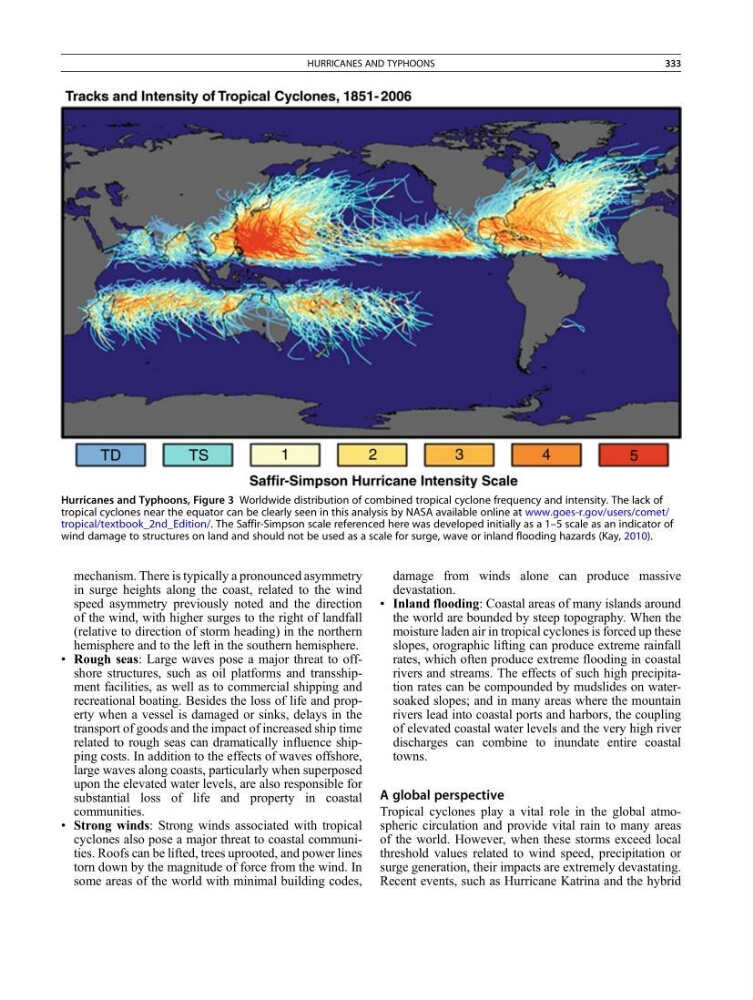
Hurricanes and Typhoons, Figure 3 Worldwide distribution of combined tropical cyclone frequency and intensity. The lack of
tropical cyclones near the equator can be clearly seen in this analysis by NASA available online at www.goes-r.gov/users/comet/
tropical/textbook_2nd_Edition/. The Saffir-Simpson scale referenced here was developed initially as a 1–5 scale as an indicator of
wind damage to structures on land and should not be used as a scale for surge, wave or inland flooding hazards (Kay, 2010).
HURRICANES AND TYPHOONS
333
in surge heights along the coast, related to the wind
speed asymmetry previously noted and the direction
of the wind, with higher surges to the right of landfall
(relative to direction of storm heading) in the northern
hemisphere and to the left in the southern hemisphere.
• Rough seas: Large waves pose a major threat to offshore structures, such as oil platforms and transshipment facilities, as well as to commercial shipping and
recreational boating. Besides the loss of life and property when a vessel is damaged or sinks, delays in the
transport of goods and the impact of increased ship time
related to rough seas can dramatically influence shipping costs. In addition to the effects of waves offshore,
large waves along coasts, particularly when superposed
upon the elevated water levels, are also responsible for
substantial loss of life and property in coastal
communities.
• Strong winds: Strong winds associated with tropical
cyclones also pose a major threat to coastal communities. Roofs can be lifted, trees uprooted, and power lines
torn down by the magnitude of force from the wind. In
some areas of the world with minimal building codes,
damage from winds alone can produce massive
devastation.
• Inland flooding: Coastal areas of many islands around
the world are bounded by steep topography. When the
moisture laden air in tropical cyclones is forced up these
slopes, orographic lifting can produce extreme rainfall
rates, which often produce extreme flooding in coastal
rivers and streams. The effects of such high precipitation rates can be compounded by mudslides on watersoaked slopes; and in many areas where the mountain
rivers lead into coastal ports and harbors, the coupling
of elevated coastal water levels and the very high river
discharges can combine to inundate entire coastal
towns.
A global perspective
Tropical cyclones play a vital role in the global atmospheric circulation and provide vital rain to many areas
of the world. However, when these storms exceed local
threshold values related to wind speed, precipitation or
surge generation, their impacts are extremely devastating.
Recent events, such as Hurricane Katrina and the hybrid
Hurricanes and Typhoons, Figure 3 Worldwide distribution of combined tropical cyclone frequency and intensity. The lack of
tropical cyclones near the equator can be clearly seen in this analysis by NASA available online at www.goes-r.gov/users/comet/
tropical/textbook_2nd_Edition/. The Saffir-Simpson scale referenced here was developed initially as a 1–5 scale as an indicator of
wind damage to structures on land and should not be used as a scale for surge, wave or inland flooding hazards (Kay, 2010).
HURRICANES AND TYPHOONS
333