

sediment waves and drift mounds. These drifts are aligned
along the contour-following bottom currents and are
called contourites. The variation of current velocities is
recorded by bedding and grain-size distribution, the latter
one mostly relying on the sortable silt. On a larger scale,
the internal architecture and the horizontal distribution of
these contourite beds can be studied by high-resolution
seismics. The internal structure of the accumulation patterns of sediment waves and drift mounds indicates the
direction of sediment transport (Stow et al., 2002). Especially the contourites generated by the Mediterranean Outflow (Roque et al., 2012), the Antarctic Circumpolar
Current (Michels et al., 2001), and the western boundary
currents of the North Atlantic Deep Water (MüllerMichaelis et al., 2013) contain a long-term record of
bottom-water characteristics and variations of the flow
intensity.
Summary
A high variety of physical and geochemical parameters of
the circulating water masses are recorded by biological,
geochemical, and petrophysical proxies, which are preserved in the bottom sediments and can be used to monitor
changes of the general ocean circulation pattern.
Bibliography
Cobb, K. M., Charles, C. D., Cheng, H., and Edwards, R. L., 2003.
El Nino/southern oscillation and tropical pacific climate during
the last millennium. Nature, 424(6946), 271–276.
Exon, N. F., Kennett, J. P., and Malone, M. J., 2004. Leg 189 synthesis: cretaceous-Holocene history of the Tasmanian Gateway. In
Exon, N. F., Kennett, J. P., and Malone, M. J. (eds.), Proceedings
of the ODP Scientific Results, Vol. 189, pp. 1–37.
Haug, G. H., and Tiedemann, R., 1998. Effect of the Isthmus of Panama on Atlantic Ocean thermohaline circulation. Nature, 393,
673–676.
Holbourn, A. E., Kuhnt, W., and Xu, J., 2011. Indonesian
throughflow variability during the last two glacial cycles: the
Timor Sea outflow. In The SE Asian Gateway: History and Tectonics of Australia-Asia Collision. Geological Society, London,
Special Publications No. 355, pp. 283–303, doi:10.1144/
SP355.14.
Lyle, M., and Wilson, P. A., 2006. Leg 199 synthesis: evaluation of
the equatorial Pacific in the early Cenozoic. In Lyle, M., Wilson,
P. A., and Firth, J. V. (eds.), Proceedings of ODP Scientific
Results, Vol. 199, pp. 1–39.
Michels, K. H., Rogenhagen, J., and Kuhn, G., 2001. Recognition
of contour-current influence in mixed contour-turbidite
sequences of the western Weddell Sea, Antarctica. Marine Geology, 22, 465–485.
Müller-Michaelis, A., Uenzelmann-Neben, G., and Stein, R., 2013.
A revised early Miocene age for the instigation of the Eirik Drift,
off Greenland: evidence from high-resolution records. Marine
Geology, 340, 1–15.
Pisias, N. G., Mayer, L. A., and Mix, A. C., 1995. Paleoceanography of the eastern Pacific during the Neogene: synthesis
of Leg 138 drilling results. In Pisias, N. G., et al. (eds.), Proceedings of ODP Scientific Results, Vol. 138, pp. 5–21.
Rahmstorf, S., 2002. Ocean circulation and climate during the past
120,000 years. Nature, 419, 207–214.
Rebesco, M., and Camerlenghi, A. (eds.), 2008. Contourites.
Amsterdam: Elsevier Science, pp. 1–688.
Roque, C., Duarte, H., Terrinha, P., Valadares, V., Noiva, J., Cachao,
M., Ferreira, J., Legoinha, P., and Zitellini, N., 2012. Pliocene and
Quaternary depositional model of the Algarve margin contourite
drifts (Gulf of Cadiz, SW Iberia): seismic architecture, tectonic control and paleoceanographic insights. Marine Geology, 303, 42–62.
Stow, D. A. V., Faugères, J.-C., Pudsey, C. J., and Viana, A. R.,
2002. Bottom currents, contourites and deep-sea sediment drifts:
current state-of-the-art. In Deep-Water Contourite Systems:
Modern Drifts and Ancient Series, Seismic and Sedimentary
Characteristics. London: Geological Society. Geological Society of London, Memoirs, Vol. 22, pp. 7–20.
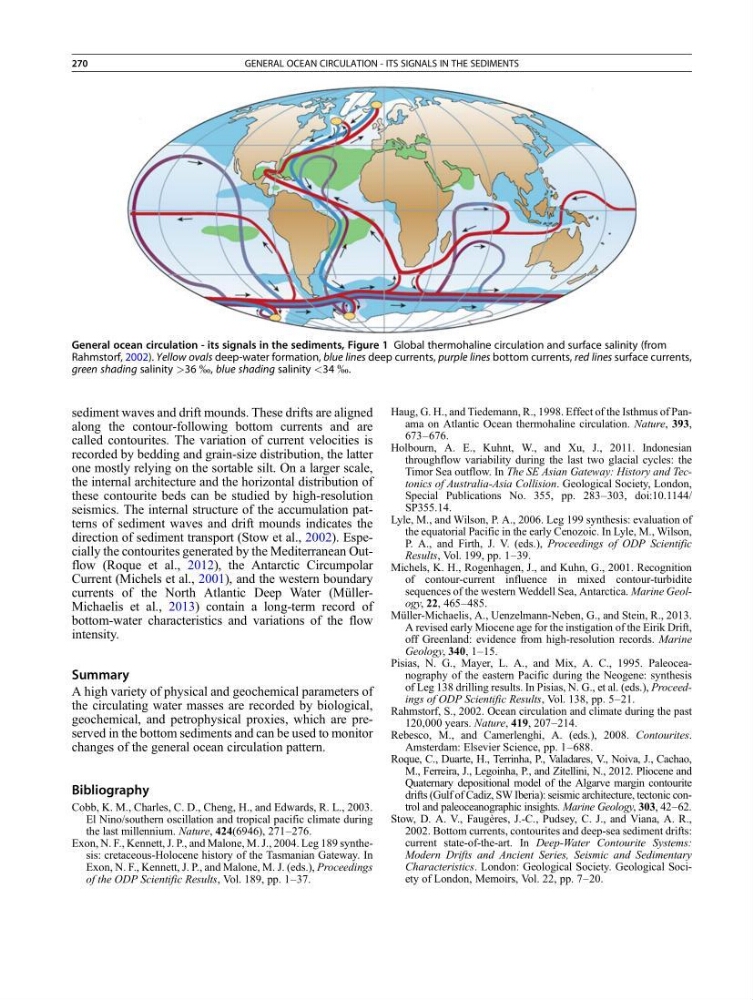
General ocean circulation - its signals in the sediments, Figure 1 Global thermohaline circulation and surface salinity (from
Rahmstorf, 2002). Yellow ovals deep-water formation, blue lines deep currents, purple lines bottom currents, red lines surface currents,
green shading salinity >36 %, blue shading salinity <34 %.
270
GENERAL OCEAN CIRCULATION - ITS SIGNALS IN THE SEDIMENTS
along the contour-following bottom currents and are
called contourites. The variation of current velocities is
recorded by bedding and grain-size distribution, the latter
one mostly relying on the sortable silt. On a larger scale,
the internal architecture and the horizontal distribution of
these contourite beds can be studied by high-resolution
seismics. The internal structure of the accumulation patterns of sediment waves and drift mounds indicates the
direction of sediment transport (Stow et al., 2002). Especially the contourites generated by the Mediterranean Outflow (Roque et al., 2012), the Antarctic Circumpolar
Current (Michels et al., 2001), and the western boundary
currents of the North Atlantic Deep Water (MüllerMichaelis et al., 2013) contain a long-term record of
bottom-water characteristics and variations of the flow
intensity.
Summary
A high variety of physical and geochemical parameters of
the circulating water masses are recorded by biological,
geochemical, and petrophysical proxies, which are preserved in the bottom sediments and can be used to monitor
changes of the general ocean circulation pattern.
Bibliography
Cobb, K. M., Charles, C. D., Cheng, H., and Edwards, R. L., 2003.
El Nino/southern oscillation and tropical pacific climate during
the last millennium. Nature, 424(6946), 271–276.
Exon, N. F., Kennett, J. P., and Malone, M. J., 2004. Leg 189 synthesis: cretaceous-Holocene history of the Tasmanian Gateway. In
Exon, N. F., Kennett, J. P., and Malone, M. J. (eds.), Proceedings
of the ODP Scientific Results, Vol. 189, pp. 1–37.
Haug, G. H., and Tiedemann, R., 1998. Effect of the Isthmus of Panama on Atlantic Ocean thermohaline circulation. Nature, 393,
673–676.
Holbourn, A. E., Kuhnt, W., and Xu, J., 2011. Indonesian
throughflow variability during the last two glacial cycles: the
Timor Sea outflow. In The SE Asian Gateway: History and Tectonics of Australia-Asia Collision. Geological Society, London,
Special Publications No. 355, pp. 283–303, doi:10.1144/
SP355.14.
Lyle, M., and Wilson, P. A., 2006. Leg 199 synthesis: evaluation of
the equatorial Pacific in the early Cenozoic. In Lyle, M., Wilson,
P. A., and Firth, J. V. (eds.), Proceedings of ODP Scientific
Results, Vol. 199, pp. 1–39.
Michels, K. H., Rogenhagen, J., and Kuhn, G., 2001. Recognition
of contour-current influence in mixed contour-turbidite
sequences of the western Weddell Sea, Antarctica. Marine Geology, 22, 465–485.
Müller-Michaelis, A., Uenzelmann-Neben, G., and Stein, R., 2013.
A revised early Miocene age for the instigation of the Eirik Drift,
off Greenland: evidence from high-resolution records. Marine
Geology, 340, 1–15.
Pisias, N. G., Mayer, L. A., and Mix, A. C., 1995. Paleoceanography of the eastern Pacific during the Neogene: synthesis
of Leg 138 drilling results. In Pisias, N. G., et al. (eds.), Proceedings of ODP Scientific Results, Vol. 138, pp. 5–21.
Rahmstorf, S., 2002. Ocean circulation and climate during the past
120,000 years. Nature, 419, 207–214.
Rebesco, M., and Camerlenghi, A. (eds.), 2008. Contourites.
Amsterdam: Elsevier Science, pp. 1–688.
Roque, C., Duarte, H., Terrinha, P., Valadares, V., Noiva, J., Cachao,
M., Ferreira, J., Legoinha, P., and Zitellini, N., 2012. Pliocene and
Quaternary depositional model of the Algarve margin contourite
drifts (Gulf of Cadiz, SW Iberia): seismic architecture, tectonic control and paleoceanographic insights. Marine Geology, 303, 42–62.
Stow, D. A. V., Faugères, J.-C., Pudsey, C. J., and Viana, A. R.,
2002. Bottom currents, contourites and deep-sea sediment drifts:
current state-of-the-art. In Deep-Water Contourite Systems:
Modern Drifts and Ancient Series, Seismic and Sedimentary
Characteristics. London: Geological Society. Geological Society of London, Memoirs, Vol. 22, pp. 7–20.
General ocean circulation - its signals in the sediments, Figure 1 Global thermohaline circulation and surface salinity (from
Rahmstorf, 2002). Yellow ovals deep-water formation, blue lines deep currents, purple lines bottom currents, red lines surface currents,
green shading salinity >36 %, blue shading salinity <34 %.
270
GENERAL OCEAN CIRCULATION - ITS SIGNALS IN THE SEDIMENTS