

IV. Retreating Shorelines
259
YEAR
'19-'78
'61-'62
'67-'68
'69"70
'71
'72
'74-'75
'75-'87
'77
'77-'79
'80
'80
'82-'83
'83
Southern California coast
La Croisette, Cannes (France)
Redondo Beach (California)
Copacabana Beach (Brazil)
Goeree (Holland)
Silt (W. Germany)
Bournemouth (U.K.)
Lagos (Nigeria)
Rockaway Beach (New York)
Knokke-Heist (Belgium)
Gold Coast, Queensland (Australia)
Miami Beach (Florida)
Isle ofLangeoo~ (W. Germany)
Pet foreshore (England)
Walland (England)
m3
(***) 108,000,000
!oo,ooo
1,100,000
3,500,000
600,000
900,000
650,000
(**) 1,000,000
48,000,000
8,400,000
2,400,000
87,000,000
,200,000
(*)(**) 19,000
(**) 31,000
(*)
(**)
(***)
"shingle"
amount is annual recharge
total amount over a 60 year period and covering 60 projects
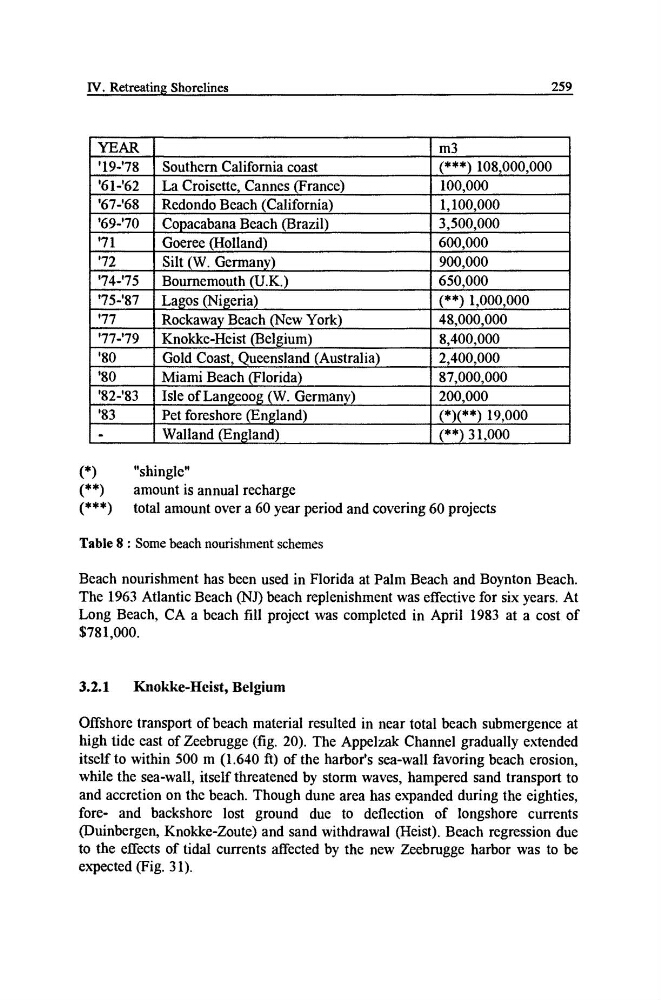
Table 8 : Some beach nourishment schemes
Beach nourishment has been used in Florida at Palm Beach and Boynton Beach.
The 1963 Atlantic Beach (NJ) beach replenishment was effective for six years. At
Long Beach, CA a beach fill project was completed in April 1983 at a cost of
$781,000.
3.2.1
Knokke-Heist, Belgium
Offshore transport of beach material resulted in near total beach submergence at
high tide east of Zeebrugge (fig. 20). The Appelzak Channel gradually extended
itself to within 500 m (1.640 ft) of the harbor's sea-wall favoring beach erosion,
while the sea-wall, itself threatened by storm waves, hampered sand transport to
and accretion on the beach. Though dune area has expanded during the eighties,
fore- and backshore lost ground due to deflection of longshore currents
(Duinbergen, Knokke-Zoute) and sand withdrawal (Heist). Beach regression due
to the effects of tidal currents affected by the new Zeebrugge harbor was to be
expected (Fig. 31).
259
YEAR
'19-'78
'61-'62
'67-'68
'69"70
'71
'72
'74-'75
'75-'87
'77
'77-'79
'80
'80
'82-'83
'83
Southern California coast
La Croisette, Cannes (France)
Redondo Beach (California)
Copacabana Beach (Brazil)
Goeree (Holland)
Silt (W. Germany)
Bournemouth (U.K.)
Lagos (Nigeria)
Rockaway Beach (New York)
Knokke-Heist (Belgium)
Gold Coast, Queensland (Australia)
Miami Beach (Florida)
Isle ofLangeoo~ (W. Germany)
Pet foreshore (England)
Walland (England)
m3
(***) 108,000,000
!oo,ooo
1,100,000
3,500,000
600,000
900,000
650,000
(**) 1,000,000
48,000,000
8,400,000
2,400,000
87,000,000
,200,000
(*)(**) 19,000
(**) 31,000
(*)
(**)
(***)
"shingle"
amount is annual recharge
total amount over a 60 year period and covering 60 projects
Table 8 : Some beach nourishment schemes
Beach nourishment has been used in Florida at Palm Beach and Boynton Beach.
The 1963 Atlantic Beach (NJ) beach replenishment was effective for six years. At
Long Beach, CA a beach fill project was completed in April 1983 at a cost of
$781,000.
3.2.1
Knokke-Heist, Belgium
Offshore transport of beach material resulted in near total beach submergence at
high tide east of Zeebrugge (fig. 20). The Appelzak Channel gradually extended
itself to within 500 m (1.640 ft) of the harbor's sea-wall favoring beach erosion,
while the sea-wall, itself threatened by storm waves, hampered sand transport to
and accretion on the beach. Though dune area has expanded during the eighties,
fore- and backshore lost ground due to deflection of longshore currents
(Duinbergen, Knokke-Zoute) and sand withdrawal (Heist). Beach regression due
to the effects of tidal currents affected by the new Zeebrugge harbor was to be
expected (Fig. 31).