

IV. Retreating Shorelines
225
Pre~u,,m,,mt
Wave Direction
Average Longshore Comptment
mad Magrdt~de
Average Loagshere Camponent
of Wave Energy (plus Direction)
o~ Wave Energy (miaua DL~'IiO~ 0
\
/
Wave Diffraction
tkeakwater Height
LENGTN
SPACING
~nd P~
Pa~
\
I"
', "
-- i
~)
I
1
I
I'--~'
/
~
-.s't
ACCatTta
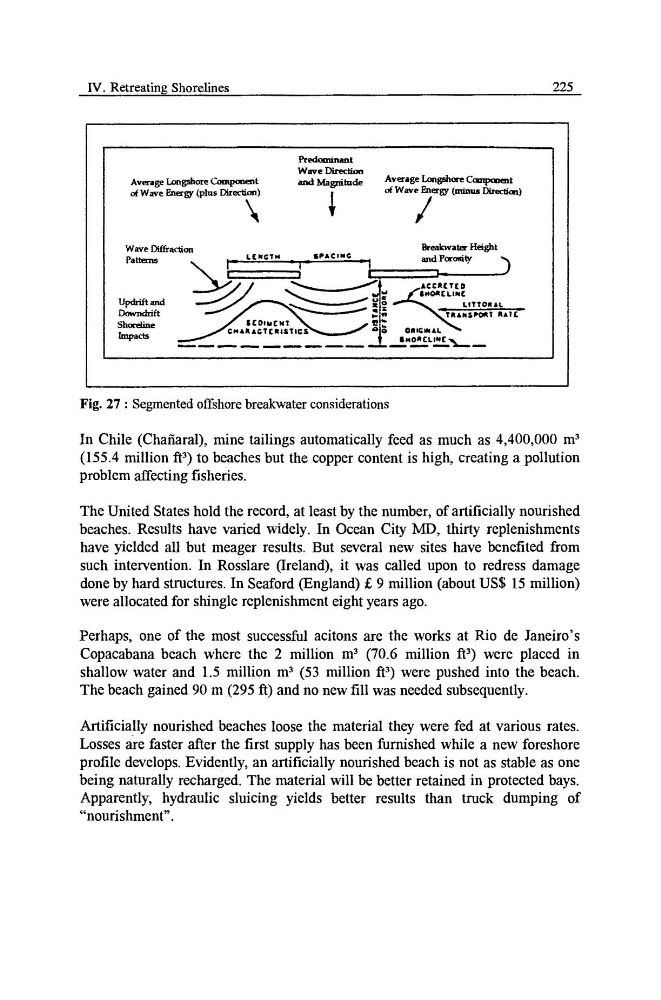
Fig. 27 : Segmented offshore breakwater considerations
In Chile (Chafiaral), mine tailings automatically feed as much as 4,400,000 m 3
(155.4 million f13) to beaches but the copper content is high, creating a pollution
problem affecting fisheries.
The United States hold the record, at least by the number, of artificially nourished
beaches. Results have varied widely. In Ocean City MD, thirty replenishments
have yielded all but meager results. But several new sites have benefited from
such intervention. In Rosslare (Ireland), it was called upon to redress damage
done by hard structures. In Seaford (England) £ 9 million (about US$15 million)
were allocated for shingle replenishment eight years ago.
Perhaps, one of the most successful acitons are the works at Rio de Janeiro's
Copacabana beach where the 2 million m 3 (70.6 million ft 3) were placed in
shallow water and 1.5 million m 3 (53 million ft 3) were pushed into the beach.
The beach gained 90 m (295 ft) and no new fill was needed subsequently.
Artificially nourished beaches loose the material they were fed at various rates.
Losses are faster after the first supply has been furnished while a new foreshore
profile develops. Evidently, an artificially nourished beach is not as stable as one
being naturally recharged. The material will be better retained in protected bays.
Apparently, hydraulic sluicing yields better results than truck dumping of
"nourishment".
225
Pre~u,,m,,mt
Wave Direction
Average Longshore Comptment
mad Magrdt~de
Average Loagshere Camponent
of Wave Energy (plus Direction)
o~ Wave Energy (miaua DL~'IiO~ 0
\
/
Wave Diffraction
tkeakwater Height
LENGTN
SPACING
~nd P~
Pa~
\
I"
', "
-- i
~)
I
1
I
I'--~'
/
~
-.s't
ACCatTta
Fig. 27 : Segmented offshore breakwater considerations
In Chile (Chafiaral), mine tailings automatically feed as much as 4,400,000 m 3
(155.4 million f13) to beaches but the copper content is high, creating a pollution
problem affecting fisheries.
The United States hold the record, at least by the number, of artificially nourished
beaches. Results have varied widely. In Ocean City MD, thirty replenishments
have yielded all but meager results. But several new sites have benefited from
such intervention. In Rosslare (Ireland), it was called upon to redress damage
done by hard structures. In Seaford (England) £ 9 million (about US$15 million)
were allocated for shingle replenishment eight years ago.
Perhaps, one of the most successful acitons are the works at Rio de Janeiro's
Copacabana beach where the 2 million m 3 (70.6 million ft 3) were placed in
shallow water and 1.5 million m 3 (53 million ft 3) were pushed into the beach.
The beach gained 90 m (295 ft) and no new fill was needed subsequently.
Artificially nourished beaches loose the material they were fed at various rates.
Losses are faster after the first supply has been furnished while a new foreshore
profile develops. Evidently, an artificially nourished beach is not as stable as one
being naturally recharged. The material will be better retained in protected bays.
Apparently, hydraulic sluicing yields better results than truck dumping of
"nourishment".